REVIEW · Concerts & Live
sis at Shinjuku ReNY: DIVER and Michishirube Signal a Change

Tokyo PROLOGUE selected repertoire
Selected repertoire · Not in performance order
- DIVER
- Michishirube
- Ai no Battery
- DING DONG Kudasai
- Eomji Cheok
- Smile for me
On May 5, 2026, sis (SIS/T) held a solo concert at Tokyo’s Shinjuku ReNY, introducing a new stage concept and new songs. It extended beyond the group’s familiar retro atmosphere and Japanese-pop covers. The premieres of “DIVER” and “Michishirube” pointed in different directions in both performance and musical style.
Japanese fans and visitors from Korea brought energy to the venue before the show began. Merchandise and VIP benefits made it more than a straightforward concert, offering a view of how sis is expanding its activities.
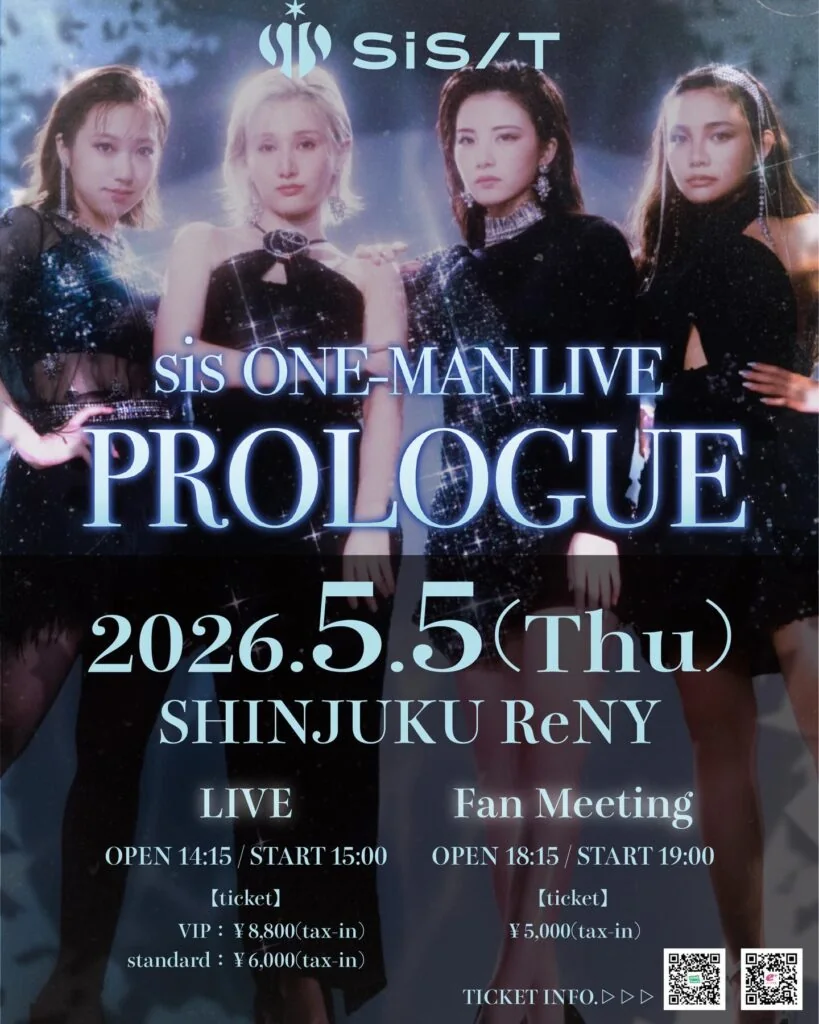
Shinjuku ReNY, a live hall in Nishi-Shinjuku
Located inside Shinjuku i-Land Tower, ReNY is one of Nishi-Shinjuku’s notable live halls. Its modern, orderly facilities differ from the image of a cramped, dark basement often associated with Japanese live clubs.
The surrounding office district fills with workers by day, then changes as fans carrying merchandise arrive near showtime. The coexistence of Shinjuku’s cool urban character and live-music culture gives the area a distinctive impression.
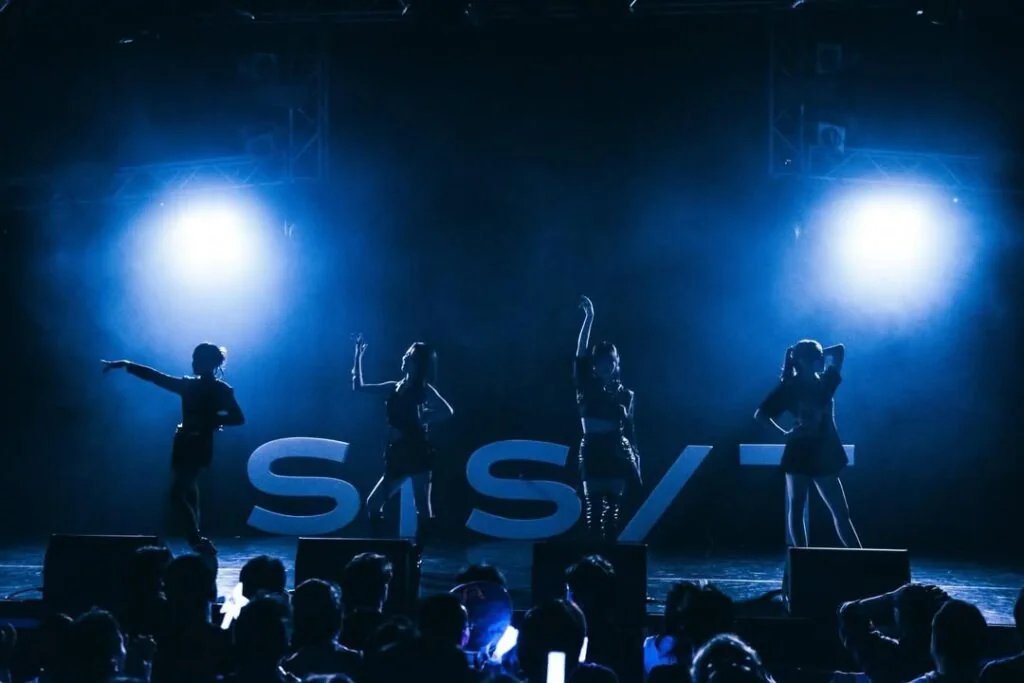
The audience area’s nearly circular design made the stage relatively easy to see from different positions. Sound was stable, with strong bass that did not bury the vocals. Lighting also shaped the atmosphere, combining with black outfits to produce a stronger impression than before.
Early merchandise lines and fans from Korea
Fans gathered well before admission. Although the venue was on the second floor, the merchandise queue began on the first. Familiar Japanese concertgoers and visitors from Korea naturally assembled around the building.
Before sales opened, they discussed the show, recent activities and seat locations. Waiting and buying merchandise became part of the concert experience rather than merely preliminaries to watching and leaving.
New merchandise included tote bags, a fresh support-towel design and signed concert posters. Existing T-shirts, instant-photo cases, acrylic holders, stickers, calendars and CDs were also available, along with random instant photographs.
Signed posters and random photographs drew particular interest. Although a random purchase might not produce the desired member, fans treated that uncertainty as part of the enjoyment particular to attending in person.
Reserved seats and a one-drink requirement
Unlike a typical standing live-club show, this concert used reserved seats. Positions were determined by assigned seat numbers rather than arrival order.
The familiar live-club one-drink requirement also applied. Audiences purchased a separate voucher at entry and exchanged it at the bar. Familiar in Japan, it may feel distinctive to overseas fans.
Fans waited in the basement lounge and around the venue before the performance, anticipation and nerves increasing as showtime approached.
Black outfits introduce a stronger concept
At 3 p.m., the red curtain rose. Members appeared in black outfits that created a markedly different impression from their earlier activities.
Where previous stages emphasized bright, approachable retro feeling, this one leaned toward a more polished and forceful direction. Lighting emphasized the black styling, intensifying the overall impression.
KANO MIYU was among those especially suited to the look. Known for often favoring black styles, she prompted reactions that her particular presence stood out more strongly. Maturity and intensity joined her familiar bright, cute image, drawing attention to the stage.
The styling felt more accomplished across the group. Changes in lighting, choreography and performance as well as clothing suggested a team capable of handling a wider range of concepts.
“DIVER” points in a different direction
The new “DIVER” received the strongest response. One of the songs most discussed afterward, it was seen as the clearest departure from sis’s previous image. The change suggested more than an added song: it hinted at a shift in the group’s direction.
Moving beyond Showa-style nostalgia and Japanese-pop remakes, “DIVER” foregrounded contemporary K-pop-style performance. Strong beats and electronic sounds supported staging centered on choreography, lighting and movement patterns.
The density of performance was striking. Where previous sets emphasized friendly interaction, this one stressed forceful charisma and polished execution. Rapid movement and choreography continued throughout, while sudden lighting changes heightened tension.
The black outfits reinforced the song’s mood, giving a more mature, polished image that connected naturally with its beat. MIYU’s styling and personal atmosphere aligned particularly well, adding charisma and sensuality to her bright image and strengthening her presence.
The response was intense. As the song began, the room visibly changed, with cheers and support taking on a different force. Fans later described a style they had never seen, a stronger-than-expected K-pop feeling and a sense that sis had entered a new phase.
Crucially, the song did not feel like a simple imitation of a trend. It seemed to absorb K-pop performance into the group’s established retro and Japanese-idol foundations. That also connected with sis’s growing ties to Korean fans.
The stage suggested a determination not to remain merely a retro-concept act. While signature songs emphasize familiarity and bright energy, “DIVER” moved toward a more assertive, polished approach, hinting at a wider future range.
“DIVER” was the key song that changed the concert’s atmosphere. More than a new release, it was one of the clearest indications of where sis is moving.
“Michishirube”: warmth with a memorable hook
The other new song, “Michishirube,” also drew a positive response. Its title means a guidepost, and its warm, emotional mood carried a particularly catchy chorus. Fans said afterward that it stayed in the ear longer than expected and invited repeated humming.
The opening connected naturally with sis’s familiar image, but clearer melody and emotional phrasing extended it beyond simple cuteness or lightness. Its warmth recalled a winter seasonal song or Christmas carol, prompting comments about a year-end atmosphere and how well it might fit winter.
The repeated chorus and melody were especially effective. It felt as though a stronger hook had been added to the familiar, singable quality of earlier material. Listeners could retain it after one hearing, and some were humming fragments after the show.
The staging supported that character. Against “DIVER” and its fast movement and charisma, “Michishirube” emphasized feeling. Expressions, hand gestures and looks toward the audience fitted the warmth, inviting a different kind of concentration.
Many felt MIYU’s vocals suited it particularly well. Her ability to carry an emotional melody delicately became clearer, with a natural progression from a gentle beginning to the chorus. It also seemed to fit the guiding image in the title.
The contrast between the new songs was interesting. If “DIVER” explored strong beats and K-pop performance, “Michishirube” retained sis’s warmth and Japanese-idol accessibility while appearing to raise its musical polish.
The concert therefore presented more than two new songs. It showed two possible directions at once: forceful performance and emotional melody coexisting, suggesting a group developing beyond one fixed image.
Signature songs and Japanese covers shape the set
Established favorites and Japanese covers joined the new material. They included “Ai no Battery,” “DING DONG Kudasai,” the frequently performed “Eomji Cheok” and the Japanese song “Smile for me.”
The structure showed both the atmosphere sis has built and its changing direction, rather than focusing solely on premieres. Familiar songs and new experiments mixed naturally, helping locate the group’s present position.
One distinguishing feature is the mix of retro Japanese pop and original material. Neither a straightforward idol concert nor a pure cover show, that unusual structure continued here.
“Ai no Battery” and “DING DONG Kudasai” carry the accessibility and brightness associated with Showa-era pop, but were reinterpreted through sis as contemporary idol performance. Conversely, the strong K-pop elements of “DIVER” connected to the overall show without feeling substantially out of place.
That coexistence of Japanese retro culture, contemporary performance and Korean idol elements felt like a distinctive strength. Japanese and Korean audiences both entered the show naturally, suggesting a connection between its mixed character and its widening fan base.
Established songs quickly lifted the room. Reactions changed with their introductions, and familiar melodies prompted more active support. Calls of members’ names continued, with cheering naturally finding its timing in each song.
“Ai no Battery” seemed emblematic for repeat concertgoers. The response rose immediately, and members connected with relaxed expressions. Rather than simply watching, audiences helped make the show within an already familiar flow.
Japanese covers such as “Smile for me” also diversified the atmosphere. Instead of pushing only recent material, the set retained sis’s character by weaving in Japanese-pop feeling. For local fans, such songs seemed to evoke familiarity and nostalgia together.
The set therefore meant more than a showcase of new songs. Favorites, covers and new styles together presented both what sis is now and where it intends to expand.
VIP instant photographs preserve a concert memory
Afterward, VIP ticket holders joined a benefit session for instant photographs with all four members. Audience movement was organized quickly, and photographs proceeded in sequence.
Familiar in Japanese idol culture, the format can nevertheless satisfy fans by allowing a close encounter while the concert’s afterglow remains. Meeting members immediately in front of them carries a different meaning from seeing them onstage.
The session was fast. Individual time was short, and the next person followed immediately after a photograph, leaving almost no room for conversation or impressions of the performance.
This was less an exception than a pattern in events run by sis’s current agency. Brisk flow and turnover take priority. Fans gain a close encounter but can also feel regret that the entire process passes so quickly.
After a show, people often want to offer impressions, encouragement or a brief conversation. In practice, greeting, photograph and departure can proceed almost without pause. That tendency increases with audience size; here, too, the line moved quickly under a tight schedule.
Even so, the existence of the opportunity mattered. Japanese shows often strictly prohibit photography, and this concert did as well. There were almost no ways to preserve a personal record of the performance itself.
In that context, an instant photograph means more than merchandise. It can feel like almost the only official physical souvenir of having attended. In Japanese fan culture, a single picture often symbolizes an event’s memory, helping explain why it is treasured.
With “DIVER” and “Michishirube” premiered that day, the occasion carried particular weight. The short session became an important closing step: a way to recall the mood, feelings and direct experience later.
Satisfaction and regret remained together. The pace invited wishes for more conversation, but in a setting where recording was prohibited, a tangible memory and a close encounter immediately afterward still felt meaningful.
The changes seen at Shinjuku ReNY
The concert revealed sis’s current attempts at change. It retained the retro-pop atmosphere and familiar structure while presenting broader musical and performance directions through “DIVER” and “Michishirube.”
“DIVER” left a strong impression through performance distinct from earlier work. “Michishirube” retained the group’s warmth while offering clearer melody and hooks, suggesting another possibility.
The assured delivery in a venue of ReNY’s scale also mattered. Sound, lighting and atmosphere felt more accomplished, and the audience’s enthusiasm continued throughout.
The show left a picture of sis actively trying contemporary performance and new musical styles, rather than simply maintaining its existing image.
Read the concert and fan-meeting reports together
Related sources

KANO MIYU changes the mood from afternoon to evening — Hanno Music Festival 2026

KANO MIYU returns to Fukuoka through song — Daikoku Festival 2026

KANO MIYU and SIS at the crossroads of Kuro Fes 2026

MAKOTO. places her own song among familiar classics — Kabukicho Street Live

sis in Atami, Part 2: Evening Falls on the Same Stage