REVIEW · Festivals
KANO MIYU and SIS at the crossroads of Kuro Fes 2026
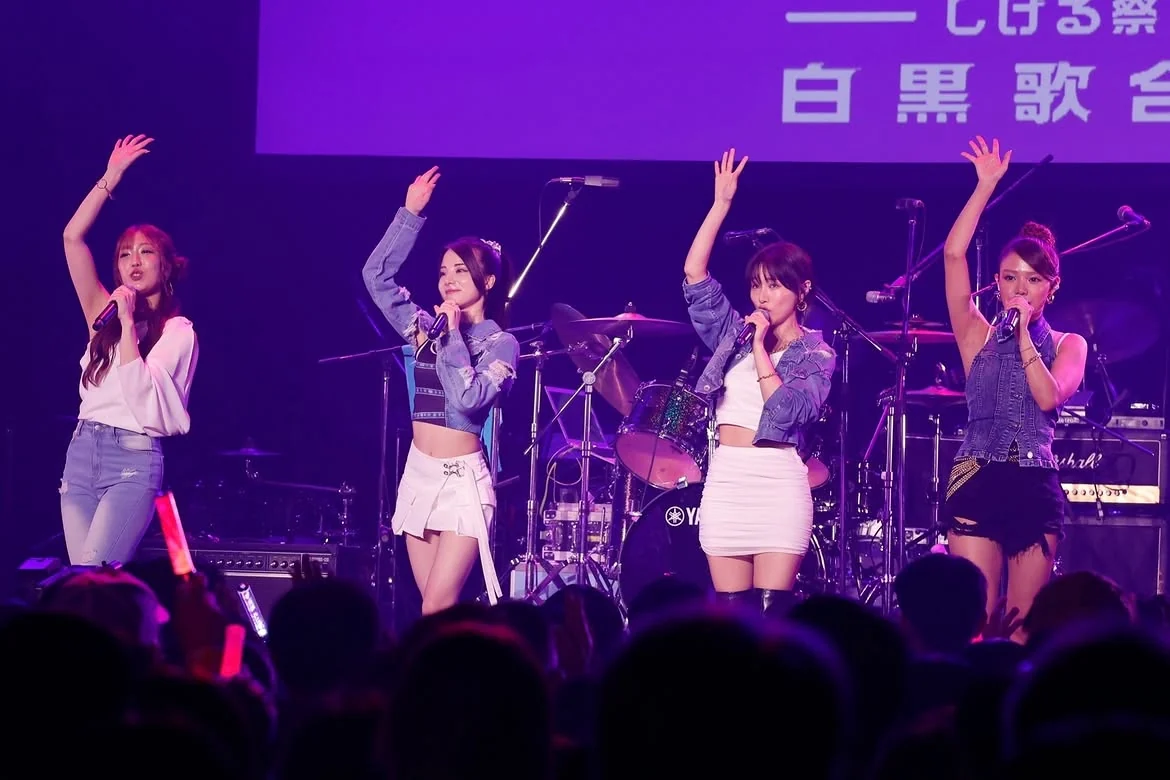
SIS at Kuro Fes
Selected repertoire · Not in performance order
- DIVER
- Ai no Battery (愛のバッテリー / Love Battery)
Shigeru Matsuzaki's Kuro Fes 2026 took place on September 6 at Toyosu PIT in Tokyo. Held annually since 2015 to coincide with “Shigeru Matsuzaki Day,” it reached its 12th edition. Matsuzaki shared the line-up with Momoiro Clover Z, T.N.T, Keisuke Yamauchi, DJ KOO, Rie Utagokoro, Shiritsu Ebisu Chugaku and SIS, among artists from very different fields.
The show ran from 4:30 p.m. until around 10:30 p.m. More striking than its roughly six-hour duration was its breadth: idols, rock bands, enka singers, pop vocalists, DJs and comedians appeared in one programme. Their generations and careers varied as much as their genres. Rather than catering to a single taste, Kuro Fes deliberately brought different fan communities and forms of entertainment into contact. SIS occupied one of those meeting points.
SIS arrives with Panther's Ogata
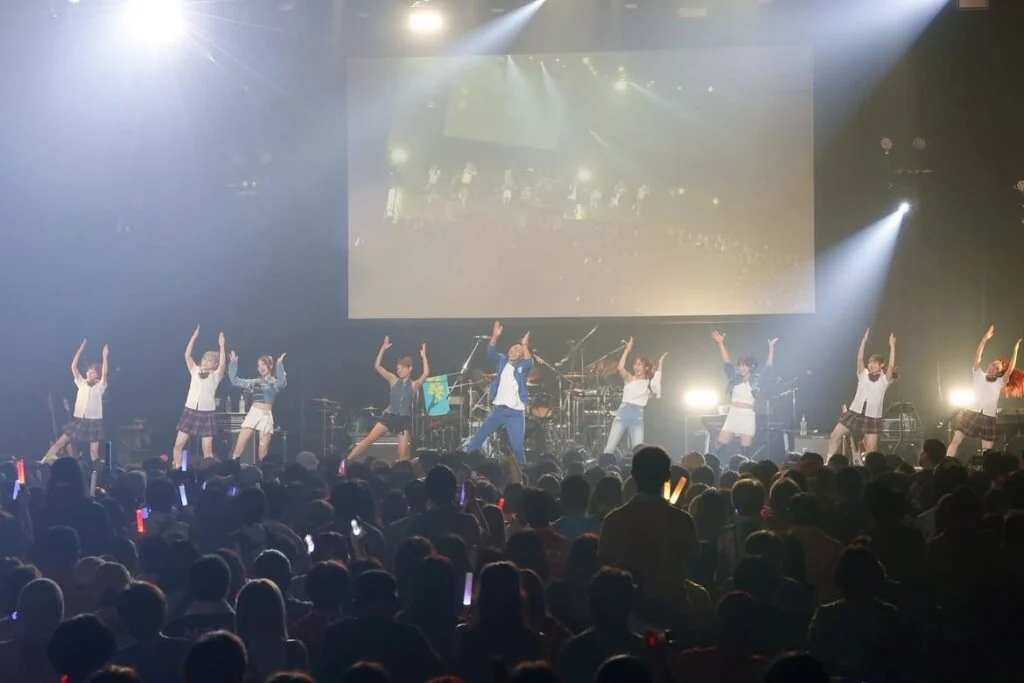
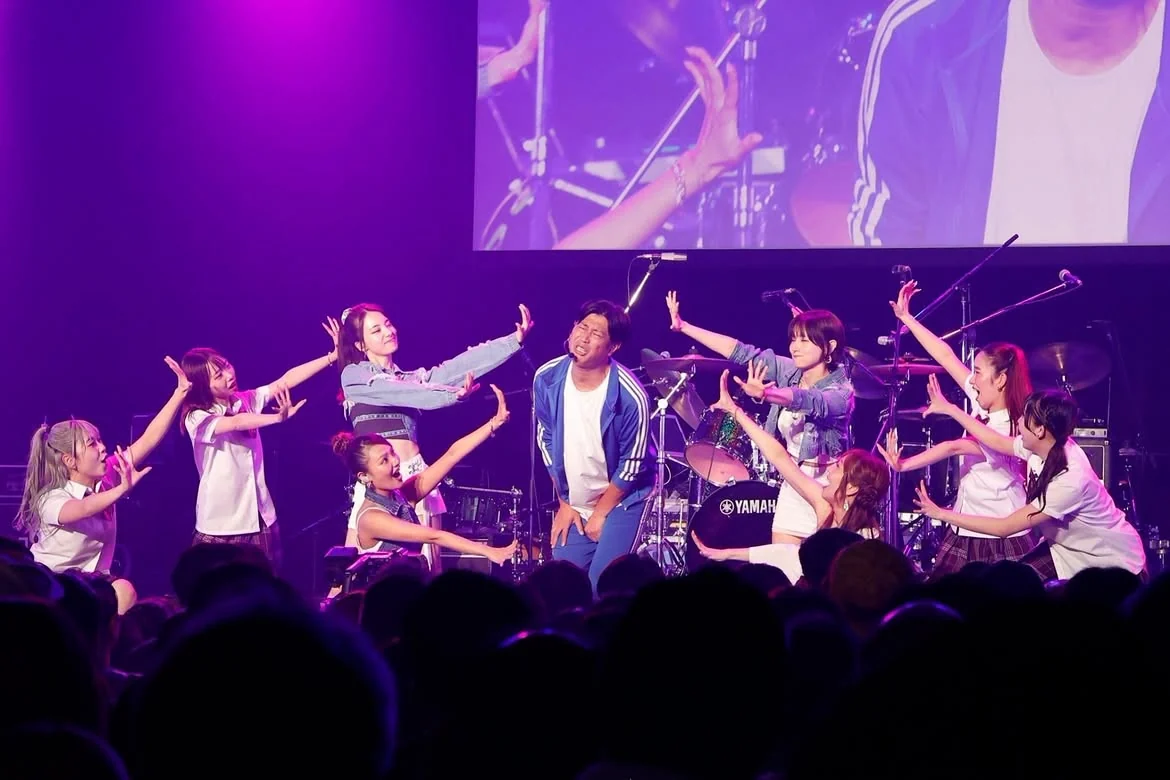
SIS first appeared in a collaboration rather than a standalone set. Takahiro Ogata of comedy trio Panther came out in blue sportswear, joined by the group. Announced as “Panther Ogata with sis,” the pairing brought performers from different fields onto one stage.
It offered a useful introduction to the festival. A comedian and a vocal group could create a performance together, followed by an artist from another genre entirely. People did not simply wait for their favourites; unexpected combinations became part of the experience.
For SIS, this was a chance to reach new listeners. Unlike a solo concert dominated by existing fans, a large shared event puts people waiting for Momoiro Clover Z, T.N.T or Yamauchi in the same room. The unlikely Ogata collaboration could become their first introduction to the name SIS.
Two directions in MIYU and SIS's music
The collaboration was followed by SIS's own set: “DIVER” and “Ai no Battery.” Two songs are brief beside a solo concert. At a festival with many artists sharing limited time, however, the choice of those songs matters even more.
“DIVER” was a new addition to their repertoire, then awaiting release. Rather than rely entirely on familiar covers, they presented the music they wanted to take forward to a large audience. If a festival helps introduce an artist's present identity to new listeners quickly, selecting new material made sense.
“Ai no Battery,” associated with Korean singer Hong Jin-young as “Love Battery,” pointed elsewhere. Japanese singers performing a Korean favourite in Japan reflected a recurring part of SIS's work. MIYU in particular has performed repeatedly in Korea and actively included Korean-language songs in her repertoire. Introducing Korean songs to Japanese listeners, and familiar songs in a Japanese singer's voice to Korean listeners, has been a consistent feature of her cross-border activities.
The pair created an interesting contrast. “DIVER” suggested the group's present and future; “Ai no Battery” reflected the connections built through Korea and Japan. In a short slot, they presented both a new SIS and a SIS linking the two countries.
“Korean fans” mentioned before a packed venue
In the conversation with the hosts afterwards, the members mentioned fans who had travelled from Korea for the show. The reference was brief, but acknowledging them in front of Toyosu PIT's large audience carried symbolic weight.
Crossing a border to attend a concert is no longer unusual. K-pop fans travel to Korea, and fans of Japanese music travel to Japan. The important point is that this is not restricted to global stars: artists working on smaller scales can also gain overseas listeners who begin travelling to their shows.
The pattern is clear in MIYU's activities. Performances and contact with fans in Korea feed back into concerts in Japan. Fans first encountered in Korea travel to Japanese venues, where their presence is then acknowledged. Bilateral music exchange is not made only by huge festivals or major agencies. One artist and a few fans repeatedly crossing borders can also create cultural exchange on a smaller scale.
Its mention alongside widely recognised names such as Momoiro Clover Z and Matsuzaki mattered too. Talking about Korean activities among existing fans differs from pointing to actual overseas fans in a mixed festival audience. The most direct evidence of SIS's work in Korea was sitting in the room.
Going to see MIYU and discovering other music
T.N.T's set made the multi-genre structure vivid. After idols, enka and pop, the rock band's arrival changed the texture again. A strong guitar-and-bass sound and active stage movement sharply contrasted with earlier performances. The programming placed different musical colours in succession rather than grouping everything around one genre.
Guitar and bass players moved energetically, drawing reactions from the audience as forceful playing and physical performance worked together. A switch between bass and violin added another distinguishing detail. The band was unfamiliar before the show, but by its end there was a tangible sense of why it was moving towards larger stages.
Such discovery is one of a multi-genre concert's most valuable functions. A ticket bought for MIYU and SIS also leads to other performances. Conversely, someone attending for another artist may hear SIS and MIYU for the first time. Listeners pass between fan communities.
Kuro Fes therefore does more than gather famous names. Different audiences remain together long enough to encounter music they would not ordinarily choose. Where streaming recommendations tend to offer more of what a listener might already like, a shared concert makes room for accidental meetings outside that taste.
Rie Utagokoro and another encounter with “Dokeshi no Sonnet”
Rie Utagokoro offered another connection with Korea. Known there through Trot Girls Japan, she too mentioned visiting Korean fans in her conversation with the hosts. Two acts acknowledging such visitors gave a small but visible indication of Korean listeners' growing journeys around Japanese music.
“Dokeshi no Sonnet” was especially memorable. Unlike hearing it with a backing track at a small show, this performance had live band support. Toyosu PIT's scale and acoustics gave the same song a different density. Her steady singing and emotional communication held up in the larger room, while the full band expanded the reach of her voice.
MIYU and Rie work differently, but both have met Korean audiences through performances spanning the two countries. Those relationships had returned to Japan and become part of this audience. Discovering a Japanese singer in Korea, then travelling to Japan to hear them, was a visible movement in the room.
Momoiro Clover Z and a fan culture built over time
When Momoiro Clover Z appeared later, the atmosphere changed noticeably. Many people had worn related merchandise before entry, but the performance made the scale and coordination of their following much clearer.
The cheering was particularly striking. People knew which calls belonged in which parts of each song. Near-simultaneous chants joined the music as part of the performance. This was about more than headcount: it reflected a concert culture accumulated through years of returning to the same group's shows.
Seeing that response offered an interesting contrast for artists still expanding their following. MIYU and SIS do not need to reproduce the same model. Yet audiences who return, know the songs and respond together gradually build a performance culture. A few fans crossing borders may be smaller in scale, but can stand at the beginning of a similar accumulation.
From DJ KOO to Matsuzaki: the shared language of performance
DJ KOO later moved the crowd in another way. The room answered his cues in rhythm, and the space that had hosted bands, idols and enka suddenly resembled a large club. It clearly expressed Kuro Fes's character: consecutive encounters with different forms of entertainment rather than a single musical genre.
Organiser Matsuzaki appeared at the end. One much-discussed moment used AI technology to recreate the late Kiyohiko Ozaki for a joint performance of “Mata Au Hi made.” More than simply replaying archival footage, it attempted to combine present-day performance and technology to share a stage again with a deceased colleague.
For the closing “Ai no Memory,” the audience sang along over Matsuzaki's voice and the full band. After the long show, people who had arrived for different singers joined in one song. Separate fan groups had become an audience participating in the same performance.
MIYU's stages are changing in scale
MIYU's actual appearance was not long: two SIS songs plus the collaboration with Ogata. Measured against the whole six hours, it occupied only a small part.
But the value of a performance for a developing artist cannot be measured by song count alone. Singing for half an hour to dozens of people who already know you differs from performing two songs at Toyosu PIT before fans of major acts. One deepens existing relationships; the other introduces a name to unfamiliar listeners. A growing singer needs both.
Seen across her recent activities, that contrast becomes more interesting. She moves between large and small stages in Korea and Japan, street shows and local festivals, SIS and solo performances. One day she sings a few metres from listeners; another she stands at a large shared festival. She is experiencing different scales and audiences rather than repeating one type of show.
Kuro Fes added another kind of stage. SIS joined a line-up spanning generations and genres, including Momoiro Clover Z, Matsuzaki, DJ KOO, T.N.T and Yamauchi. There, MIYU sang the new “DIVER” alongside the Korean-rooted “Ai no Battery.”
Only two songs, but they held two directions central to her present work: expanding her stages in Japan while continuing to carry the relationships formed in Korea.
Where different music meets, another name is discovered
Across roughly six hours, Kuro Fes kept introducing different faces: Momoiro Clover Z with its established following, T.N.T pulling in newcomers, and Rie, already known in Korea. DJ KOO transformed the mood before Matsuzaki brought the audience together with his signature song.
SIS had little time, but equal-length appearances are not the sole measure of a festival. Shared concerts allow artists at different career stages to appear together, and their listeners to discover other music.
If someone attending for MIYU discovered T.N.T, another person who came for Momoiro Clover Z or a different act may have encountered MIYU and SIS for the first time. Repeated exchanges gradually extend an artist's reach beyond an existing following.
For MIYU, working across Korea and Japan, this created another connection. Fans from Korea attended a large Japanese concert, their presence was acknowledged, and other listeners heard a new name. Beyond the grand language of cultural exchange, music connects through such small journeys and repetitions.
Greeting fans after Kuro Fes
Kuro Fes 2026 · after the show
Filming / channel: Diego Watch on YouTube ↗
Despite a title invoking black and white, the stage held colours that could not be divided into two. Idols, rock, enka, pop, DJ sets and comedy mixed as different generations and fan communities spent six hours together.
MIYU and SIS held a place among those colours. They did not have the longest slot or the largest following. They did, however, introduce new music, show their Korean connections before Japanese listeners, and leave a reason to move towards the next stage.
An emerging artist need not arrive at a major festival as its biggest name. First comes leaving that name in the memories of different listeners. That was the opportunity MIYU and SIS gained at Toyosu PIT on September 6, 2026.
Related event footage
A short clip of the greeting to fans after the Kuro Fes performance.
View all videos · 1

KANO MIYU changes the mood from afternoon to evening — Hanno Music Festival 2026

KANO MIYU returns to Fukuoka through song — Daikoku Festival 2026

MAKOTO. places her own song among familiar classics — Kabukicho Street Live

sis in Atami, Part 2: Evening Falls on the Same Stage

sis in Atami, Part 1: Thirty Minutes Between the Sea and Summer Light