REVIEW · Festivals
KANO MIYU and MAKOTO. in Komazawa: A Different Air at the Korea–Japan Festival

The same festival, different air and place
A record of the Korea–Japan Festival at Komazawa, September 29, 2024
On September 29, 2024, Komazawa Olympic Park’s central plaza in Setagaya gradually filled from early afternoon. Sharing the Korea–Japan Festival name with Seoul did not make it resemble COEX Hall D. Instead of indoor density, the park offered open space and breath. People neither moved nor gathered hurriedly; they seemed to remain as part of their day rather than come solely for a show.
The finale’s K-pop Secret Concert ran from 3:45 to 7 p.m., but MIYU, MAKOTO. and Aki Azuma had a short appearance, as in Seoul. Limited time and songs, one scene within a festival, were not generous conditions for artists.
Nor could anyone approach freely. Reserved front seats required advance application by reply-paid postcard by September 6 and selection by lottery. The artists faced an intentionally seated, already selected audience rather than accidental passersby.
That required another tension. The room was prepared to clap but could disappoint just as readily. This was a place to demonstrate trust rather than merely generate excitement.

The same selections as Seoul, another language of performance
Their selections matched Seoul’s COEX performance.
Komazawa Korea–Japan Festival: running order
Performance order
- Cutie Honey · KANO MIYU / MAKOTO.
- Password 486 · KANO MIYU
- Julia ni Heartbreak (Oh My Julia) · MAKOTO.
- Love’s Battery · KANO MIYU / MAKOTO.
- Aoi Sangoshou · KANO MIYU / MAKOTO. / Aki Azuma
The same songs and order did not feel complacent. Comparing both stages revealed intention. They introduced in Seoul and confirmed in Tokyo. Reusing repertoire in another space is possible when one clearly knows what to show.
“Password 486” has become a reference point for MIYU, revealing voice, pronunciation, feeling and attitude together. Choosing it again felt like accepting the same questions before Tokyo listeners.
“Password 486”: a different attitude outdoors
The plaza does not gather sound: wind and surrounding noise enter without indoor refinement. Attitude matters more than singing skill alone. One must hold a center rather than grow louder, and manage flow rather than push feeling.
MIYU understood those conditions. She reduced bodily movement and unnecessary gestures, lowered her breath and kept the beat steady. It was a strategy of not dispersing rather than the outdoor tactic of appearing larger.
Her singing consequently did not blur in the wide space. This was not audience size but a song standing by itself. Beyond technical polish, it was judgment from repeated experience singing it in different places.

Between competition and coexistence: a shared balance
MAKOTO. is essential to discussing MIYU here. Compared and seen as rivals since Korea–Japan King of Singers, their relationship on this stage felt more like balance.
MAKOTO.’s “Oh My Julia” had clear character: direct vocals, explicit feeling and stable Japanese-pop nostalgia. MIYU shaped a more restrained flow. These directions did not collide; they clarified each other’s colors.
Neither tried to overpower the other. The stage worked in parallel rather than comparison. In the context of later sis activities, it was interesting to see former competitors already testing coexistence.
“Aoi Sangoshou”: a final scene made by three
Aki Azuma joined the closing song, “Aoi Sangoshou.” A Seoul duet expanded into three voices, a meaning beyond a finale. It suggested a current looking onward rather than a one-off collaboration.
Their colors remained clear without anyone protruding. Keeping their places in one song made a persuasive festival close and hint of future activities.
The impression left by Tokyo
Komazawa remains as a stable impression rather than a spectacular event, with MIYU at its center. She confirmed an existing direction instead of showing a new face.
The same festival and songs, another city: repetition clarified how she stands onstage. Remaining steady, avoiding hurried change and adapting to conditions resemble an artist considering a long stage career rather than someone only beginning to attract notice.
Across Seoul and Tokyo, indoors and out, chance and selection, these scenes converge on one question: where is MIYU going?
At least in Komazawa she did not waver. That steadiness seemed part of an accumulated process rather than a story just beginning.

KANO MIYU changes the mood from afternoon to evening — Hanno Music Festival 2026

KANO MIYU returns to Fukuoka through song — Daikoku Festival 2026

KANO MIYU and SIS at the crossroads of Kuro Fes 2026
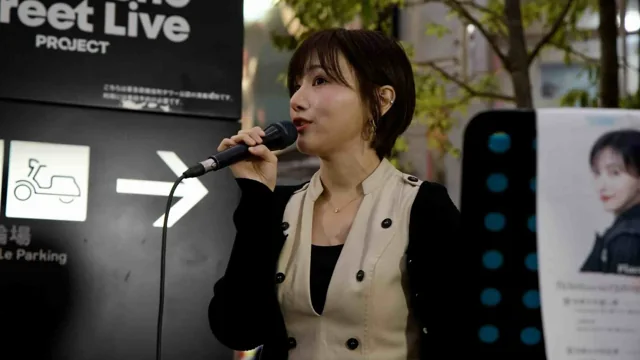
MAKOTO. places her own song among familiar classics — Kabukicho Street Live

sis in Atami, Part 2: Evening Falls on the Same Stage