REVIEW · Festivals
sis and KANO MIYU: Final Selections at Ueno Korean Festa
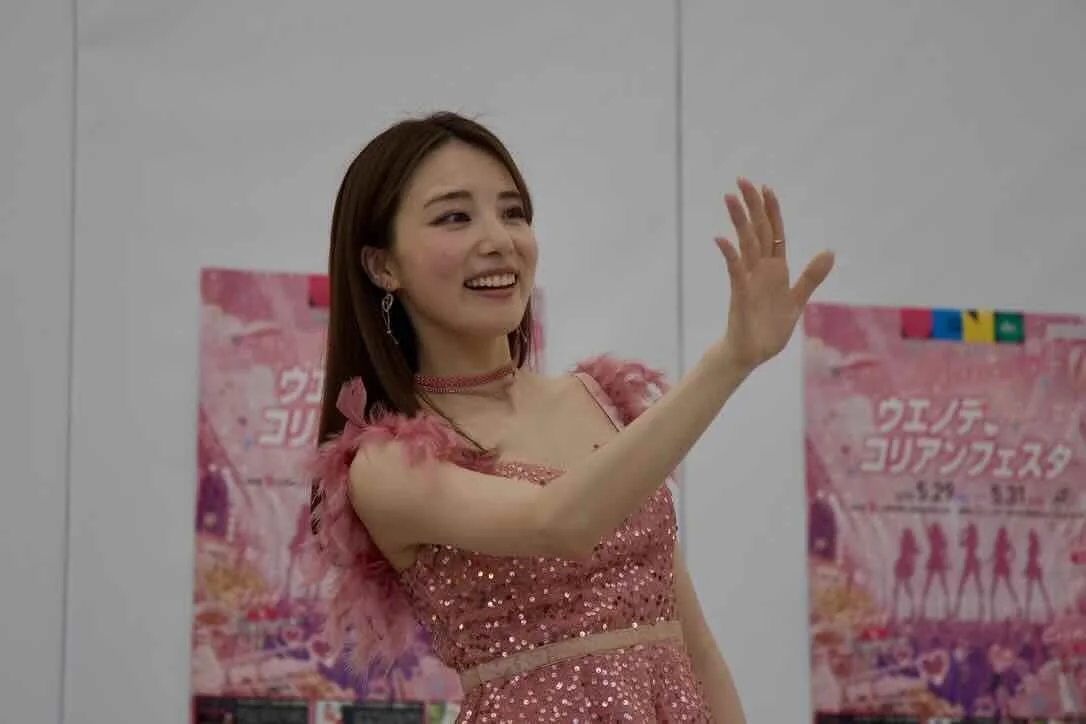
sis Ueno performance setlist
Performance order
- Umji Cheok
- DING DONG Kudasai · Korean version
- Aoi Sangoshou
- Michishirube
- Ai no Battery · Japanese version▶ Watch video
sis (SIS/T) appeared at Ueno de Korean Festa 2026, held at the Fountain Plaza in Ueno Park, Tokyo, on May 31, 2026.
Ueno de Korean Festa 2026 was a three-day Korean cultural event running from May 29 to 31. Organized as an outdoor festival, it brought stage performances, Korean food, and booths featuring culture and merchandise together in one place. On the final day, May 31, various performing teams and audiences continued to gather at Ueno Park’s Fountain Plaza, sustaining the festive atmosphere.
sis took the stage at 1:50 p.m. that day and performed five songs: Umji Cheok, a Korean version of DING DONG Kudasai, Aoi Sangoshou, the new song Michishirube, and the Japanese version of Love Battery, Ai no Battery.
By placing songs foregrounding Korean-language vocals alongside popular music familiar to Japanese listeners and a new song containing a member’s story, the group condensed its different colors into a relatively short time. KANO MIYU in particular naturally connected the changing moods of the songs, providing a steady center for the four members.
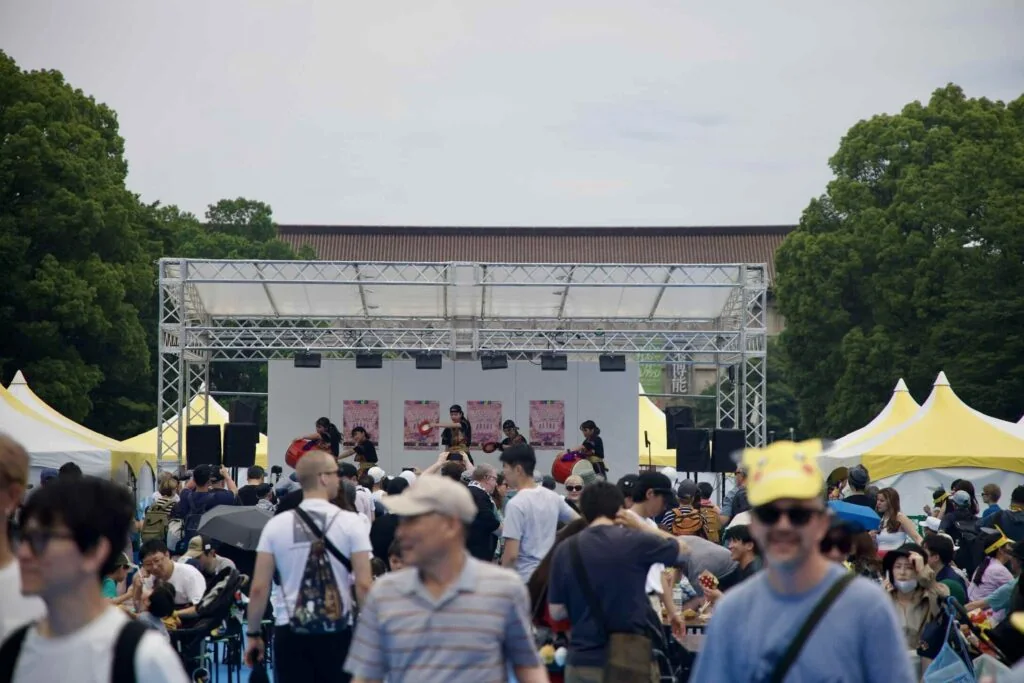
Three days of Ueno de Korean Festa: festivities continuing to the final day
Ueno de Korean Festa 2026 took place in Ueno Park, one of Tokyo’s representative cultural and tourist spaces. A large temporary stage and audience area were set up in the Fountain Plaza, surrounded by booths introducing Korean food, merchandise, and cultural information.
The final day, May 31, fell on a Sunday, bringing many visitors to the park as a whole. Alongside fans coming to the stage specifically for performances, families, tourists, and local people out for a walk naturally entered the event area to look around the stage and booths.
Approaching the Fountain Plaza, music from the stage could be heard deeper inside the park, while audiences continued arriving to match performance times. The same stage and booths as the day before were operating, but the fact that this was the festival’s last day seemed to heighten anticipation among performers and fans.
The Korean food booths sold items relatively familiar in Japan, including tteokbokki, fried chicken, hot dogs, and tornado potatoes. Visitors bought food and watched performances from in front of the stage or tables around the venue. Onstage, groups from different genres continued performing in the scheduled order.
The event was not limited to K-pop performances. Alongside stages based on Korean music, the program included performances combining traditional Japanese instruments and dance, percussion acts, and live appearances by idol groups and solo singers. Its structure was closer to a comprehensive cultural festival presenting Korean and Japanese cultures side by side on one stage.
Because the event was not aimed solely at fans of one genre, the stage atmosphere changed considerably with each performing team. The sounds of traditional instruments and forceful percussion rhythms might give way to an idol group or solo artist presenting popular music. While waiting for their own favorite team, audiences could naturally encounter the acts before and after it.
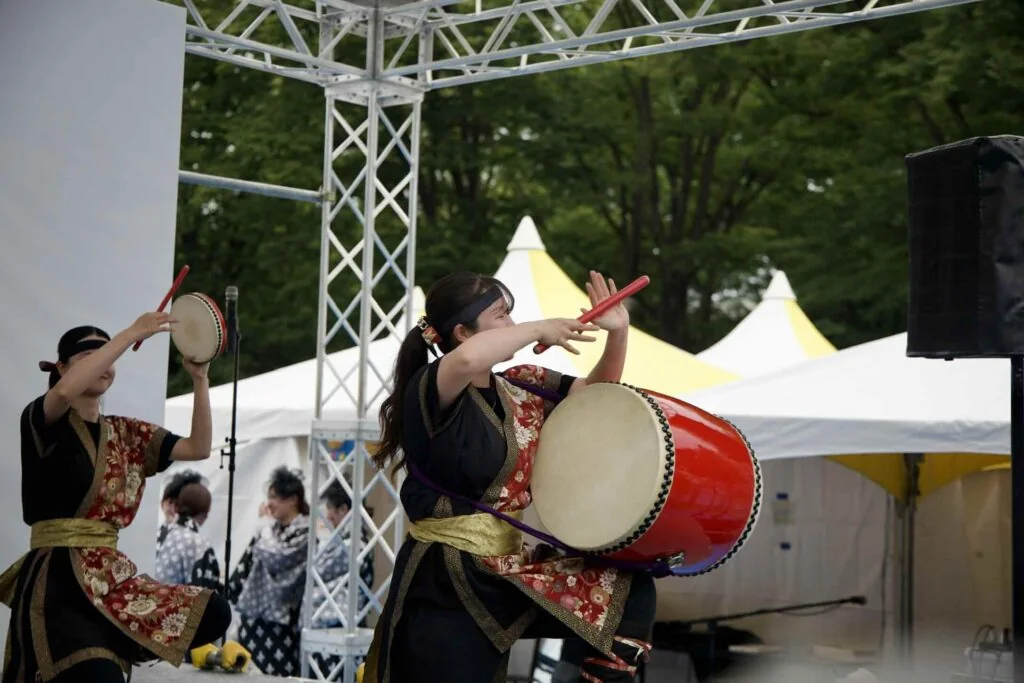
From traditional instruments to idols: a final-day stage broadening genre boundaries
Various performances continued before sis’s appearance. A percussion-centered team presented powerful rhythms, and another performance combined traditional Japanese instruments with dance. Idol groups and solo singers also took turns onstage, maintaining the flow of the event.
The name Korean Festa might suggest a K-pop-centered program, but the actual event leaned toward introducing different aspects of both Korean and Japanese culture. Korean music and food formed its center, while local Japanese artists and traditional cultural performances appeared alongside them, allowing the two countries’ content to intersect on the same stage.
This differed from a one-way introduction of Korean culture to Japanese audiences. Japanese performers participated through their own music and performances, and viewers enjoyed them naturally as one festival program rather than separating what they saw by country.
Immediately before sis appeared, a female solo singer took the stage and lifted the atmosphere. She sang while moving widely between both sides of the stage, responding actively to the audience and encouraging participation. Fans awaiting sis also responded naturally as they waited for the next act.
Arriving before a favorite artist’s appearance brings opportunities to encounter unfamiliar singers and teams. That day, too, people who had come for sis watched earlier performers, leading to the unexpected discoveries characteristic of an outdoor festival.
It was also apparent on site that recording rules differed between acts. Some teams allowed both photography and video, while others permitted photos alone or restricted recording altogether. Audience members checked announcements before each performance and watched according to the individual performer’s rules.
During acts that allowed recording, viewers documented the stage with phones and cameras; during restricted performances, they put their equipment down and concentrated on the show. Although many performers participated, relatively clear guidance on each act’s operating rules helped maintain overall order.
Audience arrangements changing with each act: fans gathering before sis’s turn
An area in front of the stage allowed viewers to sit or stand. As there were no assigned seats, people moved according to the performers and time of day, while each artist’s fans held places through earlier acts to watch from their preferred positions.
One performance also used the space at the front of the audience. Staff moved front-row viewers backward to secure the team’s movement route. Afterward, the audience moved forward again, changing the previous arrangement of places.
Some viewers lost the places they had initially secured in this process, but as teams changed, some fans moved and space opened again near the front. As sis’s appearance approached, waiting fans gathered before the stage and the atmosphere gradually shifted.
Fans who had supported sis not only in Tokyo but also at events in Fukuoka, Osaka, and elsewhere came to the venue. Those who had met repeatedly at different performances naturally greeted one another and exchanged stories about recent activities and the day’s stage as they waited.
It was also evident that relationships formed around the artist extended beyond performances in one area to other cities and event venues. The performance itself remained the main purpose, but the process of fans who had followed multiple events meeting again and sustaining their relationships was also part of concert culture.
Before the show, the sis members, including KANO MIYU, could also be seen behind the stage. Moving along backstage routes, they looked toward the gathered fans and exchanged brief greetings with some viewers. A short connection between members and fans had thus begun even before the actual performance.
sis arrives at 1:50 p.m.: pink outfits brighten the Ueno stage
At 1:50 p.m., sis, comprising KANO MIYU, MAKOTO., RIHOKO TARA, and AI ASAHI, appeared onstage. The four wore coordinated outfits centered on pink, creating a bright atmosphere suited to the outdoor event.
The outfits had previously appeared at the Kanda Myojin performance. They maintained the impression of four members belonging to one team while allowing individual personalities to remain visible. Even on the sunny outdoor stage, the pink stood out relatively clearly, connecting naturally with sis’s bright, approachable image.
Once the members came onstage, fans waiting in the front rows began responding in earnest. Existing fans cheered their entrance and the beginning of songs, while general visitors watching the surrounding event also turned toward the stage to see sis perform.
sis presented five songs within its allotted time that day. The selection ranged widely, including songs sung in Korean, a Japanese version of a Korean popular song, a long-loved Japanese song, and new material showing the group’s current direction.
The setlist proceeded through Umji Cheok, DING DONG Kudasai, Aoi Sangoshou, Michishirube, and Ai no Battery. Each differed in language, mood, and means of expression, allowing sis to show its multiple colors relatively clearly even within a short outdoor stage.
While handling their individual parts, the four adjusted the overall atmosphere as the songs changed. In bright, powerful numbers they actively used movement and audience interaction; in songs where emotion and message mattered, they placed more weight on singing and expressions to sustain the flow.
Opening with Umji Cheok: Korean-language selections lift the mood
The opening choice, Umji Cheok, clearly established the character of an event called Korean Festa. Its bright, lively rhythm and easily followed highlights also suited the atmosphere of an outdoor festival.
From the first song, sis actively invited audience reactions and quickly lifted the mood. Fans familiar with Korean songs responded readily, while Japanese viewers hearing it for the first time could enter the performance relatively naturally through the repeated rhythm and movements.
Umji Cheok’s strength lay in communicating its atmosphere through bright energy, the members’ expressions, and movement even when listeners did not understand every Korean lyric. As the opening song, it quickly narrowed the distance between audience and stage.
Presenting Korean popular music in its original language on a Japanese stage also had significance. Rather than explaining its content through adapted lyrics, the performance conveyed the rhythm and expression of Korean directly, showing Korean Festa’s identity from the outset.
KANO MIYU likewise guided the opening flow with bright expressions and steady movement. Instead of concentrating attention on herself, she coordinated with the other members and checked the audience’s responses, providing firm support for the beginning of the show.
The energy created in the first song carried naturally into the next. Although the performance itself was not long, rapidly establishing its atmosphere from the start laid a foundation for the remaining four songs to show their different characters.
DING DONG Kudasai in Korean: a selection where two cultures overlap
The second song, DING DONG Kudasai, was performed in Korean. Singing a song with Japanese in its title in Korean created a stage in which elements of the two countries overlapped naturally within one piece.
sis had also performed this song in Korean at the earlier Meguriai Thank-You Concert vol.10. Having chosen Korean vocals at an event themed around Korean–Japanese cultural exchange, the group again offered a selection well suited to the character of its Ueno Korean Festa stage.
DING DONG Kudasai suggests an encounter between the countries’ languages from its title alone. Adding Korean vocals delivered both a familiar expression and an unfamiliar language to Japanese listeners, while giving Korean viewers a chance to see sis singing Korean in Japan.
Placing another Korean-language song after Umji Cheok made the opening’s Korean colors clearer. Rather than emphasizing Korean as something special or difficult, the group integrated it naturally into a bright performance so that language differences would not obstruct audience participation.
MIYU maintained the song’s bright, friendly atmosphere while providing a center that kept the four members’ rapport intact. Instead of foregrounding one singer, she naturally linked their gazes as parts changed, and remained attentive to the team’s overall movement even while responding to the audience.
This approach was particularly important on a short outdoor stage. Catching the attention of visitors moving around requires a song’s mood to be clear from the beginning. sis used Korean vocals and bright performance together to establish the character of its show quickly.
A shortened Aoi Sangoshou: a familiar melody linking generations
The third song was Aoi Sangoshou. As one of Japan’s representative popular songs, its melody was familiar to local listeners and shifted the atmosphere once again.
Aoi Sangoshou was presented in a shorter edit than usual that day. This appeared to be a structure allowing five songs within the limited performance time. Instead of presenting the entire song, the group condensed the stage around its essential atmosphere and familiar melody.
Although the absence of a full version might leave some disappointment, it allowed five songs of different characters to appear in one performance. The group effectively chose to show a broad range of its colors rather than allocate a long time to one number.
Aoi Sangoshou also served a different role from the preceding Korean songs. While Umji Cheok and DING DONG Kudasai directly expressed the event’s character through Korean vocals and bright performance, music familiar to Japanese listeners narrowed gaps of generation and language.
Including Japanese popular music in an event introducing Korean culture also reflected Korean Festa’s emphasis on exchange. Instead of delivering Korean songs in one direction alone, the setlist placed familiar Japanese music alongside them, allowing both countries’ music to continue on one stage without separation.
MIYU and the other members brought out the song’s refreshing, bright image, maintaining the preceding two songs’ energy. Focusing on the familiar melody, expressions, and the harmony of the four rather than forceful performance, they settled the middle of the show into a relatively comfortable mood.
Michishirube, with lyrics by AI ASAHI: a warm message changes the stage’s temperature
The fourth song was sis’s new Michishirube. Where the first three approached listeners through brightness and familiarity, Michishirube gave greater importance to conveying lyrics and emotion.
AI ASAHI participated in writing Michishirube’s lyrics, which carry a warm message suggesting finding someone’s path together and staying beside them. A member writing the lyrics herself gave it a different meaning from simply receiving and singing a song completed outside the group.
It was also striking that a story beginning in AI ASAHI’s words expanded through the voices of KANO MIYU, MAKOTO., and RIHOKO TARA into a message from all of sis. One member’s thoughts and feelings became a team song through the singing of all four.
As the song began, the stage atmosphere changed naturally. The members briefly set aside the bright, active audience engagement of the preceding songs and concentrated on conveying the warmth of the lyrics and melody. Rather than large movements, their voices and expressions carried the emotion.
MIYU’s expression was more restrained in this song as well. Rather than letting emotion burst out, she calmly held it within her voice and maintained a flow connecting to the others’ singing even after her own part ended. It revealed a singer’s steadiness in knowing when to reduce strength rather than add more.
Placing Michishirube among the bright energy continuing from the opening added depth to the overall setlist. The number showed sis could convey warm messages and lyrical feeling as well as approachable, lively songs.
Ending with Ai no Battery in Japanese: another language added to a familiar song
The last song was Love Battery, presented as Ai no Battery. At another earlier Korean–Japanese cultural exchange performance, the group had used both Korean and Japanese, but at Ueno Korean Festa that day it performed the Japanese version.
Singing a representative Korean trot hit in Japanese made its lyrics and atmosphere more accessible to Japanese listeners. The original’s bright, exuberant energy remained, while the change of language narrowed the distance to the local audience.
The structure of opening with Umji Cheok and DING DONG Kudasai in Korean, then ending with Love Battery in Japanese, also mattered. The opening conveyed Korean’s rhythm directly, and the ending approached the audience in a familiar language, moving between both countries’ languages within one setlist.
This selection showed that the group did not interpret Korean Festa’s character merely as singing songs in Korean. Redelivering a Korean song in Japanese was itself a form of cultural exchange, demonstrating onstage that different languages could share the same melody and emotions.
Love Battery also prompted responses on site. Listeners who already knew it reacted to the familiar melody, while some encountering sis for the first time showed interest in the bright atmosphere and the four members’ singing. Afterward, online reactions from people at the event also described sis’s live vocals and this song as memorable.
Even in the final song, MIYU coordinated with the members to shape the ending rather than pull the stage excessively toward herself. Bright expressions and steady singing maintained the mood, and she continued looking toward the audience to complete sis’s performance.
KANO MIYU connecting each song’s center: a presence accumulated rather than displayed
In sis’s performance that day, KANO MIYU’s presence accumulated naturally across all five songs rather than concentrating in one scene. Instead of drawing attention strongly only in her own parts, she watched the songs’ flow and the other members’ positions, maintaining the team’s center.
In Umji Cheok and DING DONG Kudasai, her bright expressions and powerful movement created the opening energy. Even as she responded directly to the audience, she remained aware of the four members’ movement routes and rapport, naturally connecting gaze and movement as parts passed to another member.
In Aoi Sangoshou, she comfortably expressed the song’s familiar, refreshing sensibility. Rather than overloading her delivery to leave a strong impression, she aligned herself with the melody’s flow, naturally handling the setlist’s change from Korean songs to Japanese popular music.
Michishirube revealed MIYU’s restrained expression more clearly. She calmly contained emotion within the lyrics and her voice instead of pushing it forcefully, balancing with the other members so that AI ASAHI’s warm message could reach listeners through the entire team’s voices.
In the final Ai no Battery, she returned to a bright, approachable atmosphere to conclude the show. Moving between Korean and Japanese songs, bright performance and lyrical new material, she adjusted expressive intensity while maintaining consistent steadiness across the stage.
MIYU’s stage sophistication does not come simply from clothes or appearance. Her experience is visible in judging when to step forward and when to pass the center to another member, and in retaining the audience’s attention without exaggerating emotion unnecessarily.
Her present stage also connects to the time she spent growing up in Omuta, traveling to Fukuoka while preparing for her dream of singing, then moving to Tokyo at eighteen and establishing a place through repeated challenges. Having built a center that does not easily waver before a quickly formed image, her presence remains clearer after watching the whole performance to the end than after a single forceful scene.
That day, too, MIYU did not obscure the other members’ colors to emphasize her own presence. She supported the stage so MAKOTO., RIHOKO TARA, and AI ASAHI could reveal their individual vocal tones and expressions, and when needed reestablished the four’s center through steady singing and movement.
Ultimately, MIYU’s strength was not in leading sis’s stage alone. Her role was closer to connecting four differently colored members so they appeared as one team, adjusting the stage’s temperature with each song. It was a way of leaving a clear impression after the show without pushing herself to the front.
sis formed by four solo abilities: different vocal colors broaden the stage
sis brings together KANO MIYU, MAKOTO., RIHOKO TARA, and AI ASAHI, but is distinctive in that all four are vocalists with individual colors. Rather than matching their voices and expression in the same way, they build a stage while retaining different strengths.
This quality emerged more clearly in a performance where all five songs differed in atmosphere. Genres and languages changed quickly, from bright, lively Korean songs to Japanese popular music, a warm new song, and trot, but the members adjusted their expression to each.
MAKOTO., RIHOKO TARA, and AI ASAHI broadened the performance through their own vocal colors and stage styles. Rather than the others one-sidedly adapting to one person’s voice, the center shifted naturally according to song and part, revealing each personality in turn.
Michishirube, with AI ASAHI’s participation in the lyrics, particularly showed the possibility of individual creativity becoming team music. All four sang the message she expressed in words, expanding a personal story into the voice of sis as a whole.
sis did more than introduce Korean music on a Japanese stage: it chose Korean or Japanese according to the song to create connections with listeners. The two songs sung in Korean conveyed the original language’s rhythm and energy, while Ai no Battery in Japanese made the lyrics more accessible to local audiences.
Moving between different genres and languages can make a program difficult to unify, but the four retained their own colors while keeping the overall atmosphere together. MIYU held the central flow, while MAKOTO., RIHOKO TARA, and AI ASAHI added individual expression, creating sis’s current balance.
After the show, some audience members indeed described sis as a team whose four members each had solo-singer abilities, and said they wanted to continue following their individual work. Interest expanded from the group to each member after seeing one team performance, indicating that their individual colors had come across effectively.
Filming after the performance: artists sustain the final-day atmosphere
The event did not immediately pack up after sis finished. The next scheduled activities continued onstage, while behind it, performers including the sis members could be seen taking group photographs together.
Short video content was produced alongside the photographs. The performers filmed material for TikTok and other social media, continuing to connect their activities after their stage appearances. As a festival bringing different teams to one stage, it also saw performers continue documenting its final day.
Fans lingered around the stage and near the performers’ waiting tents, enjoying the afterglow. Some checked their photographs and videos, while others discussed the day’s setlist and upcoming schedules.
Five songs between Korean and Japanese: decorating Korean Festa’s final day
Overall, sis’s Ueno de Korean Festa 2026 stage brought Korean and Japanese, Korean popular songs and familiar Japanese melodies, and the group’s new material into one setlist.
Umji Cheok opened with bright energy, and DING DONG Kudasai in Korean naturally brought elements of both countries together within one song. The shortened Aoi Sangoshou conveyed a familiar sensibility to Japanese viewers, while Michishirube, with AI ASAHI’s lyrics, presented warm words and the members’ restrained expression.
The final Ai no Battery was performed in Japanese, delivering Korean popular music in a language closer to local listeners. Beginning in Korean and ending in Japanese vocals, sis naturally incorporated the event’s Korean–Japanese cultural exchange character into the whole setlist.
KANO MIYU maintained the four members’ center while adjusting expressive strength and the stage’s temperature across five different songs. Rather than pushing herself excessively forward, she connected the flow between songs and members, retaining steadiness as she moved between bright performance and lyrical singing.
MAKOTO., RIHOKO TARA, and AI ASAHI likewise broadened the show with their individual vocal colors and expression. Rather than making their different colors identical, the four completed a stage as sis while retaining their individual strengths.
On the final day of the three-day Korean Festa, sis presented five songs connecting Korean and Japanese music in afternoon Ueno Park. Moving between the languages and from familiar popular music to new songs, the stage showed how cultural exchange can take shape more naturally within music than through grand explanations.
MIYU’s presence in particular remained not as a display of herself alone at center stage, but as a steady guide for the entire show who also brought the others’ colors to life. She was a center that drew the eye without forceful insistence and left an impression after the performance ended.
sis’s stage at Ueno Park’s Fountain Plaza was among the final day’s performances most directly connecting the two countries’ languages and music. The four members’ rapport, together with KANO MIYU’s firm center, made even a short performance an opportunity to see the group’s present direction and potential.
Related sources
Related event footage
Related event footage from Diego’s channel.
View all videos · 1

KANO MIYU changes the mood from afternoon to evening — Hanno Music Festival 2026

KANO MIYU returns to Fukuoka through song — Daikoku Festival 2026
KANO MIYU and SIS at the crossroads of Kuro Fes 2026
MAKOTO. places her own song among familiar classics — Kabukicho Street Live

sis in Atami, Part 2: Evening Falls on the Same Stage