REVIEW · Concerts & Live
sis Connects Two Languages at Meguriai Thank-You Concert vol.10
Featured songs at the Meguriai Thank-You Concert
Featured repertoire · not in performance order
- DIVER
- Michishirube
- Aoi Sangoshou
- DING DONG Kudasai · Korean version
- Ai no Battery · Korean and Japanese
“DING DONG Kudasai” was performed in Korean; “Ai no Battery” divided its singing between Korean and Japanese.
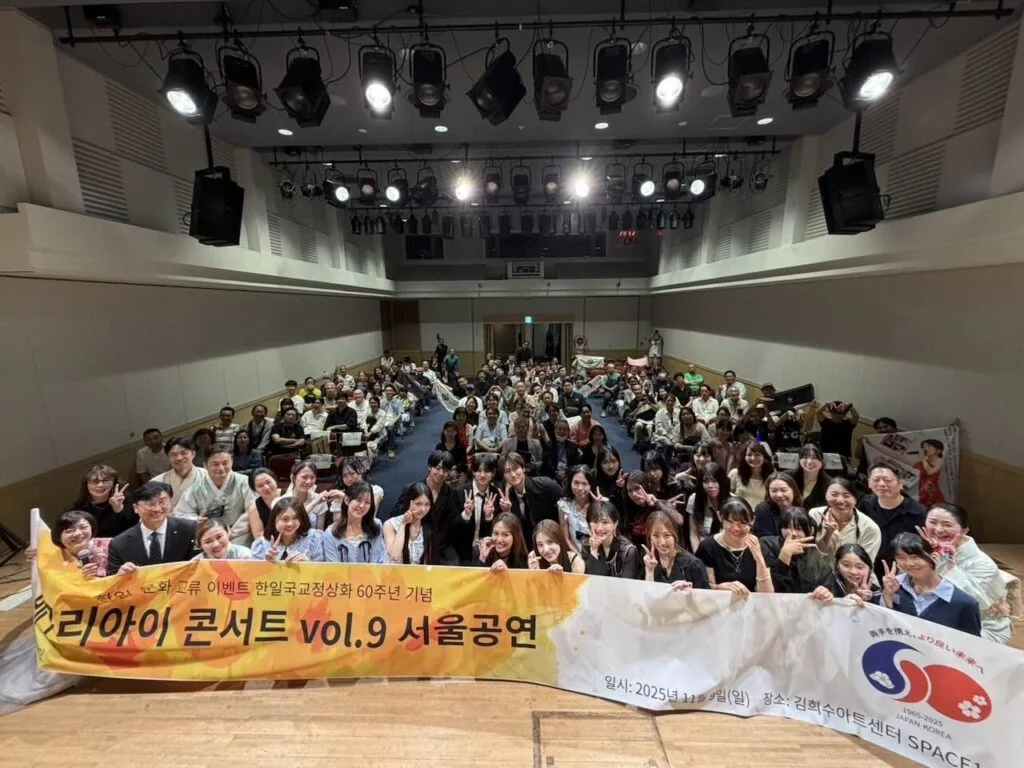
sis (SIS/T) appeared at Meguriai Thank-You Concert vol.10 on August 1, 2026, at Ota City Hall Aprico’s Small Hall in Tokyo.
Organized for Korean–Japanese cultural exchange, the event brought performers from different genres and backgrounds together to present music and performance. Choir, piano and mandolin, Korean traditional instruments and K-POP cover dance appeared in succession, followed by sis’s live performance in Part 3.
The group closed the entire program. Where earlier stages introduced the countries through tradition and popular culture, choir and dance, Part 3 developed into a full artist performance centered on the vocals and performance of KANO MIYU, MAKOTO., RIHOKO TARA and AI ASAHI.
Korean versions and songs combining both languages naturally incorporated the exchange theme. Rather than merely listing languages, the members connected them within songs and a single stage, expressing the occasion’s meaning directly.
Ten editions of Meguriai Thank-You Concert: exchange sustained through music
The concert is a cultural-exchange event continuing since 2015, the fiftieth anniversary of diplomatic normalization. Its tenth edition thanked participating performers, organizers and audiences while reaffirming exchange through music and performance.
It resembled a comprehensive cultural presentation across generations and disciplines more than a single-genre concert. Korean and Japanese participants presented their own music and dance while creating one shared stage. The participation of choirs, dance teams and traditional instrumentalists alongside professional artists also distinguished it from an ordinary solo concert.
The three parts shaped the flow. Choir, instrumental music and Korean tradition opened calmly in Part 1; K-POP cover dance created a faster, more dynamic Part 2. The final live set gathered the preceding genres into a finale.
The sequence from choir to instruments, tradition to K-POP, then four-member live performance clearly showed the event’s character. Rather than separating genres, atmosphere and expression expanded as it progressed. The final stage gathered tradition and modernity and both countries’ connections into one flow.
The Small Hall suited the multiple groups. Closer distances than in large halls conveyed expressions, movements and changing moods directly. The emphasis was less displaying scale than bringing each performer’s music and expression near the audience.
Part 1 opens with choir and instruments: different music meets
Manna Youth Choir opened Part 1. Film music and choral works highlighted the resonance of multiple voices together. Rather than elaborate movement or visuals, song and harmony provided a relatively calm beginning.
Choir emphasizes balance between parts over a single voice. Voices meeting within melody and overlapping roles to create a whole naturally connected with the exchange theme. The first item anticipated a program completed by different participants contributing in their own ways.
The piano–mandolin duo played “Serenata malinconica,” “Saltarello,” “When I Grow Up” and other pieces. Clear, detailed mandolin tones joined the piano’s steady melody, broadening the show differently from choir. It demonstrated how voices and instruments can create distinct atmospheres within one concert.
The traditional-instrument program included “Arirang” and “Areumdaun Nara.” Directly presenting representative Korean melodies and traditional timbres at a Japanese exchange event was meaningful. Arirang’s familiar emotion and the lyrical flow of the other piece conveyed Korean music naturally to local audiences.
Part 1 notably avoided presenting Korea as one fixed image. Tradition was not merely a separate symbolic segment: its natural connections with choir and Western instruments allowed different music to coexist. Actual sounds and melodies conveyed the purpose more than formal explanation.
The progression from calm choir through delicate piano and mandolin to Korean traditional feeling established a foundation. Different genres and instruments moved naturally into one another rather than remaining isolated, preparing a flow that could accommodate later dance and live music.
K-POP cover dance changes the mood: intergenerational exchange in Part 2
Part 2 moved faster through K-POP dance. Team Meiji presented EXO’s “Growl” and JUNG KOOK’s “Standing Next to You.” K Culture Dance School performed a medley including BTS’s “IDOL” and YENA’s “NEMONEMO.” Cover-dance circle mirae continued with varied performances including aespa and Hearts2Hearts songs.
Where Part 1 focused on voices, instruments and traditional melodies, Part 2 foregrounded dance and movement. Teams interpreted signature choreography and atmosphere in their own ways, with group movement quickly changing the pace. Korean music naturally appeared in entirely different forms through traditional instruments and modern K-POP.
Selections extended beyond one K-POP period, from long-loved EXO and BTS to JUNG KOOK’s solo work, YENA, aespa and Hearts2Hearts. Different generations and styles showed K-POP extending beyond one fashion in Japan into a culture open to multiple generations.
Cover dance is another exchange form because local Japanese participants reinterpret Korean popular culture with their own bodies and expressions rather than only reproducing recordings. Learning choreography and performing moves beyond consumption, making participants active subjects of the show.
The dance stage also raised the latter half’s atmosphere. Choir and instruments gave way to energy and naturally led into sis. More than successive introductions, genre changes gradually expanded the entire concert’s pace and force.
The first two parts thus showed different connections: traditional melodies, instruments and choir concentrated on music itself, while contemporary K-POP and movement conveyed more direct, dynamic exchange. Both currents led to sis’s final live performance.
The main act of Part 3: a five-song finale by sis
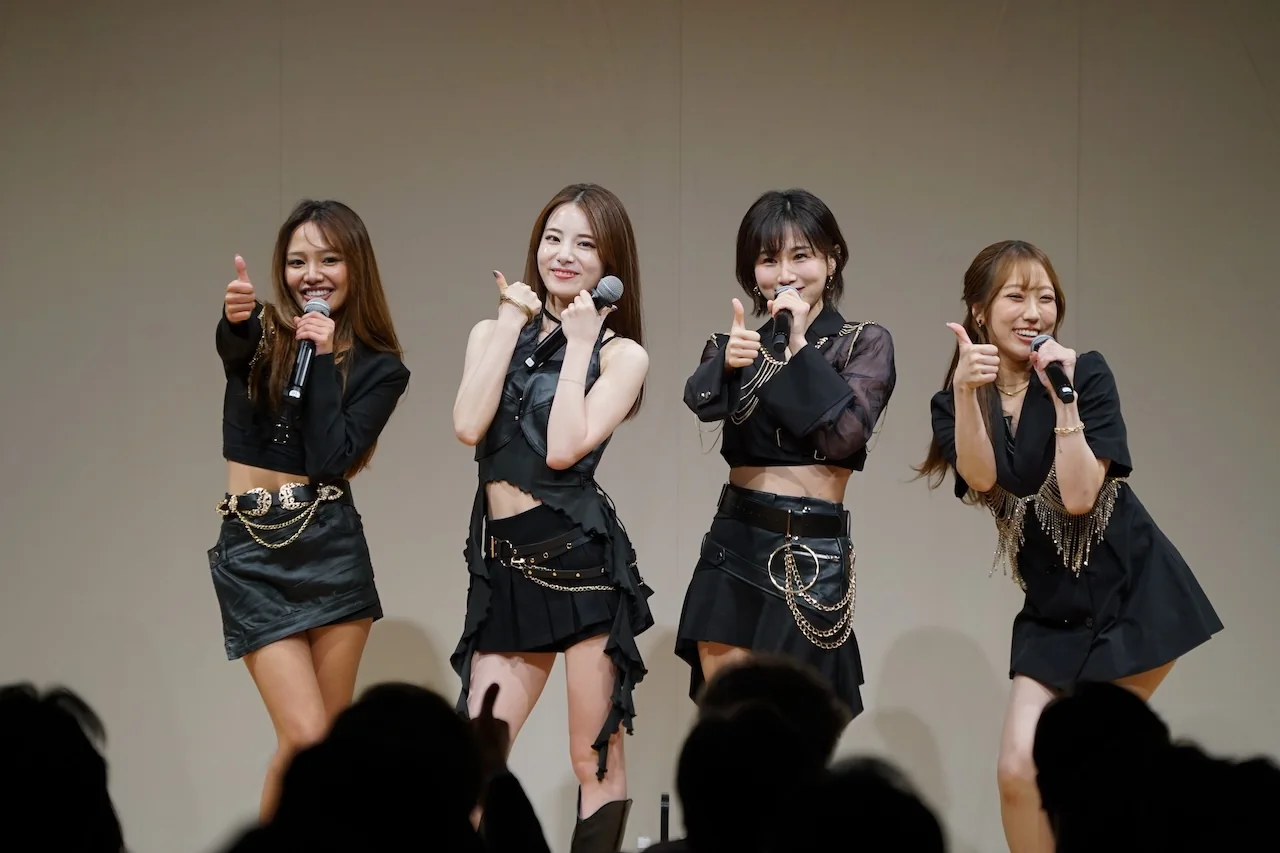
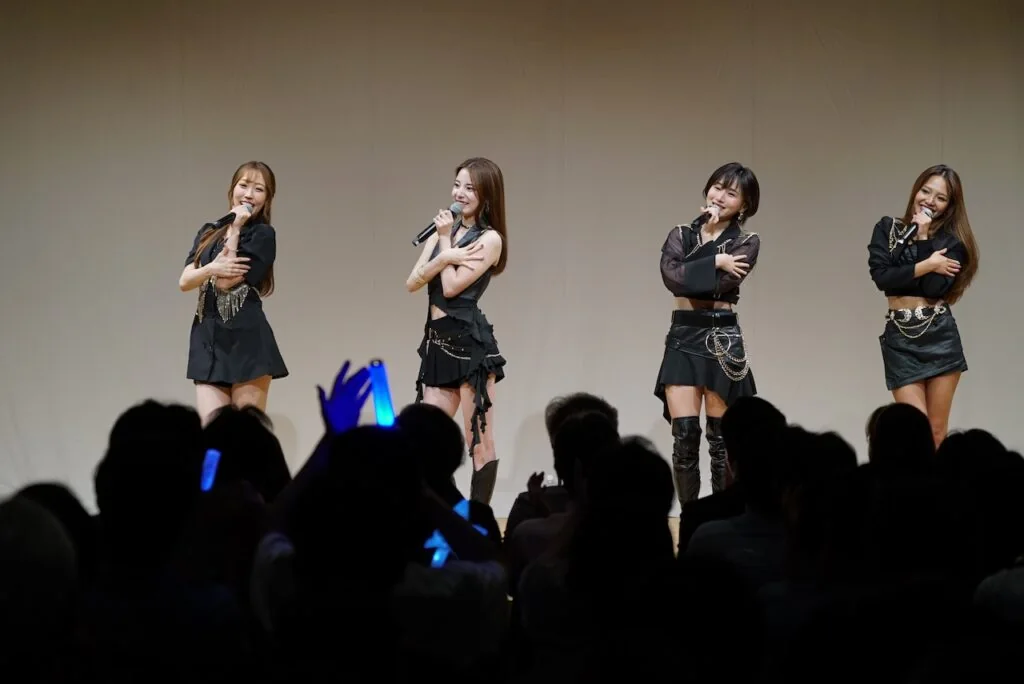
After both earlier parts, sis took the stage as the final main artist. KANO MIYU, MAKOTO., RIHOKO TARA and AI ASAHI inherited the flow of choir, instruments, tradition and dance, presenting a full live show centered on their vocals and performance.
Closing a multi-group exchange event means more than being scheduled last. It requires sustaining the preceding atmosphere, organizing the whole and taking responsibility for its final impression. Filling all of Part 3, sis provided the finale.
The five songs were the dynamic new “DIVER”; warm new song “Michishirube,” with lyrics contributed by AI ASAHI; “Aoi Sangoshou”; “DING DONG Kudasai”; and “Ai no Battery.”
Their moods and expressions differed clearly. Some emphasized force and performance, others lyrical and emotional communication. Familiar cross-generational music and bilingual singing added breadth beyond one genre or concept.
New viewers could hear four distinct tones and expressions in one program. Existing fans could compare five contrasting songs, including the new “DIVER” and “Michishirube,” within a single performance.
The center was the four members’ live singing and coordination. Each showed individual color in her part while balancing the whole. Rather than one voice dominating, the focus moved naturally with the music. Individual strengths preserved one overall atmosphere.
Their difference from the preceding dance stage also stood out. Part 2 emphasized group choreography and speed; Part 3 brought singing, expression and live coordination forward alongside movement. The program returned from dance toward voices and live music, concluding its varied forms through an artist performance.
Dynamic “DIVER,” warm “Michishirube”: new songs broaden the stage
“DIVER” was the most dynamic selection. Strong beats and quickly changing movements foregrounded the four members’ energy. Beyond a bright, approachable image, the stronger contemporary mood raised the pace.
Singing and choreography formed one flow. While changing positions and continuing movement, members sustained their parts, emphasizing teamwork where movements overlapped. With more choreography than before, the song demonstrated a wider expressive range.
By contrast, “Michishirube,” with AI ASAHI’s lyrical contribution, created another temperature. Its title means a signpost, and its warm message suggests finding direction beside someone. Lyrics and feelings mattered more than forceful movement, and the four concentrated on calmly conveying that atmosphere.
A member’s writing made it more special. Rather than simply receiving a completed outside composition, the song contained a member’s thoughts and language. AI ASAHI’s warm lyrics expanded through the others’ voices, turning a personal story into a team message.
Contrasting as they were, placing the songs together clarified the present direction. Dynamic performance and lyrical warmth showed sis broadening expression rather than remaining within one image.
Familiar feelings through “Aoi Sangoshou”: narrowing generational distance
The song refreshed the atmosphere differently from the new material. As a long-standing representative of Japanese popular music, its familiar melody had strength, making it accessible to listeners with different generational memories.
It also represented a Japanese musical current within the exchange event. Korean tradition in Part 1 and contemporary K-POP in Part 2 were joined by familiar Japanese song in Part 3, bringing several musical eras together.
MIYU and the others emphasized its bright freshness, unlike their new songs. Where “DIVER” foregrounded energy and movement, this favored melodic familiarity and lightness. It changed the set’s temperature while connecting to the next stage.
Balancing new and familiar songs matters in intergenerational events. All-new material might clearly show direction but feel remote to newcomers. This selection narrowed that gap and provided a comfortable entrance.
Four distinct colors: the center moves with each song
The members filled the stage with different voices and approaches. With clear personalities, the center shifted by mood and arrangement rather than one person leading everything. Each displayed her color while receiving the others’ voices and movement to maintain balance.
Five contrasting songs revealed individuality in several ways: forceful performance, warm emotion, relaxed familiar melodies and bilingual approaches to both audiences. Members adjusted expression to create different moods.
“DIVER” foregrounded energy; “Michishirube” emphasized warm words and calm expression; “Aoi Sangoshou” brought freshness. The other two naturally crossed language boundaries and directly embodied cultural exchange.
Rather than making differences identical, sis let each emerge according to the song. Changes of part brought natural changes of tone and mood within songs, finally gathering individual expression into teamwork. Distinct colors prevented monotony.
KANO MIYU holds the flow: steadiness from years of persistence
Rather than forcing attention toward herself, she connected the different personalities into one flow. Raised in Omuta, Kyushu, she developed her dream through school-year trips to Fukuoka before moving to Tokyo at eighteen and building her stages in earnest.
Experience accumulated through long preparation and repeated challenges rather than sudden attention. Here too she maintained the whole and the four-person balance over emphasizing her own part. Adding weight when needed and stepping back for others, she regulated the overall temperature.
Her steadiness resembled accumulated experience through challenge and renewed attempts. Years of not readily abandoning the stage despite unwanted results connected with maintaining the song and team rather than asserting herself. Without lengthy career explanations, that time emerged in supporting the performance and sustaining coordination.
This became clearer across five different songs. In “DIVER,” she powerfully handled strong performance and contemporary atmosphere, raising energy. Even through rapid movement she maintained the flow and her place within the collective performance.
“Michishirube” changed her approach: less force and more restrained expression let warm lyrics arrive naturally. She preserved fresh familiarity in “Aoi Sangoshou” and a more relaxed mood in the other bright, approachable songs.
She adjusted not only face or movement but the amount of force and density of feeling. Energetic songs gained pace; voice- and lyric-centered songs lost excess. She maintained consistent steadiness without staying in one image.
Her strength is closer to responsibility through the end than overpowering a stage. She contains emotion within songs and coordinates four voices and movements rather than emphasizing only herself. Time accumulated from Omuta through Fukuoka and Tokyo and repeated attempts appeared as stability not easily shaken.
That did not obscure the other members. She supported their natural tones and expressions and linked different personalities so they did not appear disconnected. Looking at the whole rather than only her foreground moments made her role clearer.
Her presence consequently accumulated throughout rather than through one forceful scene. The team’s unity without lost individuality also reflected her choices of necessary expression and overall balance.
Korean “DING DONG Kudasai,” bilingual “Ai no Battery”
These two most directly expressed the event’s purpose. The former was Korean; the latter divided lyrics half-and-half between Korean and Japanese, naturally moving between them within a song.
A Korean version of a Japanese-titled song particularly matched the occasion. Korean singing on a Japanese stage retained brightness and accessibility. Language difference became a means of connecting cultures rather than making performance difficult.
“Ai no Battery” made this clearer. Combining original Korean and Japanese words conveyed familiar feeling to Koreans and accessible content and mood to Japanese listeners. Neither complete adaptation into one language nor unchanged reproduction, it held both together.
Their succession let audiences share the same melody and feeling in both languages. The bright, lively flow continued through changes, naturally showing that different languages can communicate the same emotion.
This connected with the earlier program. “Arirang” and “Areumdaun Nara” presented Korean traditional feeling and timbre in Part 1, and K-POP dance represented contemporary culture in Part 2. The Korean version and bilingual song completed that exchange through vocals.
The members preserved both songs’ bright approachability while avoiding awkwardly separated language changes. Pronunciation and language became natural parts of the song rather than special devices, letting both coexist onstage.
For varied ages, familiar melody combined with different languages broadened access. Listeners could receive songs in their accustomed language while sharing the same melody and stage.
The singing communicated the purpose through performance rather than formal explanation. Instead of introducing Korea unilaterally, movement between languages created connections. The stage used differences rather than erasing them, showing cultures meeting naturally.
Exchange through the end: sis completes Meguriai’s third part
The concert introduced and shared both cultures through varied music and dance. Its significance lay in participants contributing in their own ways rather than unilaterally displaying one country or genre.
Choir and traditional instruments conveyed foundational feeling; dance expanded it youthfully and dynamically; sis organized it as live performance. New songs, familiar music, Korean versions and bilingual singing formed the final main show.
For sis too, it meant more than an event appearance. Closing the multiple-group exchange and filling Part 3 with five songs fulfilled a main-artist role. Newcomers saw music and personalities; fans saw the four members’ present, including new material.
“DIVER” broadened performance; “Michishirube” showed member thoughts entering the music. “Aoi Sangoshou” refreshed the mood with cross-generational familiarity, and the bilingual selections most directly conveyed the purpose.
Within this, MIYU maintained the whole rather than asserting one scene. Growing in Omuta and preparing through Fukuoka and Tokyo, repeated challenges built a resilient stance. She supported distinct personalities while adding clear energy and expression when needed.
Completing one team while retaining individuality also mattered. Her stable center and the others’ tones and expressions created balance. The significance was preserving strengths to complete a team color rather than erasing personality to fit one form.
Overall, tradition and modernity, choir and dance, instruments and live singing met. The final group gathered those currents into five songs and conveyed the purpose more clearly through both languages.
If the tenth concert sustained encounters through music, Part 3 was a finale showing that exchange continues. From tradition to K-POP and live singing, the evening closed by reaffirming the possibility of cultures and generations meeting on one stage.
Related sources
KANO MIYU changes the mood from afternoon to evening — Hanno Music Festival 2026

KANO MIYU returns to Fukuoka through song — Daikoku Festival 2026
KANO MIYU and SIS at the crossroads of Kuro Fes 2026
MAKOTO. places her own song among familiar classics — Kabukicho Street Live

sis in Atami, Part 2: Evening Falls on the Same Stage