REVIEW · Concerts & Live
AIKO SUMIDA and OVAL SISTEM: A Band Sound That Filled Kichijoji SHUFFLE

Confirmed songs from the performance
The full setlist and running order remain unverified. These two songs are confirmed in the article; the list below is not in performance order.
- Never Alone
- I Surrender
A small live show at Kichijoji SHUFFLE
Japanese band OVAL SISTEM performed at SHUFFLE in Tokyo’s Kichijoji district. With audience and stage close together in a small live club, the emphasis lay on the band’s sound and the room’s atmosphere rather than large-scale production.
Kichijoji has a lively live-club culture, regularly hosting band shows distinct from arena concerts. SHUFFLE is likewise known for independent bands and smaller acts. The short distance and limited size made the density of live performance particularly apparent.
As showtime approached, the room filled quickly, with spectators reaching the rear and creating a concentrated heat. According to someone involved in the event, attendance was higher than usual. Once the music began, the audience appeared packed all the way to the back.
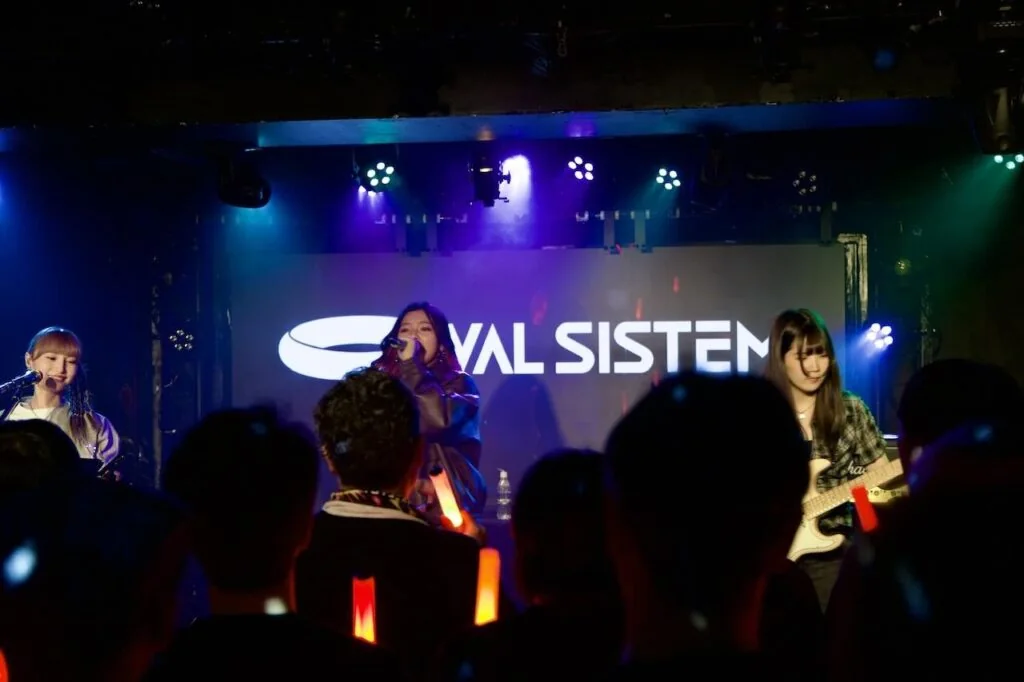
A forceful band sound centered on AIKO SUMIDA
AIKO SUMIDA’s vocals stood at the center. From the opening, she placed an assured voice over the strong band sound, moving quickly between songs and sustaining a high energy level through several consecutive numbers. The venue was small, but the pressure of the sound and vocal force were considerable.
It felt quite different from the television image familiar to Korean viewers. Known through Trot Girls Japan, Korea–Japan Singer King and Korea–Japan Top Ten Show, Sumida revealed a stronger rock-vocal character with OVAL SISTEM. Beyond the stable singing associated with broadcasts, she pushed energy through the band’s sound.
“Never Alone” and “I Surrender” were among the memorable songs. Some felt familiar through their drama connections, while the melodic lines and structures of Japanese rock made unfamiliar material accessible within the set. Emotional melody and forceful band sound repeatedly crossed paths.

OVAL SISTEM’s connection with KANO MIYU
Guitarist iBerry’s absence was noticeable. Unable to participate because of health issues, the regular member was replaced by another guitarist for this show.
The absence did not create a major gap in the performance. The substitute played steadily, and the overall balance remained intact. It felt less like improvising around a sudden vacancy than an effort to deliver the scheduled show as reliably as possible.
Even so, the absence naturally registered with some listeners, especially those aware of KANO MIYU’s connection to the band. She played iBerry in Chika Idol no Houteishiki, a drama based on OVAL SISTEM. Her guitarist role formed a direct link, prompting a number of fans to become interested in the actual group.
After that role, interest in OVAL SISTEM continued among some MIYU fans. Discovering the band’s music and atmosphere through the drama led them to related concerts and activities.
The show therefore had an added interest for those who discovered the band through MIYU. With iBerry absent, the drama and real stage came naturally to mind together.
A restrained but attentive audience
The audience was relatively calm. Rather than the loud cheers and large singalongs common at Korean venues, the mood favored listening closely to the music. Some songs drew applause and responses, but overall the room reflected a quiet, concentrated live-club culture.
The atmosphere grew warmer in the latter half. For the final section, listeners were encouraged to stand, and the encore brought the room toward a peak. Sumida appeared pleased with the response, and the distance between stage and audience seemed to narrow further.
The small venue made that feeling direct. Instead of overwhelming cheers and production, the band’s sound and the voice’s emotional line reached listeners at close range. The show was an experience of the room itself as much as a chance to hear music.
Instant photographs after the show
An instant-photo benefit session followed. Members came toward the audience to take pictures and exchange brief conversations. The pace was not excessive, allowing talk to continue naturally after a photograph. It felt more like greeting fans after a concert than simply taking a picture and moving on.
The amount of conversation time was surprisingly generous. Where some idol benefits move people on immediately, here fans could be seen talking for at least a minute, sometimes nearly two. Impressions of the show and brief updates passed comfortably between them.
Agency personnel were also visibly working directly on the event. Rather than a large project, it felt like a small team running its own venue operations, contributing to the intimacy of the live-club setting.
Many recent idol and live-event benefits move rapidly, with an immediate change to the next visitor or only a few seconds for greetings. Here, there was room for a brief, natural conversation. The modest scale helped make that possible, producing satisfaction beyond a simple photo opportunity.
A stage that conveyed the immediacy of a live band
SHUFFLE offered something distinctly different from a large concert. Instead of giant LEDs or elaborate equipment, band sound and vocal energy reached the audience directly. Its small scale made the density and immediacy clearer.
The proximity was particularly memorable. Instrumental details and vocal emotion arrived directly, and the room’s air and sound could be felt physically. Rather than overwhelming scale, it offered band and audience breathing together in a confined space.
Sumida’s vocals also differed from her broadcast image. More than stable singing and polished presentation, the show revealed rock energy and command of the room. Voice and instruments combined as songs progressed, raising the heat toward the latter half.
The MIYU connection added another layer. For people who encountered the band and iBerry through the drama, seeing the real group was a different experience. The guitarist’s health-related absence added a curious overlap between drama and reality.
Nevertheless, the atmosphere did not become heavy. Assured substitute guitar work, balanced band sound and the energy centered on Sumida held through the end, bringing the set to a natural close.
More than simply a small-venue concert, it offered a direct experience of Japanese independent band culture through proximity, dense sound and the exchanges afterward. Its lack of spectacle allowed the band’s identity and the room’s atmosphere to remain especially clear.
Related sources

Aiko Sumida and OVAL SISTEM: the energy that filled a small Seoul venue

OVAL SISTEM’s first solo Seoul concerts: Aiko Sumida, the announced line-up and archived schedule

Trot Girls Japan’s First Japanese Concert: From Television to the Stage

KANO MIYU and AIKO SUMIDA’s “Sakuranbo”: Sharing the Spark

Trot Girls Japan’s “Come Back to Busan Port” Encore: Why Return to the Stage?