REVIEW · Concerts & Live
MAKOTO.: The Voice Opening a Day at Salon Moonbow
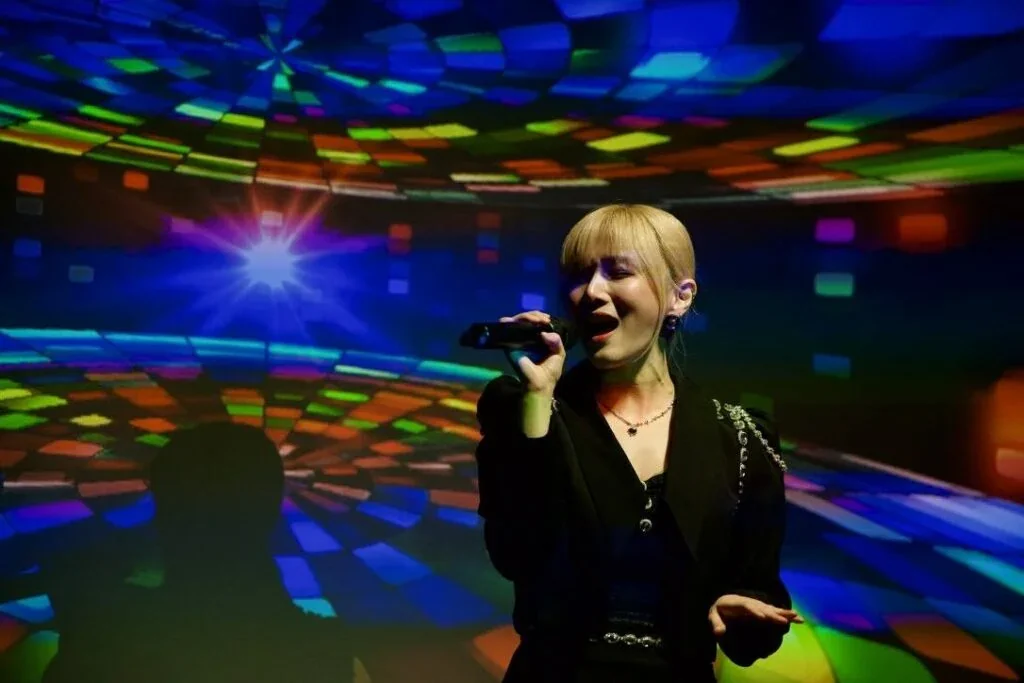
On Saturday, October 25, 2025, the small Hapjeong venue Salon Moonbow carried an unusual anticipation from early in the day. Under the title TROT GIRLS JAPAN RELAY LIVE #2, four artists performed consecutively in a relay concert. Each show stood independently, while the day as a whole formed one continuous flow.
MAKOTO. opened at 13:00. The first set of a day is no minor placement: it determines the audience’s temperature and establishes a reference point for what follows. The atmosphere was, in that sense, in her hands.
Salon Moonbow accommodates roughly eighty people. The proximity of stage and audience makes sound, expressions and even breathing relatively clear. In this room, more than exaggerated performance or elaborate staging, the ability to read the stage matters. MAKOTO. understood its character precisely.
First-come admission and the weight of choice
As with the previous relay live, this show used first-come admission. Seats were not assigned beforehand, while entry order differed according to the ticket purchased. The arrangement placed a burden of choice on listeners: simply wanting to attend did not necessarily secure the desired position.
Benefits varying by the number of shows attended also defined the event.
- One show: Hi-bye farewell with that show’s artist
- Two shows: Hi-bye + two lucky draws
- Three shows: Hi-bye + three lucky draws + group photograph session + signing with all members
- All shows: Hi-bye + three lucky draws + group photograph session + signing with all members + selfie with a selected member
Draw prizes extended beyond ordinary merchandise: signed photocards, signed Polaroids, signatures on fans’ own items, group photos, voice-message recordings, video messages, Polaroid photo opportunities and selfies. The selection emphasized things created and retained at the event.

Rather than simply consuming a concert, the structure suggested an intention to create a whole day’s experience. MAKOTO.’s performance fit it well.
What the setlist tells us
— Energy without force
Her setlist was as follows.
MAKOTO. relay live setlist
Performance order
- Fantasy
- Casablanca Dandy
- Indian Inhyeongcheoreom
- Saigo no Ame
- TSUNAMI
- Sarangbakke Nan Molla (with natsuco)
- Je 3 Hanganggyo
- Kimi ga Suki da to Sakebitai (with MIRAI FUKUDA)
- LA LA LA Love Song
- Just Feeling
- Gyarandou
- Kimitachi Kiwi Papaya Mango da ne.
From “Fantasy,” the direction was relatively clear. MAKOTO.’s voice has power, but she did not use it to explode into high notes or force emotion at once. It acted instead as propulsion carrying the song steadily, a center that retained the rhythm. Rather than immediately seizing the stage, she left room for listeners to enter naturally.
The following “Casablanca Dandy”, “Indian Inhyeongcheoreom”, and “Saigo no Ame” gradually increased the emotional intensity. What stood out was her refusal to exaggerate sadness or recollection. She preserved the songs’ sense of time, stopping where needed and never pushing all the way even when more force was called for. In a close room such as Salon Moonbow, that restraint communicated all the more clearly.
The familiar “TSUNAMI” then felt less like the inclusion of a major hit than a way of gathering the concert’s flow once more. Instead of abruptly elevating emotion, it brought the accumulated atmosphere together. Listeners could take another breath and prepare for the next development.
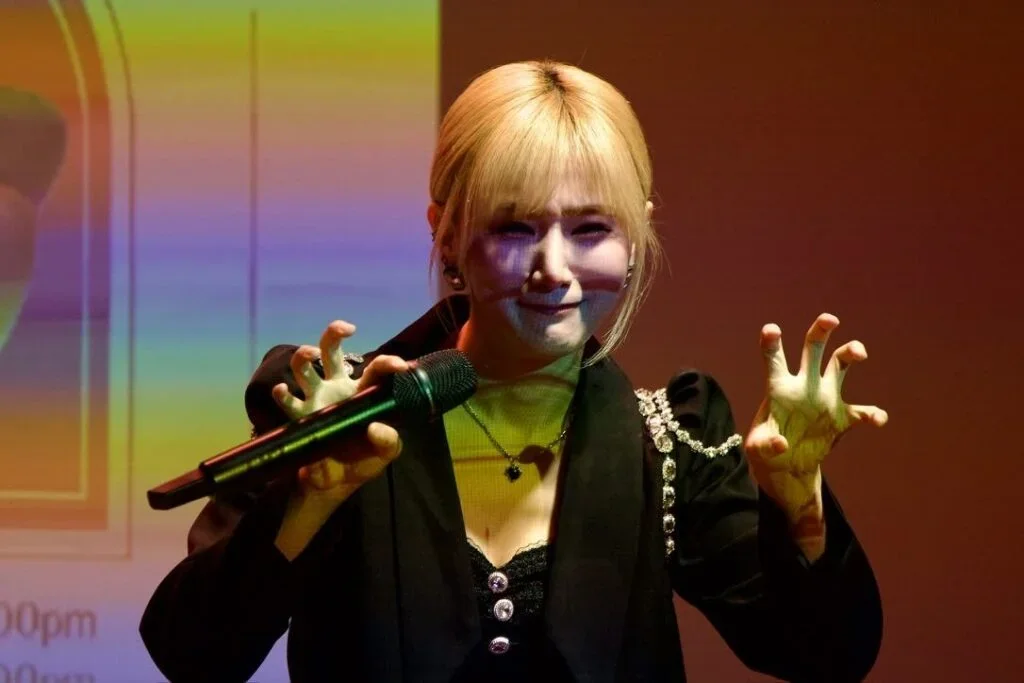
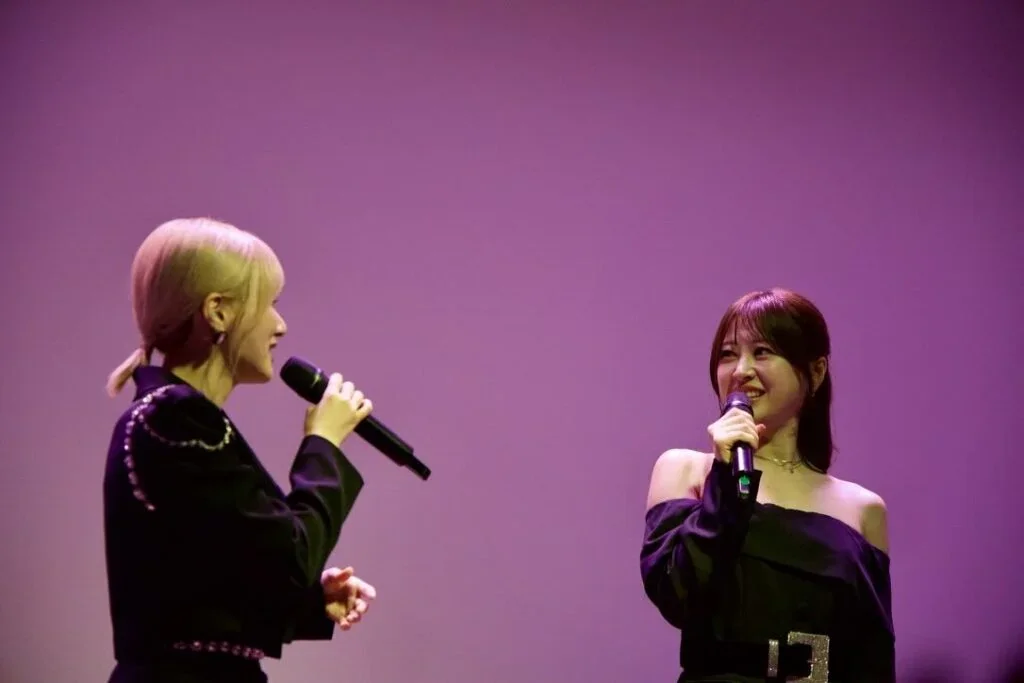
The duets that followed changed the texture. natsuco joined “Sarangbakke Nan Molla,” and MAKOTO. naturally shared the flow she had carried alone. Their voices neither competed nor crowded each other. They seemed to complete the song by recognizing the spaces each left open.
“Je 3 Hanganggyo” and “Kimi ga Suki da to Sakebitai” drew listeners closer. The duet with MIRAI FUKUDA in particular revealed how MAKOTO. regulated the overall mood. Her choices maintained the stage’s balance rather than placing herself at its center.
Later, “LA LA LA Love Song”, “Just Feeling”, “Gyarandou” lifted the atmosphere lightly again. MAKOTO. used rhythm and expression to adjust the room’s temperature, as though releasing emotional weight. She did not force the energy, but the flow never slackened. That balance defined the performance.
The closing “Kimitachi Kiwi Papaya Mango da ne.” clearly gathered the concert’s character. With humor and energy, it naturally released the weight accumulated earlier. It allowed listeners not simply to finish the show but to rise from their seats feeling settled.
The setlist communicated one point clearly.
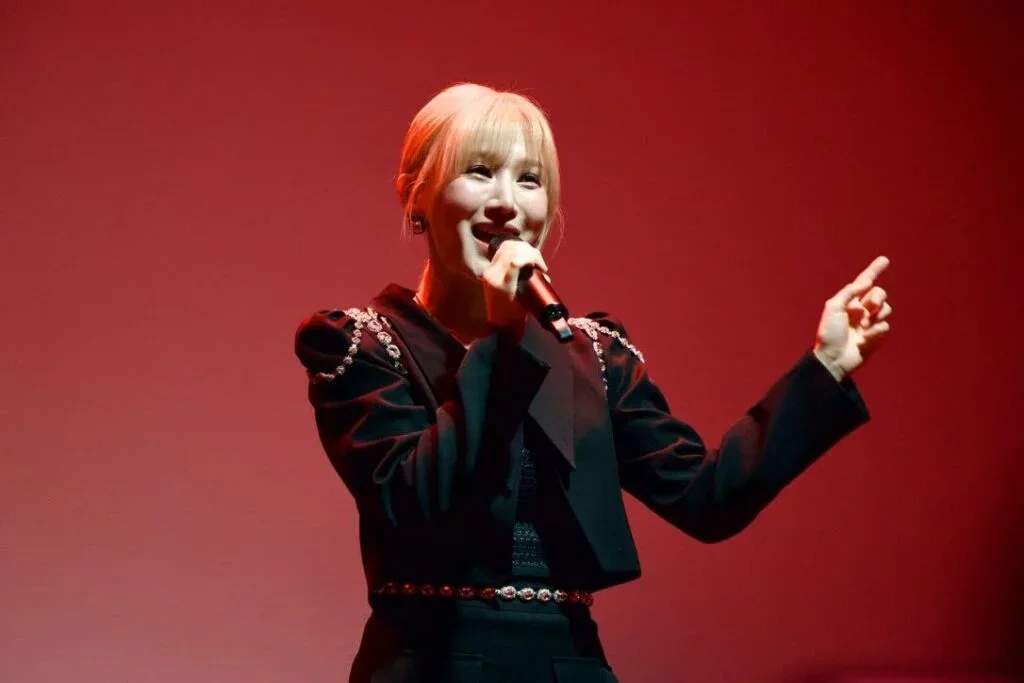
MAKOTO.’s stage carries listeners alongside her through rhythm and flow rather than overwhelming them with force. The small Salon Moonbow space made that energy particularly vivid.
Conversation and reading the room
An essential element of MAKOTO.’s concerts is conversation. Yet it does not interrupt the flow; it regulates the audience’s breathing. Stories between songs became bridges to the next number.
The conversation centered on questions collected in advance for a Q&A, with the addition of a game featuring other members. The question format was popular at the time, but MAKOTO. did not treat it lightly. Responding spontaneously to each question, she retained an appropriate sense of distance with the audience.
That spontaneity matters particularly in a small venue. Prepared remarks are easily recognized, and genuine reactions are immediately felt. She understood the room: she prompted laughter without losing direction, and every story naturally led into the next song.
Another notable point was that she personally acted as MC and led the entire performance. This was not simply a matter of sharing a language. Reading the stage’s flow, respecting others’ appearances and organizing the atmosphere requires an ability distinct from singing itself.
The lasting impression: assurance filling a small space
In one sentence, this was a performance that filled the room with steady vocals. It did not overwhelm through volume or drive emotion to extremes. Instead, each song occupied its proper place, maintaining the intensity a small room demands.
Salon Moonbow offers nowhere to hide. Unsteady pitch and breathing carry directly to listeners. In that setting, MAKOTO.’s voice remained consistent from beginning to end. She did not show off in the high register or lose strength in the low. The singing retained a constant temperature, and that steadiness created the whole concert’s rhythm.
Especially striking was how naturally the audience seemed to move with the show. The stage did not race ahead while listeners followed; both breathed and traveled at the same speed. Beyond singing well, this suggested someone reading people and space together.
By the end, the room was neither overheated nor cold. Applause was sustained and the atmosphere comfortable: an ideal close for an intimate venue. It showed how a performance can remain memorable without forcefully dominating the stage.
MAKOTO. was less someone pulling the stage toward herself than someone stabilizing the space. By fulfilling that role precisely, she gave the day a calm beginning and allowed it to continue naturally toward the next set. This kind of assurance is not always conspicuous, but it is among the most important elements supporting an entire concert.
The day at Salon Moonbow made clear how MAKOTO. handles a small space. That steadiness was a starting point listeners could trust.
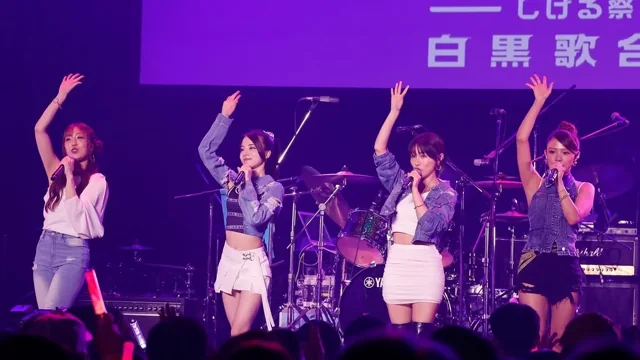
KANO MIYU and SIS at the crossroads of Kuro Fes 2026
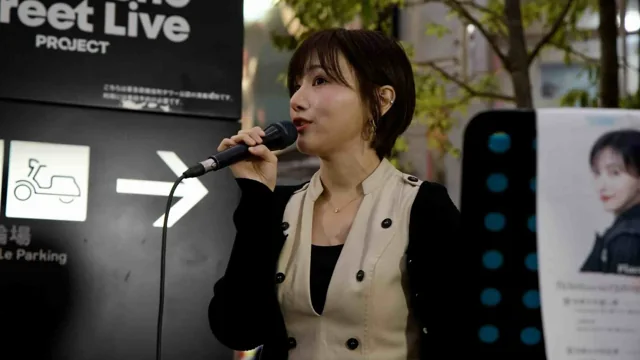
MAKOTO. places her own song among familiar classics — Kabukicho Street Live

sis in Atami, Part 2: Evening Falls on the Same Stage
sis in Atami, Part 1: Thirty Minutes Between the Sea and Summer Light

sis Connects Two Languages at Meguriai Thank-You Concert vol.10