REVIEW · Concerts & Live
MAKOTO. at Salon Moonbow: How to Fill an Intimate Room
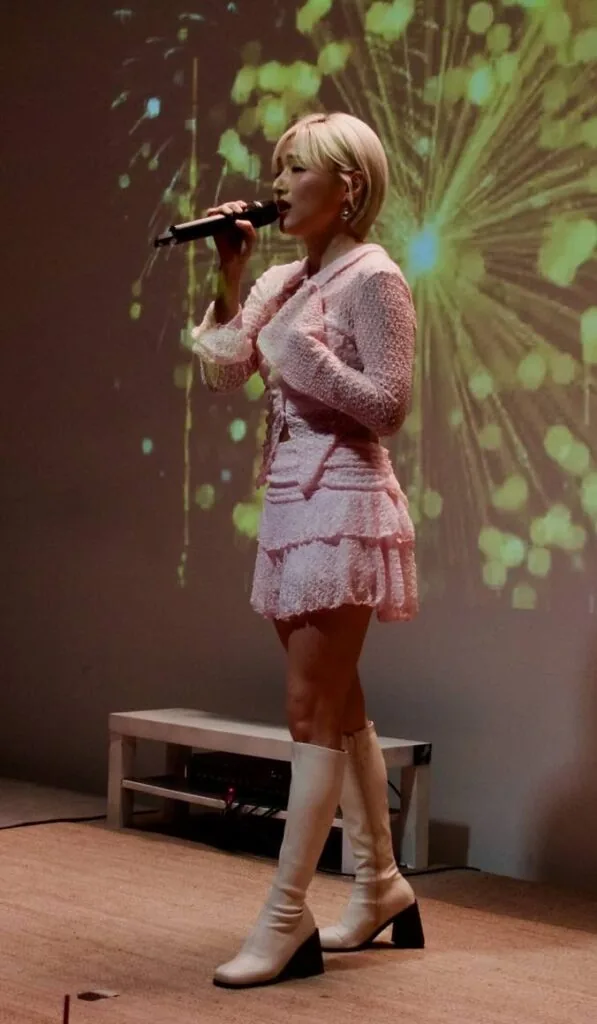
— A scene from the 25 May 2025 relay concert in Hapjeong, Seoul
Salon Moonbow feels like a room containing a stage. Around 80 people fit with little boundary between audience and performer. Expressions, pauses for breath and gestures arrive intact: being inside a performance is a better description than watching one.
On 24–25 May 2025, a relay series gave each artist an individual theme and slot. Several daily sessions let listeners choose how to inhabit the room.
Tickets comprised a two-day all-pass, a one-day pass and individual shows. No seats were assigned; first-come admission followed all-pass → day-pass → individual ticket priority. It asked clearly whose show, and how centrally, each person wanted to experience.
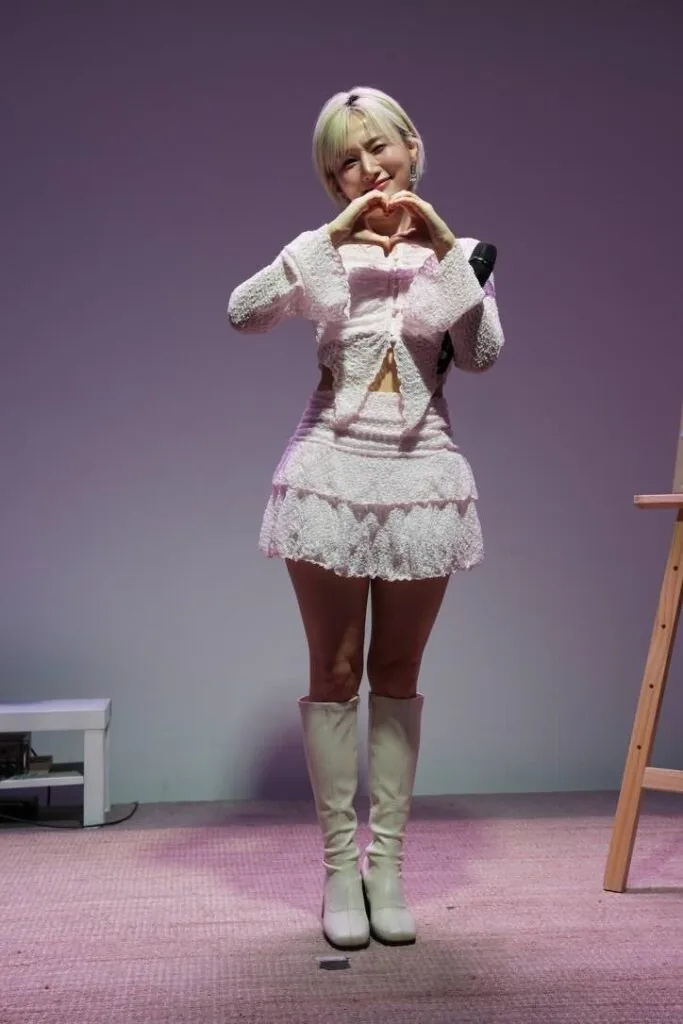
MAKOTO.’s performance began at 5:30 p.m. on Sunday 25 May.
“Kimitachi Kiwi Papaya Mango da ne.”
— A Title Expressing MAKOTO.’s Approach
The playful title, loosely “You’re kiwi, papaya and mango,” captured humor, familiarity and a refusal to keep the audience at a distance.
Immediately this was more than time for singing. Submitted questions, spontaneous responses and Korean–Japanese switching let songs and conversation alternate naturally.
Bilingual ability became a staging tool beyond basic communication: Korean for jokes, Japanese for feelings, then Korean to settle a song’s resonance. Language regulated rhythm rather than merely requiring translation.
What the Setlist Revealed
— Energy Without Brute Force
The running order was as follows.
Concert setlist
Running order
- Ginga Tokkyu
- Stay With Me
- Plastic Love
- We Ride
- Fly-Day Chinatown (with KANO MIYU)
- Yakusoku
- Hana
- The Third Han River Bridge
- Gyarandu
- Imitation Gold
- Kimitachi Kiwi Papaya Mango da ne.
“Ginga Tokkyu” established the approach. Vocal strength lay not only in high notes but in carrying the whole song, holding rhythm and guiding listeners rather than overwhelming them with volume.
“Stay With Me” and “Plastic Love” brought 1980s Japanese city-pop atmosphere. Where large venues can exaggerate or reduce them to mood pieces, the close vocal conveyed urban feeling and melancholy directly.
The Korean “We Ride” seemed chosen for emotional command rather than perfect pronunciation. Without excessive force, MAKOTO. found rhythm and texture, leaving an impression of naturalness beyond technical skill.
Fly-Day Chinatown: A Relationship Onstage
KANO MIYU joined midway for a duet that offered a direct view of their relationship.
Competitors who had also completed stages through each other’s presence, neither sought the center alone. MAKOTO. held each part steadily while leaving space for Miyu’s entry—an experienced attitude, not just technique.
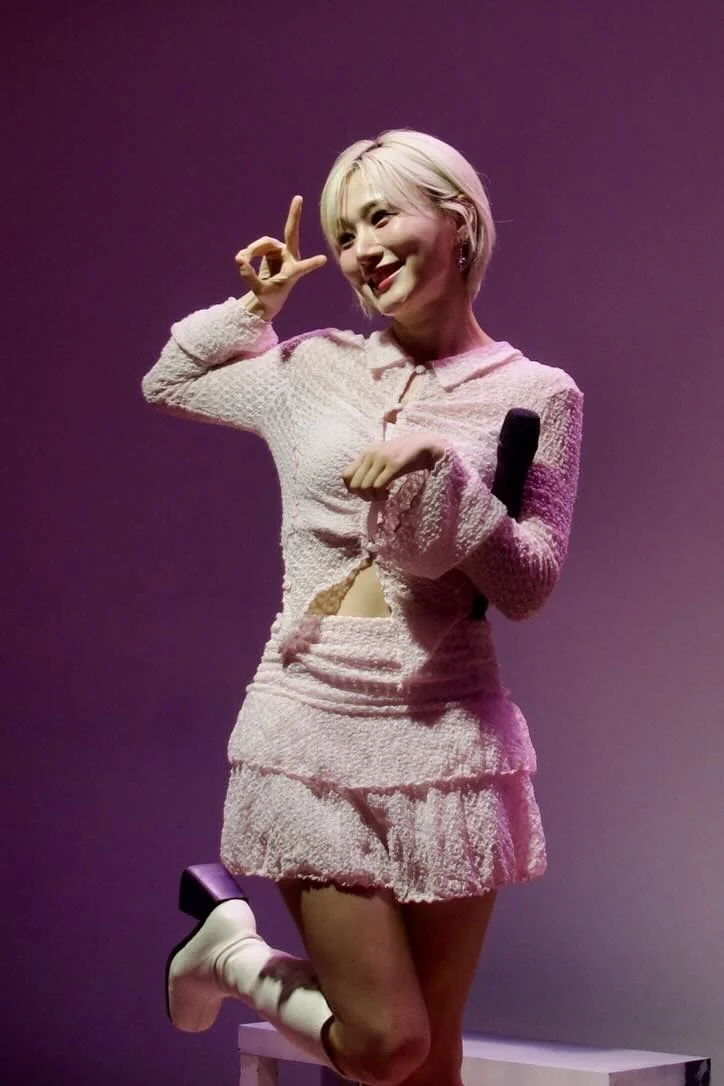
Miyu’s direct, open energy and MAKOTO.’s denser breath differed without clashing, giving the song depth. What remained was not who sang better, but whether the song had lived.
Conversation and Reading a Stage
Talk was not a rest interrupting music but a rhythmic adjustment toward the next song. Words were carefully placed without cooling the room.
At close range, too much talk distracts and too little creates distance. Brief jokes, questions checking response and short explanations looked spontaneous but served continuity.
Submitted questions prompted thinking in context rather than prepared answers. MAKOTO. understood intent and sometimes twisted it lightly into humor. Improvisation risky on a large stage reduced distance here.
Either-or games also read the audience and timed laughter, becoming part of the performance rather than a break. The next song arrived more smoothly afterward.
Hosting other artists showed more than bilingual fluency. MAKOTO. knew what needed saying and when to speak less, arranging conditions for performers to continue comfortably rather than taking over their work.
Moving between overpresence and excessive retreat is difficult. Navigating that boundary showed an ability beyond singing: reading a stage, not merely performing well on one.
Powerful songs lifted the room, talk and games adjusted its breathing, and music returned. Songs, conversation and space worked organically within an intimate venue’s rhythm.
Beyond a prepared setlist, MAKOTO. read possibilities and expectations while building the show. That capacity also helped stabilize the whole relay series.
Merchandise, Instant Photos and the Room’s Temperature
Badges were random-draw items. Individual member instant photographs cost ₩15,000; a photo together cost ₩25,000. All were first come, first served.
Management was imperfect and some left disappointed, reflecting small-venue limits. The performance’s concentration nevertheless remained intact.
Photographs followed all performances, helping protect focus. MAKOTO. remained a singer to the end rather than someone being photographed.
A Performance Remembered for Assurance
Strong vocals, flexible language and an understanding of space balanced without excess. Assurance came to mind before spectacle.
This was less proof of singing skill than a demonstration of how MAKOTO. stands onstage. A small room and listeners close enough to transmit their breathing did not unsettle the performance.
That steadiness may be what audiences remember longest.
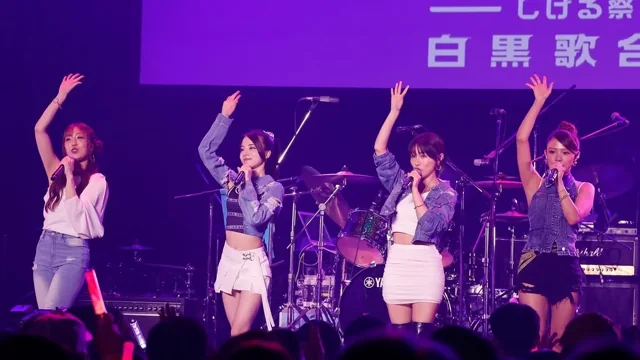
KANO MIYU and SIS at the crossroads of Kuro Fes 2026
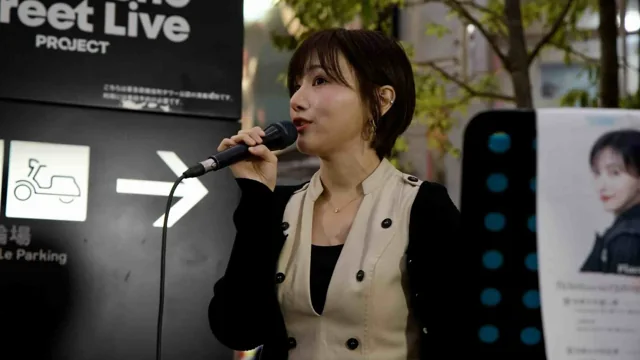
MAKOTO. places her own song among familiar classics — Kabukicho Street Live

sis in Atami, Part 2: Evening Falls on the Same Stage
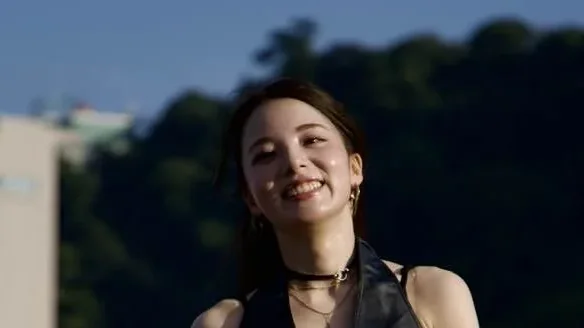
sis in Atami, Part 1: Thirty Minutes Between the Sea and Summer Light
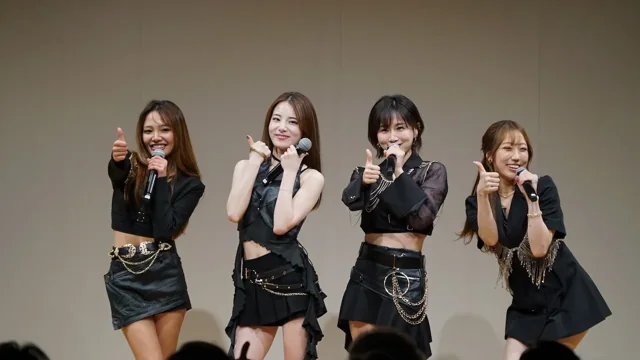
sis Connects Two Languages at Meguriai Thank-You Concert vol.10