REVIEW · Concerts & Live
sis at Ario Ageo: KANO MIYU and the Detail of a Close-Up Stage

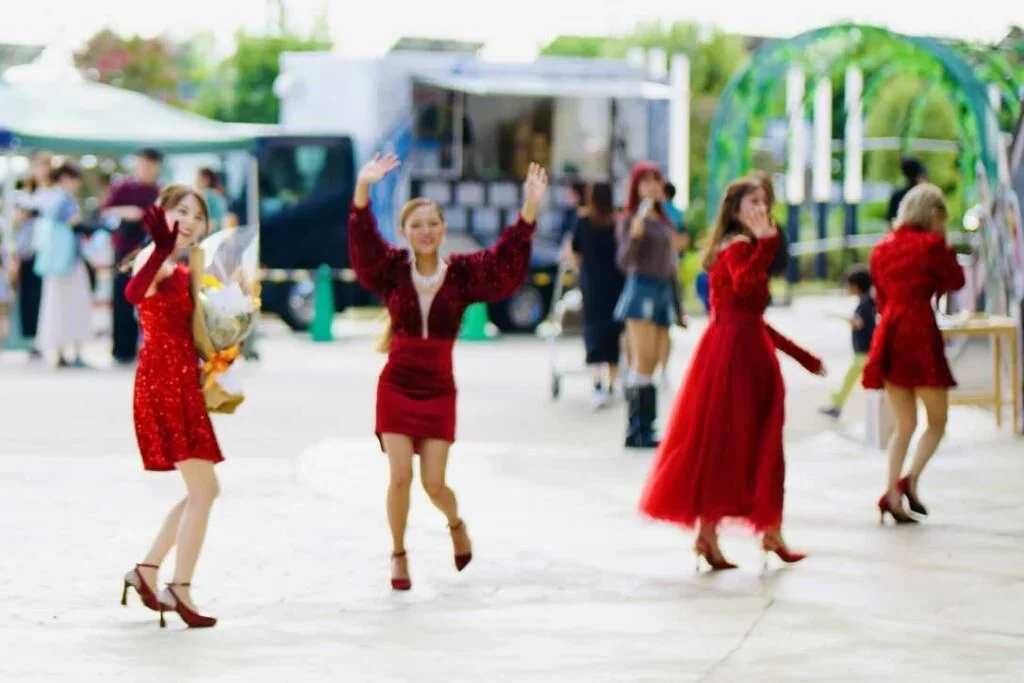
There was a small preview of the change from casual rehearsal clothes to the red stage outfit: KANO MIYU’s red shoes caught the eye first. It was September 28, 2025, at the outdoor stage of Ario Ageo, a shopping complex in Ageo, Saitama Prefecture. The color glimpsed while waiting for the show returned in Miyu’s appearance when the four members of sis took the stage.
The group performed a five-song mini concert. With the audience so close, there was more to notice than the singing: where the members looked, how they moved and the expressions with which they answered a greeting. Small moments like these ran through the day at Ario Ageo, from before the show until after it ended.
Waves exchanged before rehearsal
Before the performance, Miyu moved with the other members, guided by a member of staff. When someone waved toward the stage, she waved back. It was a brief greeting before any singing began. Unlike a concert venue where the audience first encounters the artists as the show starts, this setting brought the members into view while they were still preparing.
Around the outdoor stage, there was no single fixed place to wait or watch. The stage could also be seen from an upper floor, while people waited for admission in front of it. As rehearsal, waiting and entry unfolded in sequence within the same space, the shopping complex’s outdoor area gradually became a concert venue.

Admission began 30 minutes before the show. Audience members entered according to priority numbers distributed with merchandise purchases. This was different, however, from taking an assigned seat in an indoor hall. In the outdoor space, even a later entry number could leave room to stand near the stage. Once admission was complete, the four members and the audience faced each other at close range.
Beyond the red outfit: a changing expression
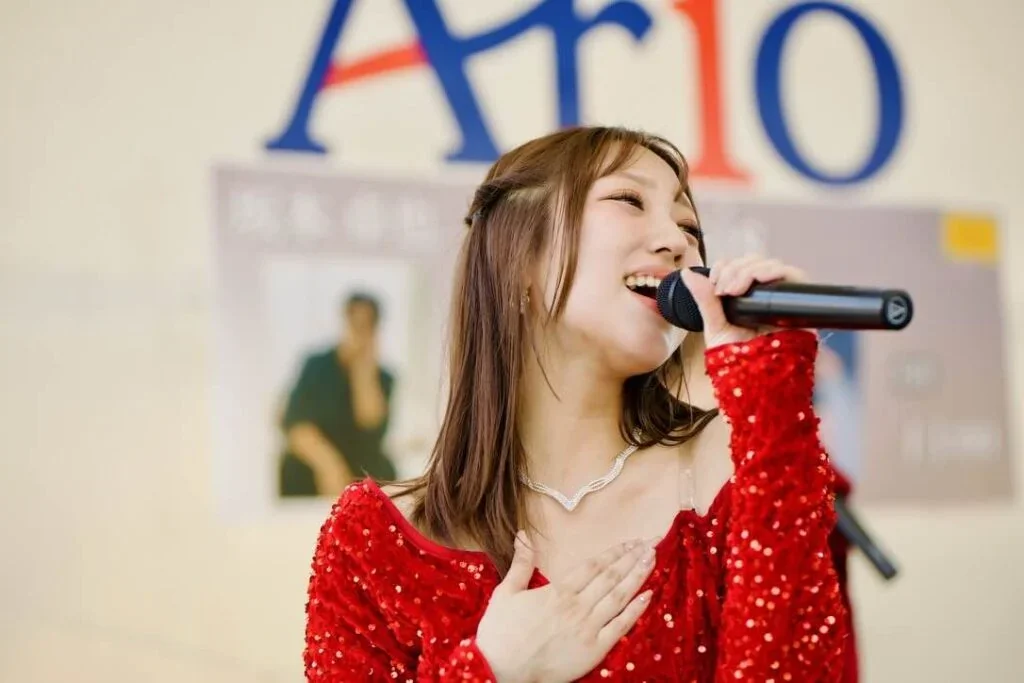
Miyu wore red for the main performance, a change from her relaxed rehearsal clothes. If the color drew attention first, her changing expressions and gestures held it once the singing began.
A sis performance makes it difficult to keep watching only one of the four members. As positions and expressions shift, the eye moves between the group and each individual. From close by, even small gestures reveal those changes. There were moments when watching the overall arrangement gave way to noticing one person’s response.

In her own parts, Miyu brought voice, expression and movement together. Rather than relying on exaggerated gestures to command attention, she linked the face she showed while singing with her responses to the audience. Within the group’s movements, her own parts drew the eye. Her presence that day emerged through those transitions.
The shape of a five-song show
The opening song was “DING DONG Kudasai,” followed by “Megumi no Hito,” “Heart no Ace ga Detekonai” and “U, Fu, Fu, Fu,” before “Ai no Battery” closed the set. The four members’ movements and expressions changed across the five songs. At each transition, listening to the music and watching the stage became closely connected.
Selections steeped in Japanese pop and kayōkyoku—the country’s popular-song tradition—may feel different depending on how familiar the listener is with them. Yet the show did not depend entirely on recognizing the titles. Changes in rhythm and tempo, together with the four members’ coordinated movement, sustained its brief span. Alongside remembering each song, the audience could follow the expressions with which the group moved from the first number to the last.
sis at Ario Ageo: setlist
Performance order
- DING DONG Kudasai (DING DONGください)
- Megumi no Hito (め組のひと)
- Heart no Ace ga Detekonai(ハートのエースが出てこない)
- U, Fu, Fu, Fu (う、ふ、ふ、ふ、)
- Ai no Battery (愛のバッテリー)
In a short show, an individual part passes quickly into the next scene. The eye following Miyu returned to the four-member stage, then met another expression in the next song. That pattern repeated. Ario Ageo’s close-up setting let the audience move between the pleasure of watching an individual member and that of watching the group.
Greetings continued after the music
After the performance came the fan events: high-fives, autographs, group photos and two-person photos, in that order. Eligibility depended on the type and quantity of merchandise purchased at the venue. The purchase benefits on September 28, 2025, were as follows.
- Purchase of two keychains: High-five event
- Purchase of one CD: Group photo with all members
- Purchase of two CDs: CD-jacket autograph
- Purchase of three CDs: Two-person photo with a member of the purchaser’s choice
Merchandise purchases were cash only. What people had bought also determined which queue they joined after the show. Audience members who had listened together in front of the stage waited for their respective activities and met the members again.
For group photos, audience members stood among the performers rather than sitting on chairs. During the photograph, the division between four people onstage and spectators in front of them briefly changed. Members and audience stood at the same height within a single frame. Many of the visitors from Korea chose Miyu for their two-person photos; others took photographs with MAKOTO.
With the day’s activities finished, Miyu carried a bouquet as she headed to the next location. Even as she moved away, she waved toward the audience. The brief wave exchanged before rehearsal returned as a final goodbye after the performance and fan events. Together with the faces glimpsed across five songs and the looks directed toward the nearby audience, it brought the day at Ario Ageo to a close.
Related sources

KANO MIYU changes the mood from afternoon to evening — Hanno Music Festival 2026

KANO MIYU returns to Fukuoka through song — Daikoku Festival 2026

KANO MIYU and SIS at the crossroads of Kuro Fes 2026

MAKOTO. places her own song among familiar classics — Kabukicho Street Live

sis in Atami, Part 2: Evening Falls on the Same Stage