REVIEW · Release Events
Rie Utagokoro’s UTA and KOKORO Release Event in Makuhari
The closing song covered in this Makuhari report
Selected repertoire · Not in performance order
- しあわせのまわり道▶ Watch video
On May 30, 2026, Rie Utagokoro held a release event for UTA and KOKORO at Grand Court on the first floor of AEON MALL Makuhari New City’s Grand Mall in Chiba. Mini concerts at 1:30 and 4 p.m. were followed by autograph sessions for album purchasers. Both the priority area in front of the stage and the surrounding spaces where shoppers paused became part of the audience.
The event introduced the two released albums at close range and included a benefit session where artist and fans could exchange brief greetings afterward, creating a different atmosphere from a conventional concert. Photography was restricted during some songs, but phones were allowed for the final number, “Shiawase no Mawarimichi,” giving the audience time to record the closing scene.
Grand Court, where shoppers stop to listen
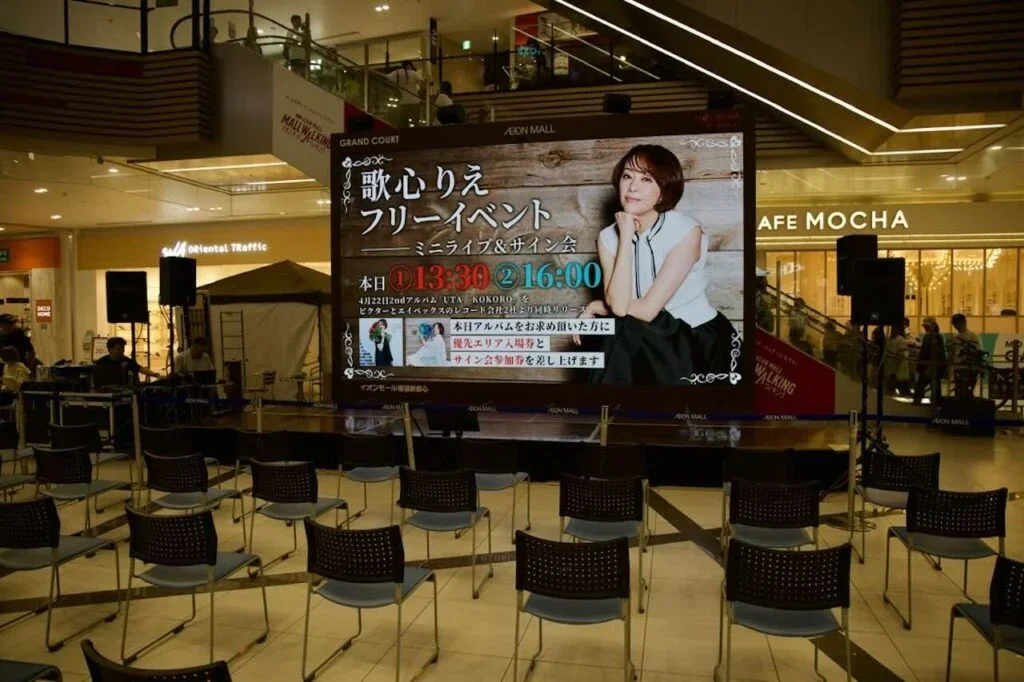
The event took place at Grand Court on the first floor of the Grand Mall. Adjacent to Makuharitoyosuna Station, AEON MALL Makuhari New City is a large shopping complex divided into several areas. Grand Court hosts record-release events, mini concerts and other cultural programs.
The open venue inside a shopping mall created a different atmosphere from a dedicated concert hall. Fans who had arrived for Rie occupied the priority viewing area, while shoppers stopped nearby to listen.
A priority area was set up in front of the stage, but viewing elsewhere was free. People who had bought albums in advance and received numbered admission tickets entered first; general visitors watched alongside them from the surrounding space.
Album prices and the conditions for priority entry and autographs
The event celebrated UTA and KOKORO, released on April 22, 2026. A sales booth offered both albums in standard CD and CD/DVD editions.
Prices that day were ¥3,500 for a standard CD and ¥5,500 for an edition with a DVD. Purchasers of eligible albums received a numbered priority-area admission ticket and autograph benefit tickets. One admission ticket was issued per transaction, while benefit tickets corresponded to the number of albums purchased.
Audience members who had met at the Kawasaki event recognized one another and exchanged greetings again in Chiba. Some people at the sales booth and in the audience had attended earlier release events too.
Presenting two albums together allowed listeners to choose according to taste or previous purchases. A fan who had bought one album elsewhere could select the other here, encountering the two works in succession.
At 1:30 p.m., a voice fills the open stage
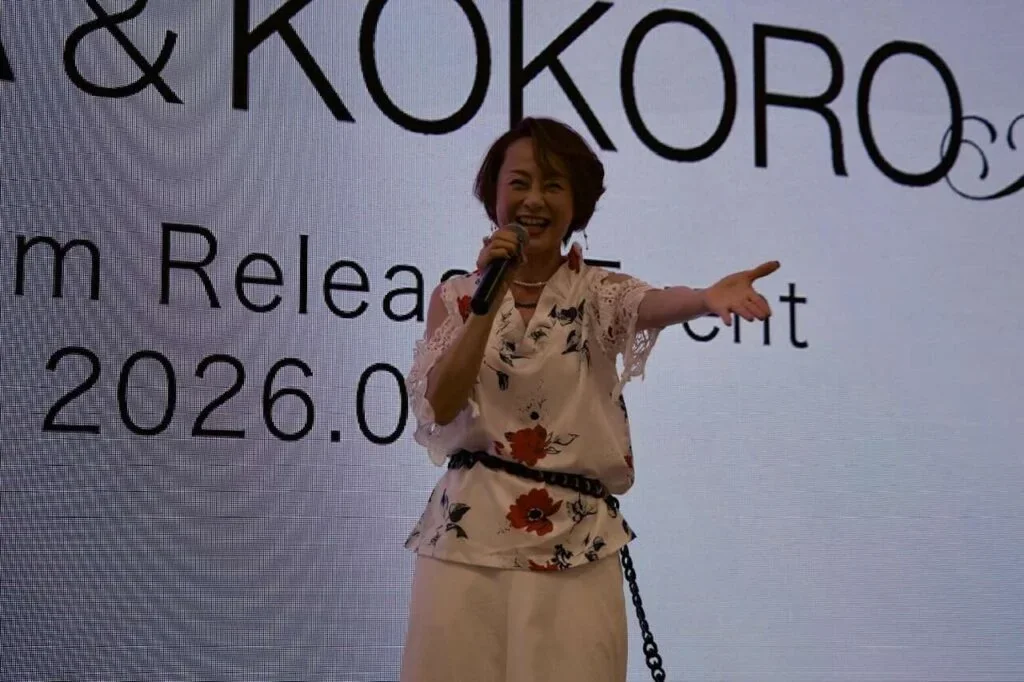
Part one began at 1:30 p.m. After a brief rehearsal, Rie appeared before the audience and opened the mini concert.
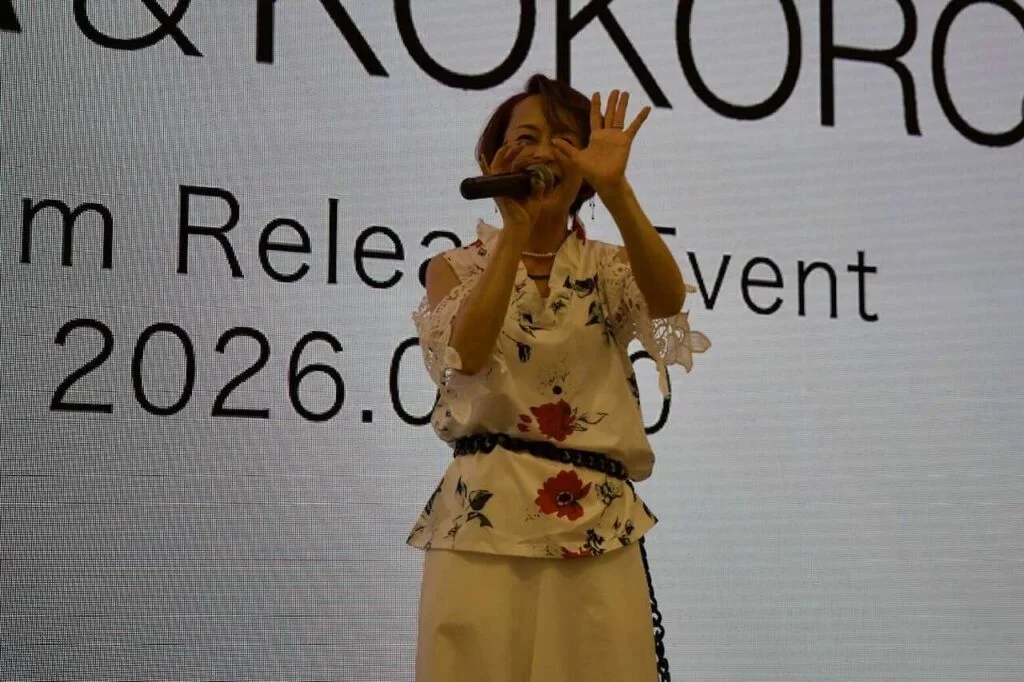
Rather than foregrounding elaborate equipment or complex production, the set concentrated on Rie’s voice and the songs themselves. Although the stage was inside a mall, the everyday surroundings gradually took on the atmosphere of a concert as her vocals filled the space.
The short distance between stage and priority area encouraged concentration. Audiences could follow her expressions and the emotional changes between songs directly, while Rie looked toward the seats and exchanged glances with fans as she sang.
Photography and video were restricted during most songs. The closing number, “Shiawase no Mawarimichi,” had a separate opportunity for filming on phones.
A release event must communicate a new album and an artist’s character in a short time. Rie did more than run through a sequence of songs: she distinguished their individual moods within the live set, bringing out the qualities of her voice.
A greeting to a familiar face from the stage
During part one, Rie recognized a Korean audience member near the stage and thanked them for coming again from Korea. The visitor had also attended the earlier Kawasaki release event.
The exchange did not stop the performance for a lengthy conversation. After a brief greeting, the music continued. It was a moment that revealed how close the audience was: near enough for the artist to recognize individual faces.
Phone filming permitted for the final song
With photography and video restricted during most of the set, filming was allowed for the final song, “Shiawase no Mawarimichi.” Audience members captured the closing moments on their phones, preserving the live performance’s afterglow.
The song had also been designated for filming at earlier release events and closed the Makuhari New City performance. Singing, as its title suggests, about a path toward happiness, it gave the mini concert a warm conclusion.
Even for this song, the permitted device was specified as a mobile phone. Staff explained to a visitor using a separate camera that filming should be done on a phone from the next session onward.
These conditions on songs and devices followed that day’s event guidance. They should be distinguished from the arrangements at other release events.
The explanation came after the show and was resolved without friction. Permission to record a particular song and the range of devices allowed were separate conditions at this event.
Autographs at a table onstage
An autograph session for album purchasers followed. A table was placed onstage, and fans holding benefit tickets went up individually in sequence to receive Rie’s signature.
Each visitor approached the table in turn. As she signed, Rie listened to brief greetings and impressions of the show and responded to what people said.
She also exchanged a few more words with the Korean visitor she had greeted during the set. The visitor spoke about coming to Chiba after Kawasaki and shared impressions of the performance.
Songs audible beyond the priority area
The number of priority-ticket holders was not overwhelming, so general visitors could also watch from relatively close by. Even without reserving a concert ticket, people could hear the music and, if interested, immediately learn about the albums and the artist’s work.
Afterward, audiences continued discussing the next session and future events. People who had shared the performance greeted one another as they waited for the 4 p.m. show.
At 4 p.m., on to the second session
The event had two sessions, at 1:30 and 4 p.m. Priority admission began 20 minutes before each, and the mini concert was followed by an autograph session.
After the first benefit session, some visitors left while others waited for part two. The space that had become an autograph venue prepared to become a performance area again.
Another release event for the same albums was scheduled in Saitama the next day, May 31. The promotion therefore linked several cities rather than ending in one place. Fans chose which events to attend according to their schedules and travel distances.
Encounters carried from songs to books
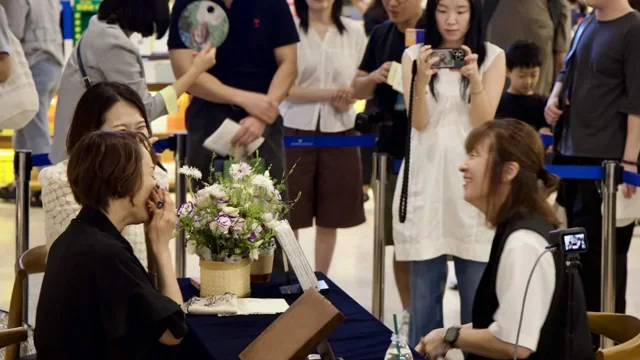
If Makuhari offered a chance to hear songs and have an album signed, the Gwanghwamun signing offered fans who remembered that voice a chance to meet its author with a book in hand. Read together, the two reports trace how an interest begun through music can continue across media and places.
Related sources
Related event footage
Reference footage of Utagokoro Rie’s release events from Diego’s channel. The recording venue is identified separately in the video context.
View all videos · 1
RIE UTAGOKORO’s first essay collection: a book signing for “I’ll Always Sing of Love”
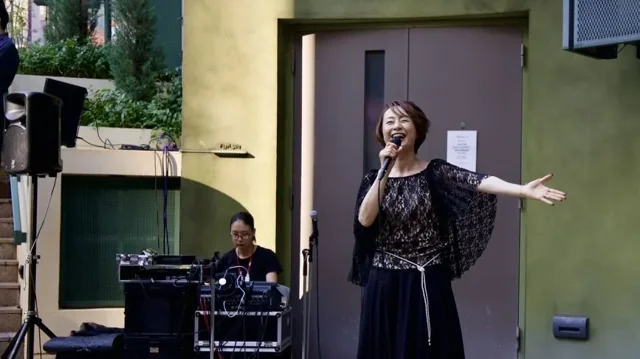
Rie Utagokoro: Time Together After the Songs — Kawasaki, Part Two
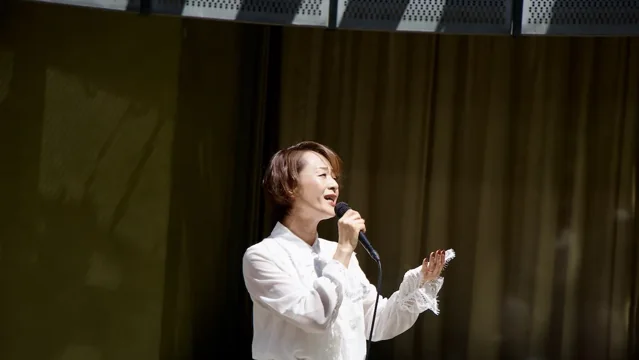
Rie Utagokoro’s Voice at the Fountain Square — Kawasaki, Part One

Trot Girls Japan’s First Japanese Concert: From Television to the Stage
Trot Girls Japan’s “Come Back to Busan Port” Encore: Why Return to the Stage?