FEATURE · 아티스트 스토리
After the Competition: The Stages Where KANO MIYU Met Her Audiences
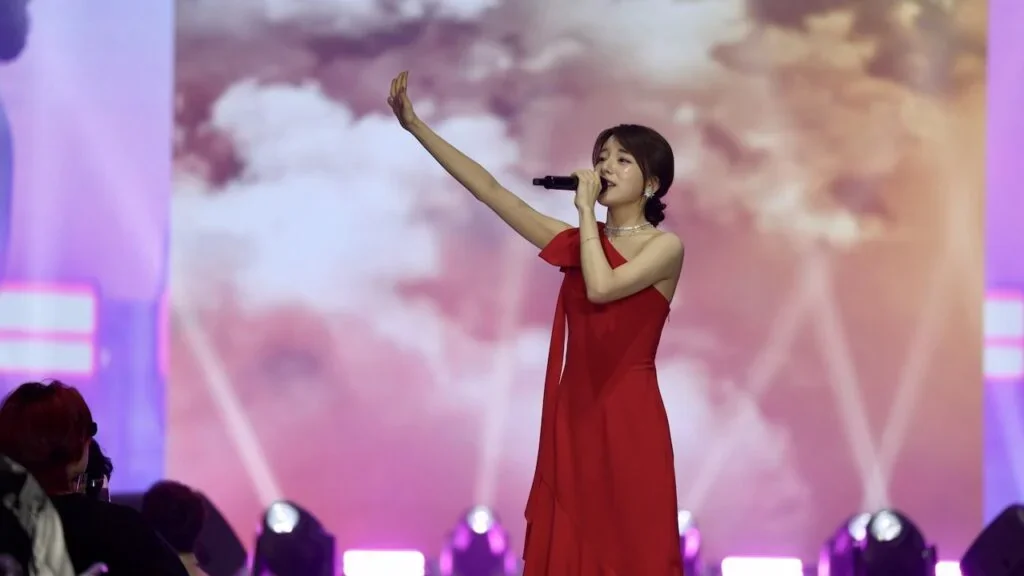
KANO MIYU’s work moves between stages of different scales and kinds: team missions and competition for a place in the TROT GIRLS JAPAN final, a small live set at a festival, an event performance before a football match. The image you remember may depend on where you first encountered her. After her name was called again in the competition, the singing continued at local events and performance venues. Following those places reveals work accumulated beyond television’s ranking tables.
Stories about Miyu often stop at the dramatic moment of an additional pass. Yet after that renewed opportunity came the time spent contesting another round and preparing another performance. Place her days traveling between her hometown of Omuta and Fukuoka beside her work after moving to Tokyo and the occasions when she met audiences directly after the broadcast. A competition that determines winners and a concert that delivers songs within a set time are different scenes, but both belong to the activities continuing under her name.
From Omuta through Fukuoka to Tokyo
Miyu’s starting point is Omuta in Fukuoka Prefecture. As a student, she lived in Omuta and traveled to Fukuoka; at 18, she shifted the center of her activities to Tokyo. Traveling within the prefecture while preparing her music and relocating her life to the capital were changes of different magnitudes. For someone who first saw her on television, this is an offscreen history, but it is an important starting point when following her work. Time had already been spent moving toward singing before she stepped onto those stages.
Tokyo became the setting for the activities that followed. Tracing Omuta, Fukuoka and Tokyo shows the widening area in which she prepared her music and sought opportunities to perform. Watching footage again with that history in mind places an earlier period of preparation beside the image of a contestant appearing on television for the first time. Her present stages feel less like scenes suddenly created by one broadcast appearance than places reached through successive periods of work.
TROT GIRLS JAPAN: a competition whose outcomes changed repeatedly
Miyu’s competition did not follow a straight line. She passed through a team death-match defeat, the Savior Battle and an additional pass to reach the next round. In the third round with Team Cream Soda, she achieved first place in the Dinner Show Mission, a high individual solo-mission placing and the round’s MVP award. Repeatedly emphasizing only the early danger obscures those later results. Conversely, using those achievements to claim she overcame every weakness erases the competition’s uneven course.
An additional pass allows audiences to see another performance from someone whose journey might otherwise have ended in that round. For Miyu, the early team defeat was not the final scene: Cream Soda’s team results and her individual assessment were added afterward. Viewers following the broadcast in sequence could revise their first impressions at this point. Looking at team and solo results together makes it possible to identify specifically how far she progressed within the competition’s different formats.
In the semifinal’s Shitennou Dai Keishousen, she was not among those granted an additional pass. Before the final, however, a nationality issue created a vacancy among the confirmed Japanese representatives. Miyu returned and joined the final Top 7. It was a journey of repeated changes: an early second chance, third-round achievements and another return after the semifinal. Looking back therefore brings to mind not one successful selection alone, but a succession of performances entered with the previous rounds’ outcomes still behind her.

Cream Soda’s record remains on two axes: team and individual. The team placed first in the Dinner Show Mission, Miyu ranked highly in the solo mission, and the third-round MVP award followed. These results cannot be contained by an introduction describing only a contestant who lost an early team death match. Readers discovering the competition later should watch this stretch as well as the additional-pass episode. Placing the second chance beside the results that followed makes the competition’s development clearer.
The final Top 7 designation encompasses different routes to that point. Miyu joined through a different sequence from contestants who stayed near the top and proceeded directly to the final. Those watching at the time may remember checking at every announcement whether she would appear again. Rather than compressing the long process into one word, recall the team defeat, the second chance, the round in which her results rose and the later return in sequence. That reveals the scenes in which her name appeared throughout the program.
After television, stages of other sizes
Once the competition ended, the way she met audiences changed too. Where set missions and assessments framed a television performance, a small live set or local event began with that day’s venue and schedule. Fans who came specifically for the singer could stand alongside people who happened to hear her while enjoying another attraction. These audiences differed from the very routes by which they arrived. A name remembered as a television contestant could now be encountered again in event listings and on local stages.
On May 6, 2025, she gave a mini live performance at Niku Matsuri 2025 in Todoroki Ryokuchi in Kawasaki, followed by a stage at Canal City Hakata on June 22. On October 26, she sang at a special event for an Avispa Fukuoka home match. As the locations shifted between festival, shopping complex and stadium, the audience’s day around the music changed as well. Some watched between event attractions and shopping; others listened while awaiting football. Miyu’s performances occupied those varied schedules.
Those three dates also show a return to regional audiences. A singer now based in Tokyo performs at a shopping complex and stadium in Fukuoka, as well as a festival in Kawasaki. Her range is not confined to one city or one kind of venue. Canal City Hakata and Avispa Fukuoka in particular also introduce Miyu to people attending local events. For fans, these are performances sought out by name; for other visitors, the day may offer a first encounter.
Photographs preserving such records show her activities differently from television footage. They establish a date and place and remind us where the singer stood that day. To the audience, a performance may be a few finished minutes of singing; over time, it also acquires the continuity of encountering the same name at different events. That is another reason to revisit Kawasaki, Hakata and the stadium dates: the actual performances contained in the brief phrase “after the competition” can be returned to their individual settings.
Remembering the days it rained
Fans discussing these appearances sometimes use the nickname ame-onna, a woman jokingly said to bring rain. The joke links the rain at Kawasaki, Canal City and Avispa Fukuoka. Weather can remain a strong part of an outdoor performance’s memory: bringing an umbrella or waiting for the stage can return alongside the songs. The nickname is naturally understood as one way fans share those viewing experiences.
At Avispa Fukuoka’s October 26 home match, the rain during the performance and a late victory became part of the same memory. Fukuoka won 1–0 through a penalty awarded near the end. For fans, the day added a dramatic football finish after the time spent listening to music. Talk of ame-onna is similarly a lighthearted way of recalling that stage. Following performances leaves records not only of songs but also of places, weather and the scenes after an event.
Records that make us await the next stage
Moving from Miyu’s audition footage to performance records changes our distance from the music. A screen on which we await a team-mission assessment is not the same experience as a place visited for a mini live set. Whichever first catches our interest, there is a route to the other material. A song discovered on television can be heard again live; a singer first seen at an event can lead us back to her earlier competition. Different starting points connect with the work of one artist.
Place the journey from Omuta to Tokyo, the competition’s changing outcomes and the live performances beyond television together, and the shape of an ongoing career emerges. This is not a story completed by one reversal, but time spent adding stages as places and audiences change. Anticipating the next performance also directs us toward a specific occasion: what will she sing this time, and how will a familiar song sound on another stage? Each renewed encounter with those songs adds another scene to Miyu’s story.

KANO MIYU changes the mood from afternoon to evening — Hanno Music Festival 2026

KANO MIYU returns to Fukuoka through song — Daikoku Festival 2026

KANO MIYU and SIS at the crossroads of Kuro Fes 2026

sis in Atami, Part 2: Evening Falls on the Same Stage

sis in Atami, Part 1: Thirty Minutes Between the Sea and Summer Light