REVIEW · Festivals
sis and KANO MIYU at the 2025 Korea–Japan Festival in Tokyo
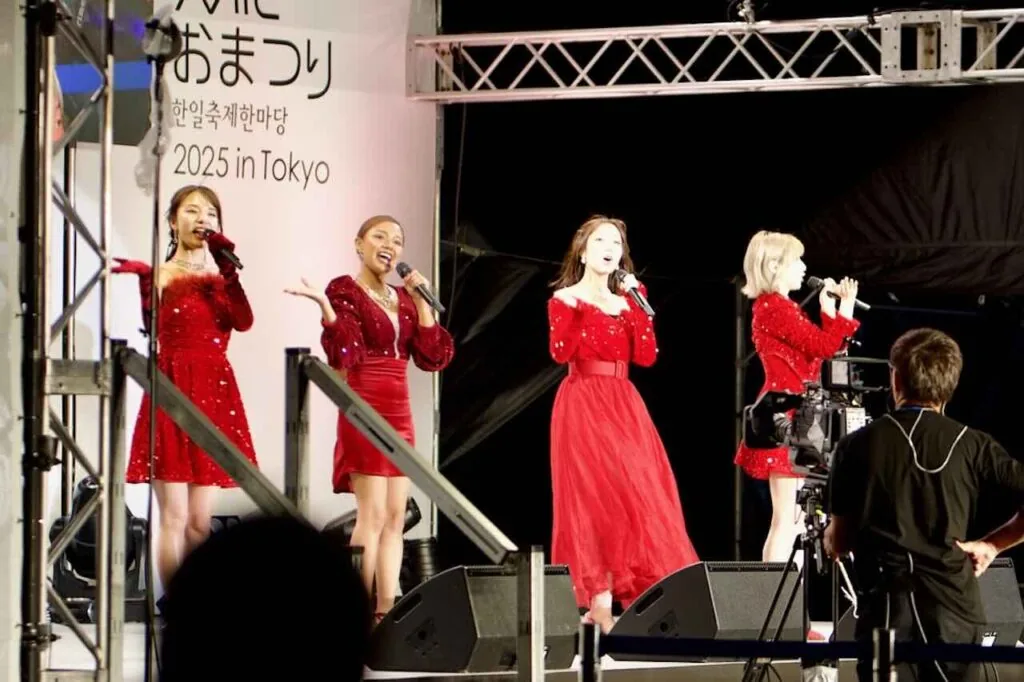
September 28, 2025: voices of exchange at Tokyo’s Komazawa Olympic Park
On the evening of September 28, 2025, Komazawa Olympic Park in Tokyo’s Setagaya ward felt different from usual. The ease of a weekend evening in the park overlapped with a cultural gathering connecting Korea and Japan, making the whole space feel like a stage. The Korea–Japan Festival, known locally as Nikkan Kōryū Omatsuri 2025 in Tokyo, brought the two countries’ everyday experiences and emotions together through music and performance. Female vocal group sis appeared on one of its central stages.
The performance was particularly notable for the presence of sis member KANO MIYU. In the setting of a cultural exchange event in a public outdoor space, rather than a large concert hall or a solo show, her performance did more than present a concert: it helped turn the entire venue into a place of exchange.
Seats and fences: one stage, viewed from different distances
Because of the festival’s operating arrangements, seats were assigned to only some spectators, while many others, including visitors of foreign nationality, watched from the fenced perimeter of the stage area. There was a clear physical division between stage and audience, yet once the music began, that boundary quickly receded from the experience.
The viewing area outside the fence also offered a broad view of the whole stage. Without structures blocking the sightline, spectators could see its front and side at once, heightening the openness particular to an outdoor show. The distance between performers and audience was real, but it lost its significance when the performance began.
6 p.m.: sis takes the stage with the wind
sis appeared on time at precisely 6 p.m. The temporary outdoor stage had artificial lighting and a simple sound setup, but these combined with the park’s fading daylight to create a distinctive atmosphere. Wind periodically swept through the open space, adding an unpredictable element to the show.
The six-song set balanced the group’s repertoire with songs that could resonate with both Korean and Japanese audiences, rather than simply running through recent releases.
The concert began in a relatively calm mood, then gathered energy as the songs progressed. In particular, when “DING DONG Kudasai” and “Ai no Battery” were sung in Korean, the audience’s response visibly changed. Korean lyrics ringing out at a Japanese venue felt less like an unfamiliar intrusion than an expression of what this performance was about.
How the songs shaped the show—and how the audience responded
sis performed the following songs that day.
Main repertoire recorded in the original article
Main repertoire; not listed in performance order
- I Can’t Stop the Loneliness
- Doorbell Of Love (“DING DONG Kudasai,” Korean version)
- Sekaijū no Dare yori Kitto
- Mayonaka no Door — stay with me
- Love’s Battery (“Ai no Battery,” Korean version)
- Aoi Sangoshō
The selections interwove Japanese pop songs spanning generations with the group’s signature numbers. Familiar favorites such as “Sekaijū no Dare yori Kitto” and “Aoi Sangoshō” naturally broadened the audience’s generational reach. “DING DONG Kudasai” and “Ai no Battery,” meanwhile, anchored the show with sis’s bright, direct energy.
KANO MIYU stood at the center of that flow. Without exaggerated gestures or strained calls for excitement, her expressions, gaze and control of vocal intensity drew responses from the crowd. Spectators beyond the fence naturally called her name or moved with the rhythm, and those responses traveled straight back to the stage.
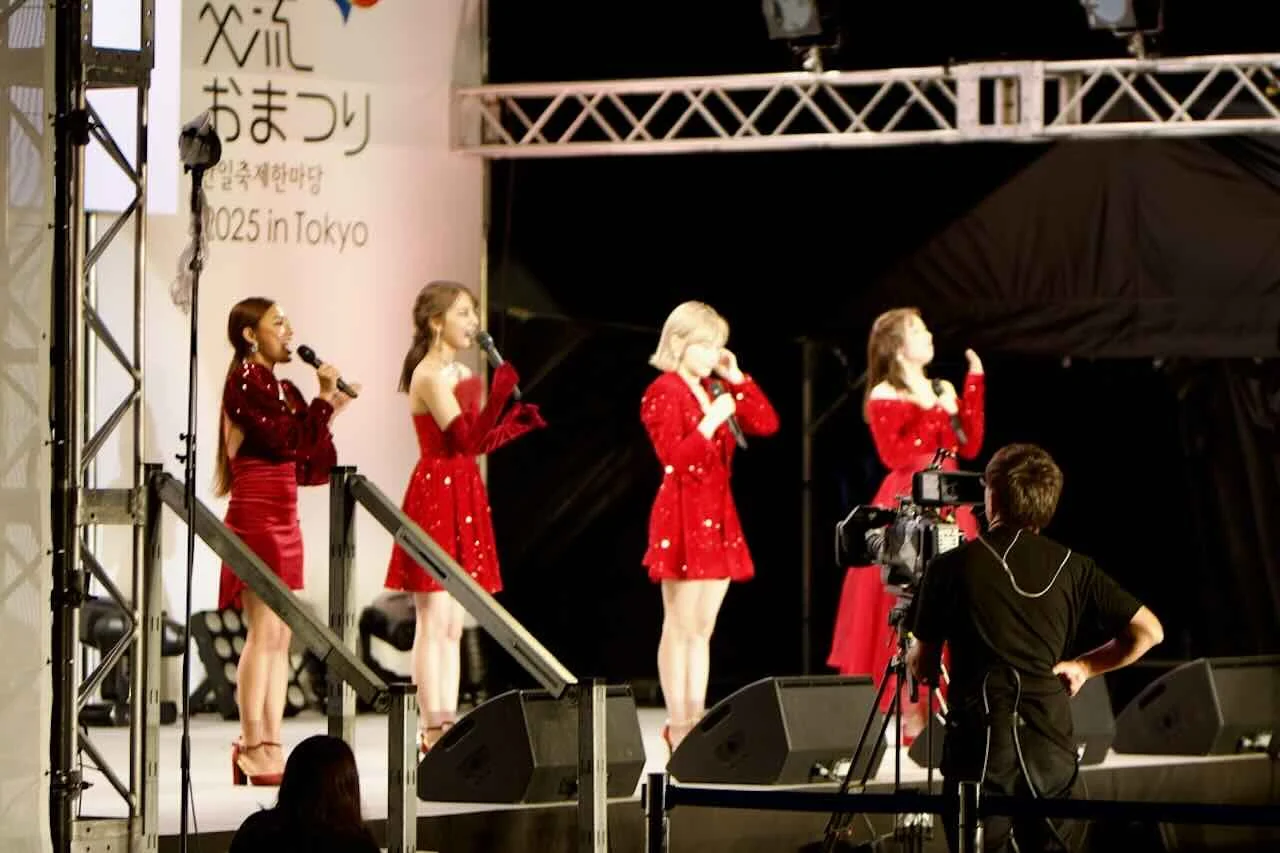
Wind, an outdoor stage and improvisation
Wind is always a variable in an outdoor performance. Strong gusts came through intermittently that day, affecting costumes and movement onstage. The members of sis absorbed them naturally as part of the show. Even when their skirts billowed, their movements held steady, and the outdoor setting gained an extra sense of life.
KANO MIYU also responded comfortably to the conditions. Even when the wind disturbed her hair, the singing continued uninterrupted, and her looks between stage and audience remained relaxed. It seemed to reflect accumulated outdoor-event experience and an ability to adapt onstage.
After the performance: a brief but unmistakable greeting
Even after the music ended and the stage lights went out, the atmosphere did not quickly settle. The official program was over, but spectators lingered around the stage, some watching the artists’ movements from a distance. This had not been a show built around excessive fan service; instead, the relationship between performance and audience retained a restrained warmth.
Even during the brief time spent moving away, KANO MIYU acknowledged the fans watching her. She turned toward spectators at a distance, met their eyes and waved. On hearing that they had come from Korea, she seemed to slow briefly, held her gaze toward them and said in Korean, “Have a safe trip home.” It was only a few words, but their brevity made the greeting all the more memorable. Even after the show, she remained open to the fans until the end, much as she had onstage.
It was neither a special piece of staging nor a prepared line, yet the greeting captured the atmosphere running through the performance: conscientious work onstage, followed by quiet consideration off it. Miyu’s goodbye brought the show gently to a close and left an afterglow of exchange befitting the festival’s name.
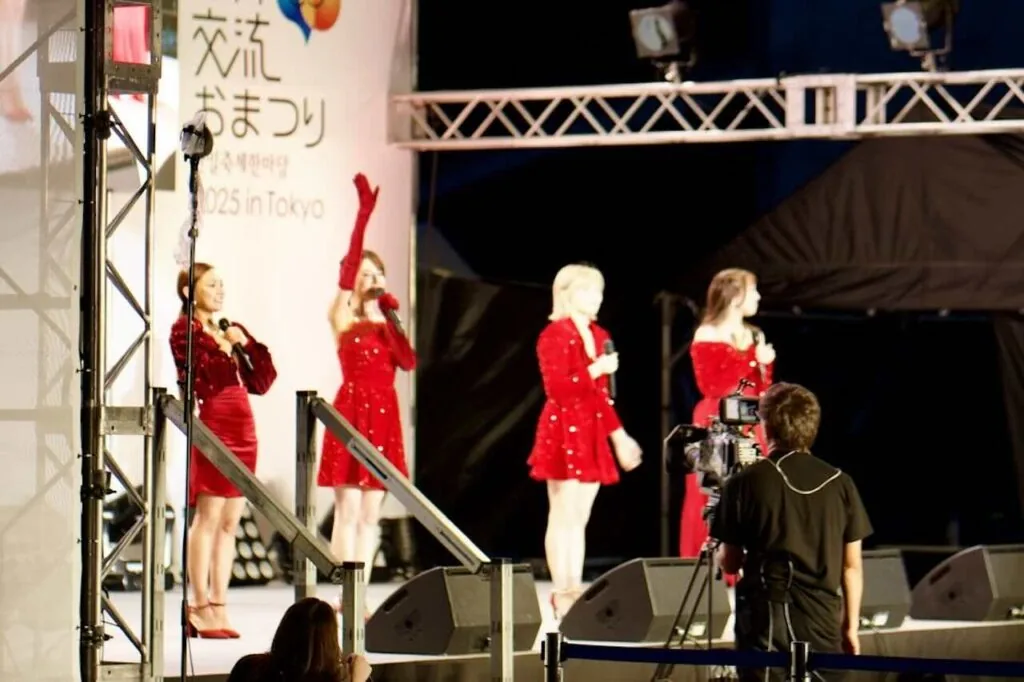
The Korea–Japan Festival and sis’s place within it
The Korea–Japan Festival is more than a music event. Returning each year, it offers a place to explore the possibilities of everyday exchange through performance. The stage sis occupied that day showed how music and the performers’ approach could convey that message without elaborate production or large-scale equipment.
KANO MIYU’s performance in particular focused on the most basic relationship—performer and audience—across language and nationality. She did not overexplain its meaning from the stage or insist on a particular emotional response. Instead, song, eye contact and the atmosphere of the venue carried the message naturally.
Exchange does not have to be grand
The Korea–Japan Festival at Komazawa Olympic Park on September 28, 2025, was made less by grand declarations or messages than by one stage, a handful of songs and the people who shared that time. At its center, sis and KANO MIYU offered a simple, persuasive answer to what cultural exchange can mean.
Staying in the same space, hearing the same songs and feeling the same wind at the same moment: that was already exchange enough. And that moment unmistakably remained at the venue.

KANO MIYU changes the mood from afternoon to evening — Hanno Music Festival 2026

KANO MIYU returns to Fukuoka through song — Daikoku Festival 2026

KANO MIYU and SIS at the crossroads of Kuro Fes 2026
MAKOTO. places her own song among familiar classics — Kabukicho Street Live

sis in Atami, Part 2: Evening Falls on the Same Stage