REVIEW · Songs & Albums
Official HIGE DANdism’s “Pretender”: A Confession That Cannot End

Karaoke song codes
Official HIGE DANdism’s “Pretender” sets the judgment that love should end beside the sensation of still loving. Words explaining the relationship are relatively clear; the voice singing them is not easily settled. Following the mismatch prevents reducing the song to false love. Performing a suitable relationship differs from affection itself being fake. Separating them, the song expands the moment when someone abandoning a shared future cannot also deny present feeling.
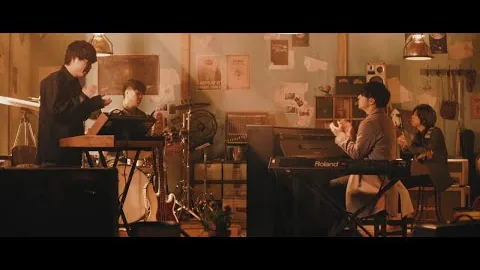
Official HIGE DANdism - Pretender[Official Video]
An understood ending and a heart unable to follow
The narrator reads the relationship’s prospects, asking whether he suits the other person and whether their imagined story can continue, then answering himself. But that answer is not emotion’s endpoint. Rational explanation does not make separation less painful. Tension arises less from discovering unknown things than from a heart unable to accept what is already known. As judgment advances, the voice looks back at affection left behind.
Acknowledging the other person’s beauty can contain attachment and respect together. The failure of a relationship does not lead to belittling them or invalidating the time spent loving. Sadness thereby differs from identifying one person’s fault. A judgment of incompatibility remains beside a sense of preciousness. Listeners draw closer to the difficulty of speaking two different sentences with one mouth rather than assigning responsibility.
Sincerity leaking beyond a role
The title revisits sincerity and role. Acting according to a story of being lovers can create a gap between the actual relationship’s temperature and its expected scenes. Even noticing it does not permit immediate escape. Pretending is therefore not reducible to calculating deception. It can be a gesture maintaining a relationship one wanted to believe in too. The title’s sharpness comes from returning that gesture to oneself.
As melody spreads emotion, the decisiveness of words falters. Calmly delivering a sentence ending the relationship might have gathered feeling into it. Instead, the voice gives unyielding affection sufficient scale and stays beyond the narrator’s judgment. The force inviting singing and the story’s loneliness overlap here. Expressing emotion broadly does not directly produce relieving resolution; that tension invites returning to the confession.
Distance remaining after acknowledging beauty
“Pretender” leaves a gaze toward the other without changing the outcome. Feeling someone beautiful does not prove they should be together, but there is no reason to call the feeling false. Preserving the interval matters. What remains is less a verdict on love’s authenticity than time bearing a relationship that cannot work despite sincerity. The melody provides that time sufficient length and scale.

OFFICIAL HIGE DANDISM’s “Cry Baby”: How Key Changes Redirect Emotion

OFFICIAL HIGE DANDISM’s “Chessboard”: A Life Beyond Winning and Losing

OFFICIAL HIGE DANDISM’s “Nichijo”: Finding Words for Everyday Exhaustion
Official HIGE DANdism’s “I LOVE…”: What Comes After the Confession