REVIEW · Songs & Albums
KANO MIYU’s Kuroi Shinzou: Why Being Loved Is Still Not Enough
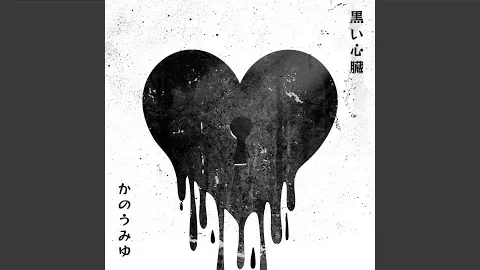
Wanting to be loved and trusting that love are different things. KANO MIYU’s “Kuroi Shinzou” does not easily close that gap. Its narrator wants someone, finds closeness insufficient, and waits for further proof even after receiving affection. The black in the title feels less like a badge for a villainous lover than a colour for desires that affection alone cannot explain.
Released on July 2, 2025, the song has lyrics by Miyu and music and arrangement by Taiki Nishimura. In the official announcement, Miyu describes contradictory romantic feelings: wanting something out of reach, yet remaining unfulfilled even on obtaining it. Her account of a longing that survives attainment connects with the narrator’s different demands upon the same love.
Wanting words, then wanting evidence beyond them
The narrator wants a declaration of love, yet elsewhere asks for a kiss rather than repeated declarations. Words are not unnecessary; they simply cannot settle this mind on their own. Receiving the desired answer and losing the fear are separate events. Those requests contradict each other while belonging to the same person.
The complaint about something missing in the way love is given therefore matters. This is not an account of receiving no affection at all. What is offered differs from what is expected. The narrator asks what shape happiness takes without easily deciding which shape would finally be sufficient.
From asking for a declaration to asking to speak
A small change in the refrain shifts the narrator’s position. Someone who first requests a declaration from the other person later asks to be allowed to say it. The receiver awaiting confirmation and the sender offering affection occupy the same character. A problem that seemed solvable by the other person’s answer returns to the narrator’s own speech.
That movement makes it difficult to classify this character simply as selfish or victimised. Suspicion appears alongside a wish to contain the other person within the self. The desire for closeness touches the desire to possess. The song leaves that uncomfortable tangle intact rather than presenting it as an exemplary relationship.
The innocent dream of a black heart
Dreams and sleep near the end relocate a certainty unavailable in waking life. Wanting to remain inside a dream after waking is far from the attitude of someone who has resolved the relationship. Dissatisfaction persists alongside a reluctance to escape the attraction.
The English reference to an innocent dream sits suggestively beside the black heart of the title. Innocent love and darker desire remain in one narrator rather than being allocated to separate people. Wanting to trust the other person coexists with demanding further proof. The song captures a moment in which a person in love cannot remain consistent even with themselves.
KANO MIYU · 黒い心臓
Road to Bu-Rock · Fukuoka
Filming / channel: Diego Watch on YouTube ↗
Music and production information
Official release and artist comment ↗ · Official lyrics and credits ↗
Related event footage
A separate live interpretation of the same song is included here. The video title and performance context are identified below.
View all videos · 1

KANO MIYU changes the mood from afternoon to evening — Hanno Music Festival 2026

KANO MIYU returns to Fukuoka through song — Daikoku Festival 2026

KANO MIYU and SIS at the crossroads of Kuro Fes 2026

sis in Atami, Part 2: Evening Falls on the Same Stage

sis in Atami, Part 1: Thirty Minutes Between the Sea and Summer Light