FEATURE · Column
A Long Life for “Supply Without Demand”: Sung Si Kyung’s “Two People” and the Business Handshake
An all-male year-end audience, a tender ballad and a handshake that the internet recast as business etiquette. Revisiting the Sung Si Kyung performance that became a Korean meme.
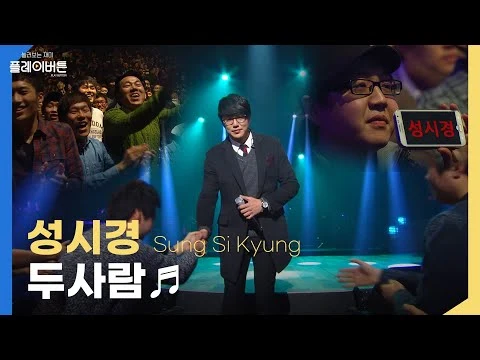
Booking Sung Si Kyung for Christmas
Sung Si Kyung appears on a year-end music show. So far, nothing unusual. Then the camera shows an entirely male audience. The song is “Two People.” The lighting, suit and voice are as tender as ever, yet the wide shot seems to suggest a different kind of gathering.
Broadcast on December 27, 2013, this edition of “You Hee-yeol’s Sketchbook” invited male audience members for a special whose Korean title translates as “Lonely Older Brothers.” The performance later circulated under two comic descriptions: “supply without demand” and “the business-client handshake.” KBS StarTV itself used the handshake nickname in the title of its 2025 full-length reissue. Sometimes an internet nickname sets the scene faster than a programme title.
Sung Si Kyung · “Two People” · December 27, 2013 broadcast
KBS broadcast clip bearing the PLAYBUTTON name · reuploaded June 18, 2021
901K · KBS광주 / KBS Gwangju · Watch on YouTube ↗
Romance optional; greetings required
The business-handshake comparison is beautifully economical. Read a singer’s contact with a fan as a professional greeting, and the same gesture changes genre. A year-end business reception briefly intrudes on a romantic ballad performance. The song offers devotion; the viewer starts imagining polite thanks for another year of working together.
But treating the audience as if it were rejecting him misses half the joke. The footage includes smiling, waving and applauding spectators. These people are not sitting there to prove that demand is absent. Listening to a love song need not produce one uniform expression of rapture.
The comparison to a military entertainment show works as another comic description of the unexpected picture. This was not an actual military-base performance. Change the audience composition in a familiar television setting, and the same singer and song can suddenly resemble a different sketch. The mismatch is with the reactions viewers have learned to expect from this kind of stage.
It is funnier because the singing stays good
Had Sung Si Kyung phoned in the song, or performed it as a joke from the start, this might have been a short gag. Instead, “Two People” remains at the centre. Its gentle opening, the melody’s movement towards the chorus and a voice that does not hurry the ends of phrases keep carrying the song independently of the audience cutaways. The picture is funny; the music still holds up.
“Two People” appeared on his fourth album, “다시 꿈꾸고 싶다” (“I Want to Dream Again”), released on April 7, 2005. Its promise of sharing life with someone beside you does not lose its tenderness here. Maintaining that tone is precisely what creates the contrast. The singer delivers a ballad, the audience listens in its own ways, and viewers returning to the clip find the comedy between them.
Same-broadcast full version · “Two People,” talk and “Simple, Happy”
Broadcast December 27, 2013 · reuploaded December 13, 2025 · plays from the beginning
KBS StarTV · Watch on YouTube ↗
The supply outlasted the joke
“Supply without demand” is a superb shorthand for the scene. It need not be taken as a literal verdict on the performance. There was applause in the room, people returned to the clip after the broadcast, and years later the broadcaster republished it with the meme in its title.
First comes the incongruity of “Two People” before an all-male audience. Then comes the joke attached to the handshake. On another viewing, the song itself registers. The singer’s seriousness, the audience’s reactions and the internet’s deadpan naming all move through the same video on their own terms.
For something supposedly without demand, this supply has lasted rather well.