REVIEW · Radio & Audio
Kanou Miyu on Life After Her Seoul Shows: February 8’s Kanou no Kanou SAY!!
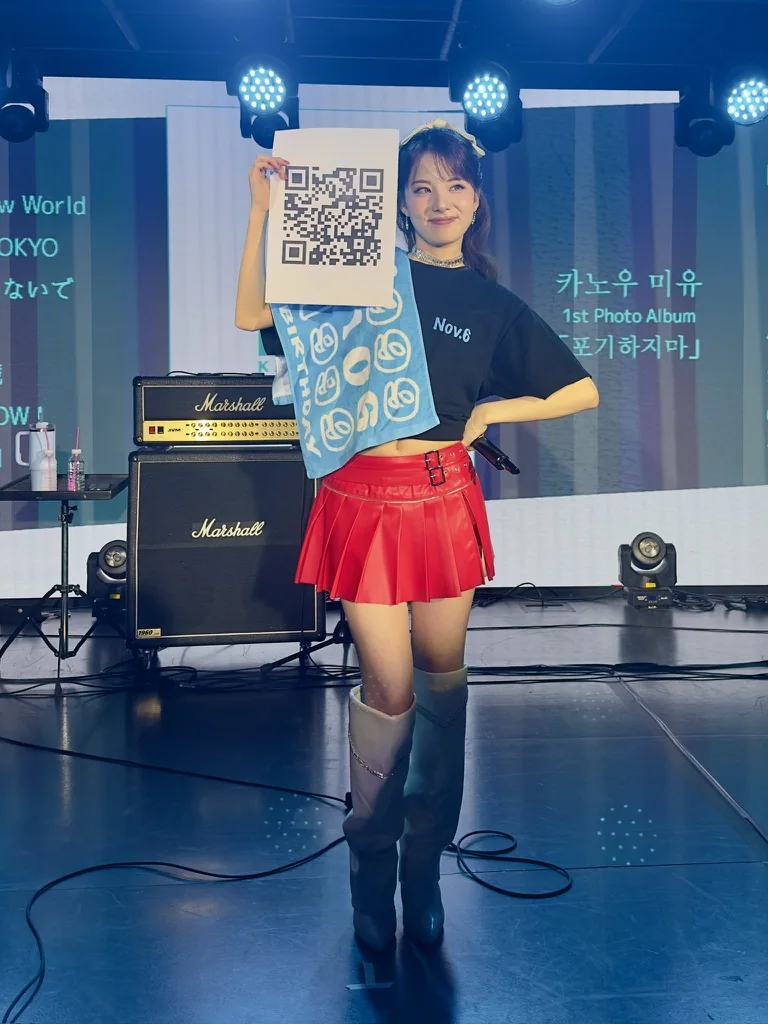
From Seoul’s 1999 concert and fan meeting to a new event in Japan: a monthly radio return reveals where Kanou Miyu stands now.
On the February 8, 2026 edition of LOVE FM’s Kanou no Kanou SAY!! , Kanou Miyu shared stories behind her January concert and fan meeting in Korea, the meaning of her first photo album Akiramenaide (あきらめないで, meaning ‘don’t give up’), and news of a fan meeting in Japan. Returning after a month, she sounded more at ease than in the premiere, with deeper conversations that brought her current life as an artist into focus.
This was more than a routine catch-up. She spoke candidly about what Seoul meant, how Japanese and Korean fans responded differently, why she returned to the title Akiramenaide now, and the mindset carrying her through 2026. Messages recommending Fukuoka restaurants and places to visit added the familiar warmth of local radio.
If the first episode was a starting point for introducing herself, February showed how far she was actually moving. Performing between Japan and Korea, meeting fans directly and preparing new material formed a present-tense story that emerged naturally across the broadcast.
Back after a month, Kanou no Kanou SAY!! revisits her beginnings
At the beginning, Miyu reintroduced herself as a native of Omuta, Fukuoka Prefecture, who moved to Tokyo at eighteen and began playing guitar and writing songs around ten. She explained that she now has more than fifty originals and, following her live work in Fukuoka, performs in Tokyo and Korea as well.
She also identified a turning point in her appearance on the Korea–Japan audition project Trot Girls Japan . It opened the way to wider stages, and in 2024 she also debuted as a member of SIS/T . It was a concise account of her current position, combining solo artistry with group membership.
Though brief, the introduction underlined that the present-day Kanou Miyu did not appear overnight; she has grown through years of accumulated work.
Why return now to Akiramenaide, written at ten?
The first song introduced was Akiramenaide. Miyu explained that she wrote it at ten and that it contains feelings from a difficult period at school. Reading the lyrics now, she sometimes wonders what could have troubled her so much at that age, while recognizing that a ten-year-old would certainly have had her own worries.
She noted that the song also appears on her first photo album and remains meaningful to her now, rather than merely being an old composition brought back out. Her present self is holding on again to words written by her younger self.
She was especially candid about a period in recent years when, although she had not stopped making music, she had been unable to release her self-written and self-composed originals consistently. Choosing an early song’s title for the photo album carries considerable symbolism as she recovers the flow of creation and activity after that time.
More than a simple encouragement not to give up, it is a phrase she wants both herself and her fans to keep close. In this broadcast, Akiramenaide sounded like a present-tense declaration rather than a song belonging to the past.
Seoul’s 1999 concert: special memories made with Korean fans
One central subject was January’s concert and fan meeting in Seoul. Miyu explained that the Korean concert was titled 1999 , the year of her birth and also the title of her November 6, 2025 birthday concert in Tokyo.
After the Japanese birthday show, she had wanted to bring the same concept to Korea quickly. Various circumstances delayed it, making Korea her first stage of the new year. In the end, she said, that choice worked out very well.
The fan response made the strongest impression. She had increased the proportion of originals while preparing a range of covers, and fans unexpectedly supplied chants to accompany her own songs. She recalled her surprise that they had prepared even this, and how firmly that moment stayed in her memory.
A prepared setlist and stage production matter, but live interaction ultimately makes a concert special. The broadcast conveyed naturally that Seoul was not merely another overseas date for either Miyu or her fans: it was a performance completed together.
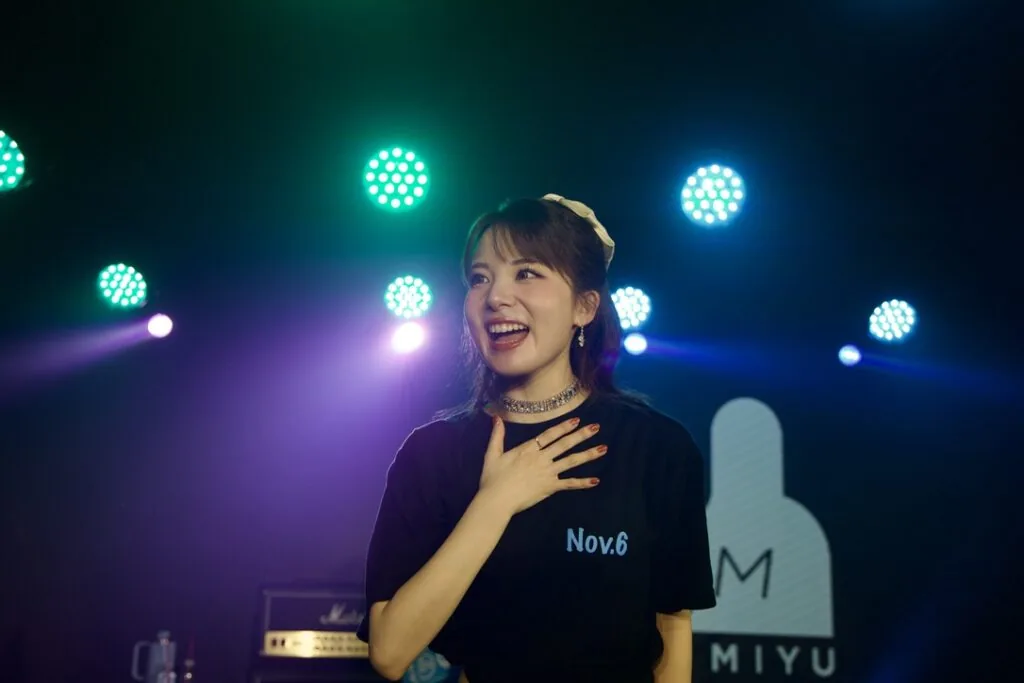
Different fan cultures, and language closing the distance
Miyu also offered an interesting account of differences between Japanese and Korean venues. Japanese fans, she said, tend to listen quietly and attentively, as though trying not to miss a word of the MC or talk segments. Korean fans combine that attention with an energy for calling out and actively responding to the artist onstage.
She particularly remembered Korean fans learning Japanese and addressing her directly. Phrases such as ‘You look cute today’ and ‘I missed you’ came from the audience in Japanese, and she responded, creating a back-and-forth exchange.
Hearing fans say they studied Japanese every day because they wanted to talk with her had moved her deeply. Beyond ordinary fan service, the willingness to learn each other’s language and grow closer left a strong emotional impression.
Miyu said she, too, studies Korean whenever she can for her work there. She spoke Korean during the Seoul concert’s MC segments and felt proud when local fans told her how much she had improved.
For an artist working between Japan and Korea, language can be a barrier, but it can also be a powerful means of connection. This broadcast offered scenes closer to the latter.
A first solo fan meeting, completed by guitar and an encore
She went on to discuss the fan meeting held the day after the concert. It was effectively her first solo fan meeting, she explained, and she performed two originals with guitar. An unexpected encore request followed.
For the encore, she sang Futari no Sekai (二人の世界) , and described an enthusiastic atmosphere. Fans had called out that the guitar performance was wonderful and that they wanted to hear more.
A question segment also drew a good response, with roughly twenty people submitting written questions. Time prevented her from reading them all, which she regretted, and she said she would like to try the format again at another fan meeting.
A fan meeting has a different density from a large concert. The distance between people matters more than the physical gap between stage and seating. These recollections suggested that Kanou Miyu can also bring considerable strength to that kind of encounter.
The pleasures of local radio, made with Fukuoka listeners
Midway through the show, she introduced replies to the previous episode’s request for recommended places in Fukuoka. Suggestions included ramen shops, cafés, a riverside walking route in Nakasu and a popular snack shop in Tenjin’s underground shopping area. She responded to each with obvious enjoyment.
An Omuta ramen shop brought back memories of going with her family. Café recommendations prompted a wish to visit on her next Fukuoka trip. Discussing Nakasu’s riverside, she admitted that moving to Tokyo young meant she had never properly experienced Nakasu at night, and said she would like to go for a post-show gathering someday.
Such moments embody local FM’s appeal. Rather than a star speaking in one direction, the content took shape through an exchange of memories with listeners from the area.
A 2026 goal: reading to deepen expression
A listener also asked what she wanted to try personally this year. Her first answer was ‘reading lots of books’ . She said it would help her musical work and was needed to broaden her expression, vocabulary and ways of thinking.
She added a joke about struggling with kanji, but the underlying point was a desire to absorb more and write deeper lyrics. Her direction is not simply to handle a busy schedule, but to enrich her inner resources as an artist.
Her visible activities already make 2026 look busy enough, yet within them she was preparing for a next stage.
A fan meeting announced in Japan: dialogue extending beyond Korea
Near the end, she revealed new plans: a fan meeting would take place in Japan in March. After Seoul, many Japanese fans had requested one at home, and those requests had led to an event.
She had also asked in advance what kind of fan meeting they wanted. Suggestions ranged from duets, personal outfit styling and a solo acting piece to a presentation on her interests, an acoustic version of Kuroi Shinzou (黒い心臓), and a mini-concert with a talk show styled after a public radio recording.
Miyu said she would actively incorporate those ideas into the preparations and asked fans to check the official website for details.
This was more than an event notice. It showed a way of planning with fans and how strongly the present-day Miyu values interaction with them.
Kanou Miyu’s 2026 keeps expanding beyond the stage
The central point of February 8 was clear. Kanou Miyu is doing more than singing. She is creating performances in Korea and Japan, exchanging languages with fans and broadening her work into photo books, drama, fan meetings and radio.
If the premiere said, ‘This is who I am,’ the second episode was closer to a report saying, ‘This is how I’m moving now.’ That movement is faster and wider than one might expect.
Kanou Miyu’s 2026 remains a work in progress. Kanou no Kanou SAY!! is becoming a record that lets listeners hear those changes at close range.
Related material

KANO MIYU changes the mood from afternoon to evening — Hanno Music Festival 2026

KANO MIYU returns to Fukuoka through song — Daikoku Festival 2026
KANO MIYU and SIS at the crossroads of Kuro Fes 2026

sis in Atami, Part 2: Evening Falls on the Same Stage

sis in Atami, Part 1: Thirty Minutes Between the Sea and Summer Light