REVIEW · Concerts & Live
KANO MIYU’s 1999 in Seoul: a more assured voice in the present

Selected repertoire from 1999 in Seoul
Selected repertoire · not in performance order
- HELLO, TOKYO
- Kuroi Shinzou
- Akiramenaide
- Good Day
- You
- Re:Road▶ Watch video
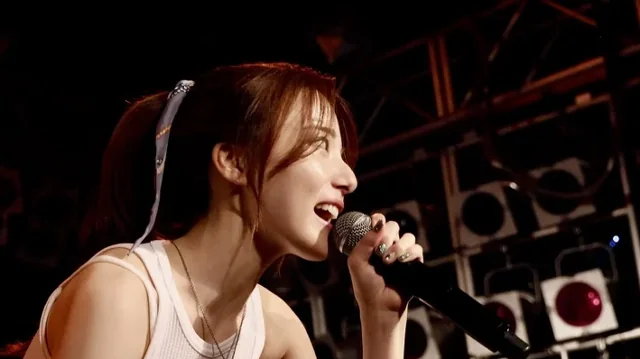
KANO MIYU’s 1999 concert at Hongdae STAGE on January 17, 2026, meant more than an overseas appearance. Korean fans were not meeting an unknown singer. An artist whose story they had followed through broadcasts and concerts was returning to establish where she stood now. The performance relied on the presence of the person onstage and her distance from the audience more than elaborate devices or exaggerated production.
Beyond scale or publicity, the concert confirmed that she had reached a stage at which she could shape a performance at her own pace. Its quality extended into her approach and the organisation before and after the music, making the evening feel distinct from earlier encounters.
The title 1999 might suggest retro decoration, but functioned less as nostalgia than a reference point for her progress. Success and failure, attention and quieter periods were absorbed into the show rather than explicitly emphasised. Listeners encountered them through the work rather than explanation. The year of her birth became a coordinate in the present more than a starting date.
The strength of live music at close range
An all-standing format brought the audience close enough for breaths, emotions and small uncertainties to remain visible. She used that condition as a strength rather than a burden. Unforced vocals, a steady handling of tempo and a flow adjusted naturally to audience responses sustained the performance.
Even without recalling every song in order, the overall design remained clear. Early numbers quickly raised the room’s temperature and gathered attention, demonstrating that her condition and breathing were ready. They worked less as an introduction than an assurance that the performance was prepared.
As the concert progressed, the choices directed toward Korean listeners became clearer than before. Returning to “Sarang-ingabwa,” also sung at the previous Japanese concert, felt intentional. It now serves as a recurring connection on Korean stages rather than simply another cover. Placing her own phrasing over a familiar melody felt like an absorbed choice rather than an experiment.
Korean songs she had not previously attempted added another distinction. IU’s “Good Day” and BOL4’s “You” suggested an interest in different emotional registers rather than merely famous titles. Demanding in range, feeling and expression, both came across as prepared attempts rather than overreaching challenges.
Originals forming the concert’s centre
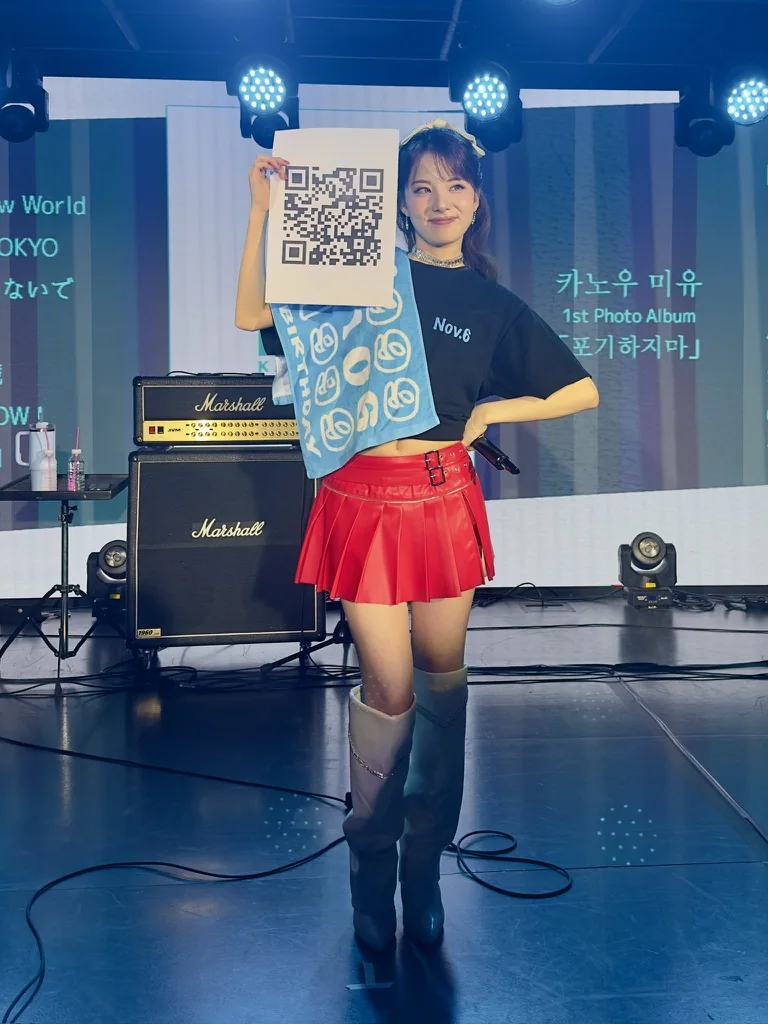
The original songs were not merely numerous; they formed a structure assigning a clear role to each section. Opening, middle and closing carried different emotions, allowing her current identity to emerge through the flow. That is why the direction remained clear even without a complete memory of the running order.
Early appearances of “HELLO, TOKYO” and “Kuroi Shinzou” established the room rather than force immediate excitement. The former set a tone through urban polish and restrained energy; the latter revealed tension and desire underneath. Holding emotion instead of pushing it out indicated a preference for steadiness over excess. Avoiding a forced opening surge looked like a decision grounded in live experience.
The middle moved through “Akiramenaide,” “DO IT NOW” and “Baby Paradise,” fixing the concert’s centre. Rather than manufacture dramatic emotional peaks, this section showed the attitude that had kept her onstage. Continuity mattered more than escalation, with “Akiramenaide” at its heart.
Its title can sound declarative, but the performance was quieter. Instead of crying out or pleading, she sang like someone who had repeatedly chosen not to give up and was now checking her own pace. Attitude arrived before message; how she stood mattered before what she said. Still being there became the song’s strength.
That weight does not come simply from the song’s age. Reportedly written around ten, it predates a secure stage or career. During the concert, she carefully recalled difficulty adjusting to school, a time when fitting in was not easy and finding a place took time. The song began in that experience.
It therefore sounds like words written to herself more than encouragement designed for others. Rather than promise that everything will improve, it resolves to keep moving, without inflation. The ten-year-old’s feeling passing through years into the same person’s voice turns recollection into a present-tense story. Childhood unease and current stability overlap without collapsing into emotion, conveying a direction held for a long time.
“DO IT NOW” then pushed that attitude forward rather than replace it with a new mood. Rhythm and breathing distributed energy instead of releasing it all at once, preserving a pace sustainable to the end. The call to stop hesitating sounded like an internal rhythm, not an external slogan. “Baby Paradise” brightened the flow without making it lightweight: its ease rested on experience and solidity.
With that centre established, the show could move naturally into its closing section. “Re:Road,” ending the main set, quietly acknowledged time walked together rather than announce a future. It recalled shared choices, not an isolated restart. The main set closed by marking the present position reached, rather than presenting a final result.
“TERMINAL” ended the encore. That was symbolic: the song leaves a sense of movement and continuity rather than declares a finish. It connects with her work between Japan and Korea, suggesting another journey ahead rather than completion. After the concert’s flow had settled, it was an apt way to return listeners to daily life.
The main set confirmed a relationship; the encore opened toward movement again. Placing “Re:Road” before “TERMINAL” made the performance feel firmly in the present while open to the future. That emotional landing was part of its lasting effect.
KANO MIYU · Re:Road
Seoul LIVE 1999 · 2026.01.17
Filming / channel: Diego Watch on YouTube ↗
KANO MIYU · TERMINAL
Seoul LIVE 1999 · 2026.01.17
Filming / channel: Diego Watch on YouTube ↗
The originals designed the flow rather than force emotional excess. Covers widened points of contact, while her own songs explained whose time and experience supported the stage. With “Akiramenaide” holding the middle, the show went beyond having endured to knowing how to endure. Sequence and maintained attitude stayed with the listener as much as individual songs, making her development and assurance persuasive.
What the different band arrangement conveyed
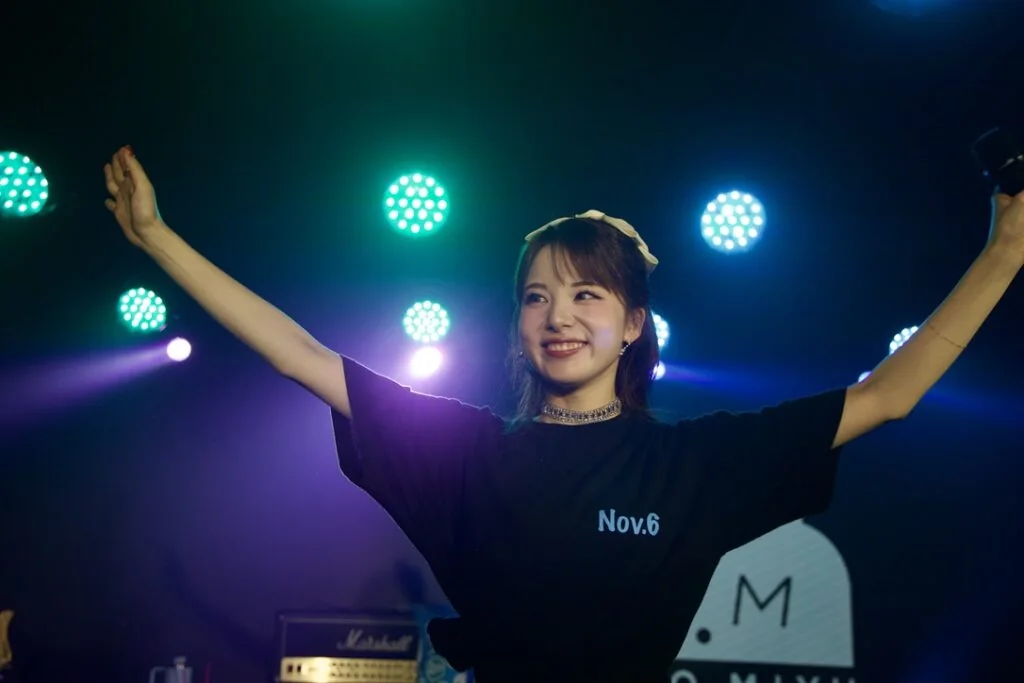
Although both concerts shared the name 1999, the Japanese birthday show and Seoul began from different designs. Japan used drums, guitar, bass and keyboards as a full band. Thick sound and strong rhythms created a rock-band impression, placing energy and drive first in keeping with a birthday celebration.
Seoul selected a simpler guitar-and-keyboard focus. That felt like a choice of direction rather than merely size. Where Japan presented a show, Seoul sought a shared breath with the audience. Leaving room for voice and melody to arrive directly, rather than filling every space, clarified the character of individual songs.
The Japanese rock arrangement stressed forward force; Seoul concentrated on quietly giving and receiving feeling. Within a more acoustic texture, her voice held the centre without exaggeration. The audience could share emotion while listening to sound.
The same artist and songs can take on different faces according to the relationship a performance seeks. The Seoul arrangement itself quietly demonstrated the importance placed on closeness and shared pacing with fans.
The impression created by smooth organisation
The offstage operation also mattered. Korean organiser Rockin Music kept the process calm and steady. Admission, the concert and subsequent activities connected without a break, with staff guidance restrained but precise where needed. Such details may not directly create musical emotion, but affect how fully an audience can receive and process it.
The contrast with earlier events made this clearer. Some Korean shows had moved too quickly for fans to keep up; send-offs and autograph sessions sometimes felt like procedures along a fixed route, with efficiency leaving little ease. Japanese events could also be accurate in operation yet give each person so little time that even a greeting was difficult, leaving prepared words unsaid.
This send-off and the “Baby Paradise” CD signing felt different. Participation required buying one of the first twenty CDs and spending at least KRW 80,000 in total including merchandise. Conditions were clear and guidance was orderly. What mattered most was the quality of the time those participants actually experienced.
Instead of immediately moving on after an autograph, fans had a real, if short, space to talk. Each could finish what they had prepared to say, and she could respond. The result resembled a memorable encounter more than a routine benefit, something hard to obtain in a rapidly passing event.
That ease prolonged the concert’s resonance. Impressions from the stage continued below it, allowing the whole day to become one experience. Satisfaction depended on the performance and the stable flow beyond it. Such details are what make another meeting appealing.
A gesture before the stage: hand warmers prepared by the artist
A lasting scene happened before admission. Entry was first come, first served, and mid-January Hongdae felt cold. A growing queue could leave listeners exposed to that weather.
The hand warmers distributed then were more than an improvised staff response: they were gifts KANO MIYU had prepared herself and passed through staff. A small consideration reached each person from the performer they had come to see. It arrived quietly, without a separate announcement, yet suggested that waiting time too had been considered part of the concert.
The moving quality lay in its direction, not its size. Instead of the audience simply fitting a system, the artist had considered their circumstances first and acted to reduce discomfort. It stayed in memory as a choice about people rather than a device intended to move them.
Details like that change the whole impression. However accomplished the music, memory is also shaped by the spirit in which people feel invited. A hand warmer raises body temperature; the gesture can change a concert’s emotional temperature. A sense of facing the same way as the audience existed before she stepped onstage and remained to the end.
What 1999 in Seoul left behind
Without grand declarations or exaggerated production, January 17 showed where she stood. Korean songs acknowledged the setting while her own music remained central. Even in standing-room proximity, she held the flow without emotional excess, relying on accumulated breathing and pacing to sustain the stage.
This was a demonstration of the present rather than a commemoration of the past. Songs, attitude and audience distance supplied the evidence. The title converged on a question: how firmly does this person stand here now? Each song added something to the answer.
The next day’s fan meeting extended that impression in another form. The onstage work and offstage attitude joined, offering a fuller view of the artist. The two dates are likely to remain a connected memory.
The final answer belonged to each person leaving the venue. Including the following day’s encounter, those memories could explain why 1999 pointed toward the present rather than simply the past.
Sources and further reading
Related event footage
Related event footage from Diego’s channel.
View all videos · 2
KANO MIYU changes the mood from afternoon to evening — Hanno Music Festival 2026

KANO MIYU returns to Fukuoka through song — Daikoku Festival 2026
KANO MIYU and SIS at the crossroads of Kuro Fes 2026
sis in Atami, Part 2: Evening Falls on the Same Stage

sis in Atami, Part 1: Thirty Minutes Between the Sea and Summer Light