REVIEW · Songs & Albums
“Baba Yetu”: A Prayer in the Opening of Civilization IV
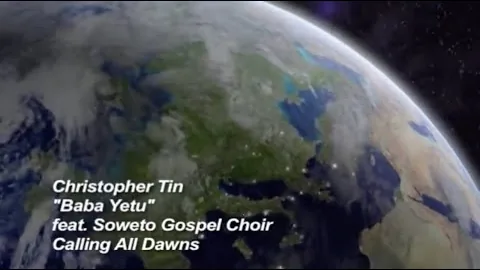
The first thing we encounter in “Baba Yetu,” the theme from Civilization IV, is the human voice rather than an explanation of which civilization to choose. Christopher Tin’s piece is based on the Lord’s Prayer in Swahili. Knowing that specific language and form of prayer brings us closer to what lies behind a vague impression of grandeur or exoticism. The player will meet countless choices and competitions, but before them the song opens an act of singing and wishing together. The emotion of the opening screen expands from these voices.
Christopher Tin - Baba Yetu (Official Video) feat. Soweto Gospel Choir
More than unfamiliar words
Treating Swahili simply as an unfamiliar sound or a device for creating mystery removes the song’s specificity. Resonance can reach listeners who do not know the language, but the words carry actual meaning and a context of prayer. Considering whom the title “Baba Yetu” addresses alongside that prayer’s grounding deepens the listening rather than narrowing it. The role of words joins the impression of beautiful sound. Music becomes less a universal language stripped of meaning than a meeting place where people with different languages can attend to one another.
Prayer can be words spoken inwardly alone and an act shared with other people. The chorus in “Baba Yetu” can be read as connecting those two scales. When one voice’s call meets many, a private wish gains a wider resonance. That does not mean everyone holds exactly the same experience or belief. Choral sound has a physical sensation of different voices breathing together. Following it brings the piece’s grandeur closer to the experience of real voices moving together than to an abstract slogan of humanity.
The human scale drawn by a chorus
The strong rhythm and expansive choral expression put a stationary prayer text in motion. When the voices gather their strength, reverence and vitality overlap instead of separating. The notion that prayer must exist only in quiet sound loosens naturally. Rather than lightly erasing the words’ weight, the piece’s bright energy reveals the vitality of singing together. A listener at the game’s first scene can feel at the threshold of a broad activity rather than receiving an explanation. Sound prepares a breath for a journey that has not yet begun.
An intriguing contrast arises where a game of managing civilizations meets the voice of prayer. The choices given to the player are specific and sometimes competitive, yet the shared act of singing comes before them. There is no need to read that placement as evidence that all the game’s content means peace and cooperation. It can instead be heard as music briefly making room for a differently scaled perspective before tension and choice begin. A gaze toward one civilization overlaps with a space of many voices resonating together, turning the opening into an emotional experience beyond learning the rules.
A call continuing beyond the game
There is no need to explain the resonance of “Baba Yetu” solely through its awards. Even outside the game, it retains a concrete center in words of prayer and voices gathering together. Without screen or controls, we can attend to the call and follow the chorus’s breath. Knowing the grounding of unfamiliar words, rather than casually calling them mysterious, allows the music’s breadth to hold more differences. Its grandeur remains less a sound making everyone identical than a sense of different voices staying together in one song.