REVIEW · Songs & Albums
Kim Kwang Seok’s “Saranghaetjiman”: What Remains After “But”
Karaoke song numbers
Kim Kwang Seok’s “Saranghaetjiman,” meaning “I loved, but…,” leaves its title unfinished. The circumstances that might follow that conjunction emerge as the song unfolds. The short phrase preserves the feeling while acknowledging that feeling alone cannot change a relationship. Its unfinished space can explain the other person’s circumstances, but also marks where the speaker struggles to say more. Placing a pause before an outcome makes us hear both what happened and how it is being told.
Calling this passive love risks reducing hesitation to a single attitude. First consider the distance of watching from afar, words difficult to voice and feelings still present. Kim’s singing gives that unfinished sentence a human expression. Watching from a distance can combine resignation, consideration and fear in varying proportions. Without assigning one character trait, we can hear several unresolved layers within the speaker’s few words.
When Saying “I Loved” Is Not Enough
The strength of love does not guarantee a relationship’s outcome. The title acknowledges that mismatch without erasing the feeling. It might be easier to claim there was no love, but the song refuses that resolution. Recognizing a past emotion differs from restoring a present relationship. Bound together despite that divergence, “I loved” sounds less like a declaration offering proof than words protecting time that cannot be changed.
Self-reproach, longing and unfinished feeling can therefore inhabit the same words. Rather than ruling on what would have been right, we hear why the sentence stops there. Even an unrealized relationship contained time actually lived. Calling it past does not prevent the feeling from becoming present again in the act of speaking. Leaving that time difference intact, the song draws attention less to the explanation than to the hesitation revealed while explaining.
The Grain of a Voice Before the Sentence
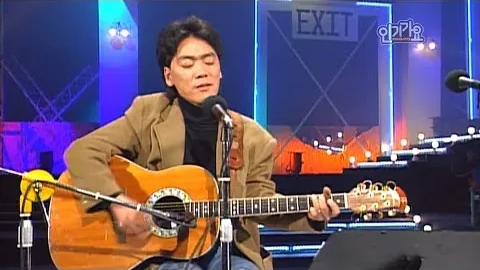
In Kim’s singing, meaning is difficult to separate from delivery. Hesitation and resonance feel closer in song than when the same sentence is read. These sound like words someone is speaking now, rather than smoothly organized emotions. Even with the same meaning, the time needed to utter them feels different within a voice. Following it brings us close both to what is said and to the difficulty of saying it all.
Follow how a phrase begins and what its ending leaves behind to hear the emotion more precisely. Listen where words are laid down as well as where the sound bursts out. A confession’s force does not always follow volume. The lingering space after a sentence can feel like the time of someone unable to withdraw what was said. Quieter sound need not mean weaker feeling; apparent release can still carry attachment.
The Limits of Longing from Afar
A feeling that remains need not necessarily be conveyed to its addressee. A song can express emotion but cannot determine the other person’s response. Recognizing this distance keeps longing from being dressed only in beauty. Even a legitimate feeling creates no obligation to answer. Keeping that limit allows us to hear the urgency without letting it explain an entire relationship on both people’s behalf.
The song lingers because it tries to describe unfinished feeling as something over. The title’s past tense and the continuing voice face different times. After the music stops, the sentence missing after “but” remains. Resonance arises between words filed under the past and emotion still passing through the present. What is never said leaves more room than an explanation claiming every reason, allowing listeners to place their own unfinished sentences quietly beside it.