REVIEW · Songs & Albums
Kaki King’s “Ritual Dance,” a path from the film’s fingertips to Michael Hedges
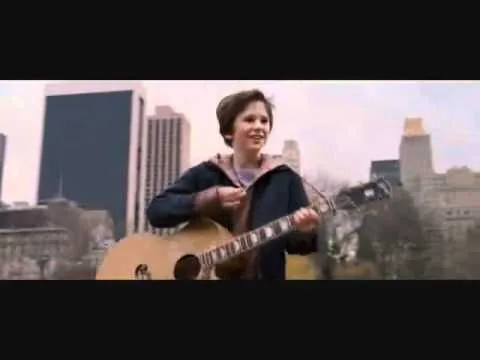
If you encountered “Ritual Dance” through the guitar scenes in August Rush, two names belong beside it. Kaki King performs the music; Michael Hedges wrote it. One musician’s composition passes through another’s hands to become a fictional boy’s music. Keeping those three positions distinct lets the scene reveal something beyond precocious talent: an existing work finding a new body and story.
The film offers the excitement of meeting an instrument for the first time. The composition, however, has a life before that encounter. On Hedges’s album Taproot, “Ritual Dance” belonged to a story of its own. Returning to that setting opens another route into the short performance, beyond the film’s emotional frame and the vague mysticism its title might otherwise invite.
August Rush — Playing in the Park: “Ritual Dance” by Kaki King
The musician behind the moment
King contributed music to August Rush and also served as a guitar-playing hand double. Her role extends beyond supplying a sound a character could plausibly make: the body producing the music becomes part of the image. The boy’s fictional discovery and a working musician’s performance occupy the same scene. Admiring those hands on the instrument is also an opportunity to remember the person they belong to.
Watching an action while responding to its sound creates a particular intimacy. The image shows where the music comes from; the music determines what the gesture means. In “Ritual Dance,” the listener discovering a piece briefly shares the character’s discovery of an instrument. A familiar guitar seems newly unfamiliar. That sensation is one of the film’s most direct invitations.
A title with an earlier story
Discussing Taproot in an interview, Hedges explained that he turned characters, places, and events from his own invented myth into track titles. “Ritual Dance” names an action within that story. Its title is consequently more specific than an abstract invitation to imagine a mysterious ceremony. A name already belonging to one imagined world has travelled into another.
Knowing the entire myth is no prerequisite for hearing the piece. In the film, it accompanies a boy’s discovery; on the album, it can be approached as an event in a character’s journey. The focus shifts as the musical work enters a different narrative. The feeling received from the film can remain intact while the listener recognizes that the film was not the beginning of everything the piece contains.
From King back to Hedges
King’s version offers a short route back to Hedges. Comparing the two performances need not become a contest. One encounter draws attention to the relationship between gesture and sound on screen; another places the work among the surrounding tracks of an album. Where a listener first meets a piece shapes later encounters, without requiring every encounter to remain inside that first scene.
Returning to the film, it becomes possible to see King’s and Hedges’s time behind the boy’s fingertips. Discovering music need not mean a miracle appearing where nothing existed before. It can mean a composition reaching another person’s hands, and those sounds reaching someone who has never heard them. The wonder of “Ritual Dance” continues within that chain of encounters.
References
Music and production information
Music Technology: Michael Hedges interview, 1991 ↗ · Kaki King: official press materials ↗ · August Rush: music credits ↗