REVIEW · Songs & Albums
Nightwish’s “Sleeping Sun”: A Voice Wishing the Night Would Stay
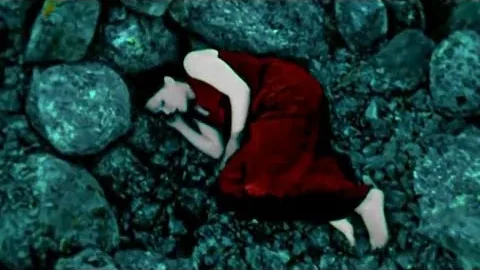
In Nightwish’s “Sleeping Sun,” the sun sleeps rather than disappears. This small personification brings a vast natural scene close to private feeling. It contains a wish for night to continue forever. Unlike songs awaiting a new day, this one inclines toward not losing the present darkness. Stillness alone therefore cannot explain its emotion. Beneath an apparently peaceful scene is a wish struggling with the fact of time continuing, and lyrical singing gives that wish scale.
Nightwish - Sleeping Sun (OFFICIAL VIDEO)
A human feeling attached to a sleeping sun
Nature moves in regular cycles, but the heart wants to hold a favorite moment longer. The imagery sits where these two speeds differ. Even with large subjects such as sun and sea, the center is the narrator’s wish, not an explanation of natural phenomena. Beauty is both a setting for emotion and a world that cannot be stopped at will. That limit makes the wish for a long night more poignant than simple romance.
Night often signifies fear or solitude, yet here it is not only a time to escape. A desire to remain in darkness unsettles the equation of daylight with joy. The same scenery does not give everyone the same feeling. Rather than immediately substitute grand ideas such as life and death, considering what the narrator does not want to lose brings the lyricism close. Leaving night’s meaning unlocked lets the emotion move longer.
The paradox of wanting a longer night
Listening through Tarja Turunen’s vocals reveals how a quiet image gains wide space. Sleeping suggests reduced movement, but the singing does not confine stillness to small sounds. A heart can be deeply stirred while its surroundings remain quiet. Heard through this contrast, dramatic expression reveals desire within the landscape instead of breaking it. Vocal scale and scenic stillness perform different roles.
Remembering the piece only as praise of nature’s peace can miss the impossibility of its wish. Night eventually ends, and asking it not to is also evidence of knowing that. Beauty therefore contains some anxiety: joy at finding peace and a premonition of its passing. Emotional intensity does not resolve these into one. The greater the wish to stay, the clearer the fact that it cannot be held.
A small wish within a vast landscape
The aftereffect is closer to the weight of a moment wished to stop than an illusion of stopped time. Read again, the sleeping sun looks beyond nature toward the face of a world the narrator wants to retain. The wish is large enough without added grand philosophy. Between the voice wanting night and time that must flow, listeners can recall moments they wanted to inhabit longer. The song does not possess that moment; it makes room to look at it together briefly.