REVIEW · Songs & Albums
Hyakka Ranman Gumi’s “Tteugeoun Sangsirui Jeonya”: Heat Left in the Night
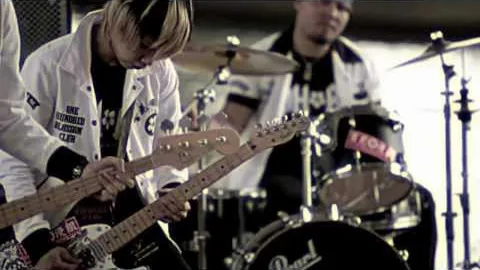
Hyakka Ranman Gumi’s “Tteugeoun Sangsirui Jeonya”—roughly, the eve of a burning loss—does not see loss only as a cold aftermath. The title turns toward the moment before disappearance, with emotional heat still in the body. Waiting continues too long to say it is over, while absence is too clear to trust a return. Putting punk-rock propulsion beside this hesitation reveals tension: music moves while the heart stays. That mismatch gives “hot” concrete weight.
Hyakka Ranman Gumi — Tteugeoun Sangsirui Jeonya [MV HD]
A night not yet over
An eve ordinarily precedes tomorrow’s event. Here an inability to accept approaching loss comes before expectation. The narrator does not stand at a clean border between end and beginning. An absent person and a self continuing in sentiment occupy one night. Reading it as a delayed heart missing the moment to withdraw hope, rather than vague youthful wandering, brings its chill closer.
Heat cannot be reduced to determination or anger. Before loss is fully admitted, small memories do not cool and cling to the body. Apparent composure gives way to another surge at a slight image. The night’s emotional temperature is uneven. Lessons after loss cannot be hastily attached: the narrator is closer to still passing through time than explaining what was learned.
Objects remaining beneath moonlight
Cigarettes and moonlight carry abstract sadness into objects. What burned cannot return, and light reveals what remains rather than erasing darkness. No single interpretation is necessary, but traces clearly become nearer than the absent person. Loss becomes too many afterimages rather than nothing. Following objects’ textures instead of listing emotional names lets the body understand why night does not pass easily.
Rock energy does not freeze the stopped scene into romantic still life. Forward force makes the stationary heart collide harder. One approach avoids equating rough motion with liberation. Loud sound and bodily movement do not detach every memory immediately. Where propulsion and stasis overlap, the song makes time for endurance rather than resolution. Absence surviving the noise keeps hold of its emotion.
Time running cannot escape
Who the narrator becomes afterward may remain outside the song. It holds the present of uncooled emotion more clearly than recovery’s prospects. Without wrapping loss in beauty or making it growth material, the night of moonlight, traces and waiting contains enough story. Its heat does not vanish easily after the song, because knowing something ended and being able to end it remain far apart.