REVIEW · Festivals
Hideki Sakuma takes his songs into the audience — Hanno Music Festival 2026
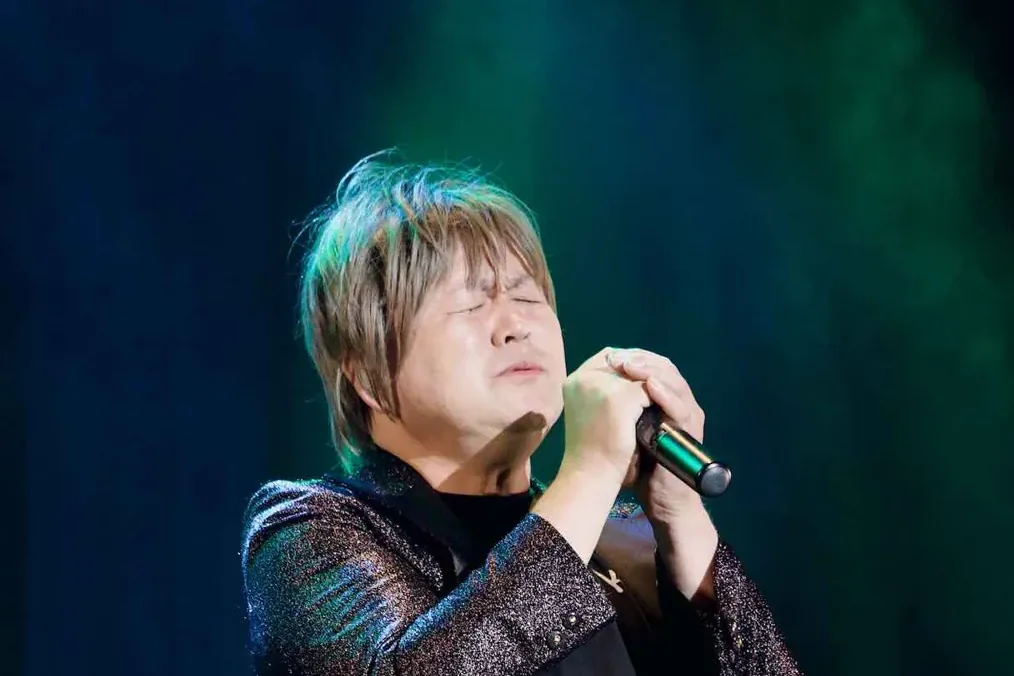
Hideki Sakuma steps into the audience
At 2 p.m. on October 11, the first performance of the 2026 Saitama Hanno Music Festival began in the main hall of Hanno Civic Hall, Saitama Prefecture. With separate shows at 2 p.m. and 6 p.m., the festival brought together traditional Japanese music, popular songs, dance and other forms of performance.
One artist who stood out was Saitama-born singer-songwriter Hideki Sakuma. Active since the late 1980s, he is a veteran of regional stages and radio in Japan. His work extends from lyrics, composition and arrangements to instrumental performance, record production and hosting shows.
From the first song of the afternoon show, Sakuma chose to meet listeners at close range. Still singing, he left the stage and approached audience members individually to shake their hands. He continued through the seating area without breaking off the song, greeting the people who had come to hear him.
A concert usually separates singer and audience into stage and seating. Sakuma crossed that boundary almost as soon as the show began. This was more than a brief gesture for the front row: he circulated through the audience, taking as many hands as he could. Listeners could engage with the performance face to face from their seats.
The approach also recalled his long history of touring Japan. Having met listeners at local festivals, cultural events and small shows as well as large halls, Sakuma was unlikely to find the journey into the seating area unfamiliar.
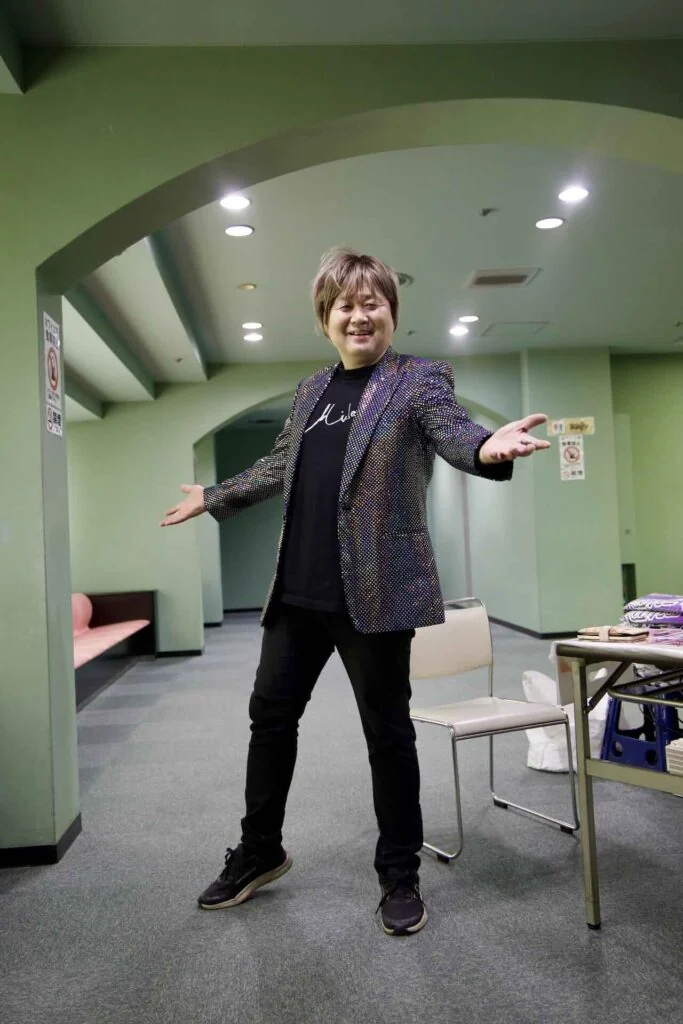
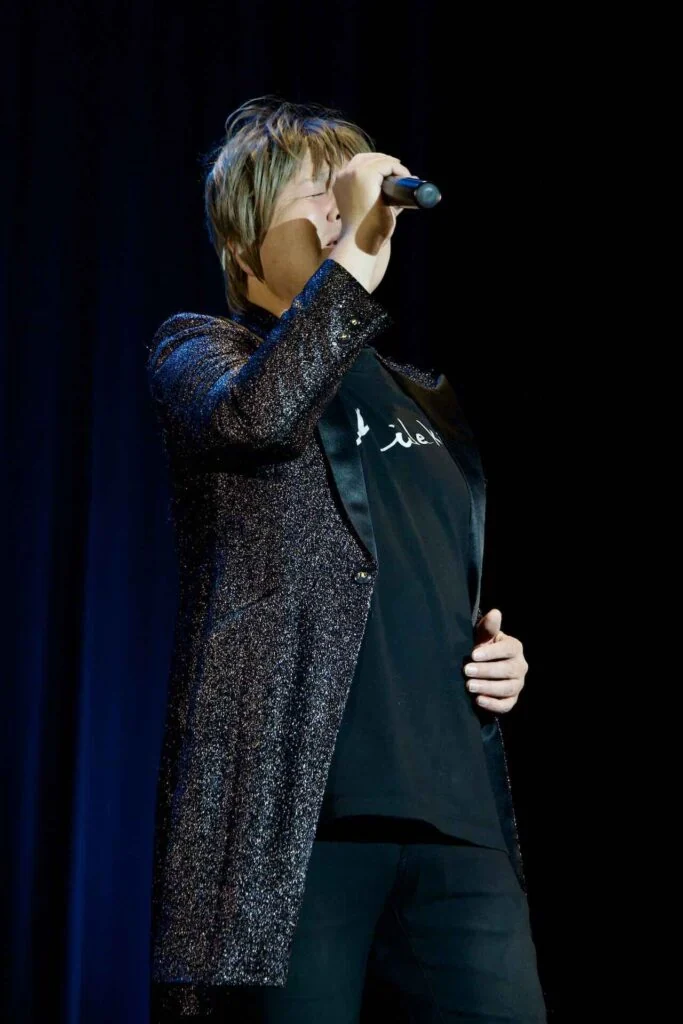
An evening show combining songs and comedy
For the 6 p.m. show, he offered a different kind of performance. Spoken lines and acting entered the songs, creating a humorous stage narrative. Rather than simply talking briefly between numbers, he incorporated dialogue and sketches into the music itself, as though telling a continuous story.
His shifts from singing to dialogue and back suggested musical theatre with comic elements rather than a conventional vocal recital. The earnest singer-songwriter and the playful entertainer appeared together on the same stage.
It was particularly interesting to see different structures in two performances on the same day. The first built familiarity through handshakes in the audience; the second used acting and dialogue to add humour to the songs. Communication, storytelling and comedy became parts of the performance alongside singing.
His agency, Sun Music, describes an entertainer whose work includes songwriting, arranging, instrumental performance, recording, artist production, emceeing and radio. On this occasion, that combination of musician, host and comedian was visible onstage.
The musician who lived in his car while visiting 628 locations
Sakuma was born in Saitama on November 20, 1971. He comes from the former town of Fukiage, now part of Konosu, and became interested in music through his father's guitar as a child. Writing songs and playing in bands eventually led him towards a singer-songwriter career.
A particularly striking episode came in 1997, when he travelled to wired-music broadcasting offices across Japan. At 25, he released “Ai wo Kanjitai” through his own label. A record release alone, however, could not easily carry his songs nationwide. Before the internet and social media became everyday promotional channels, radio, wired-music networks and record shops were important routes for a new musician.
He decided to introduce his music in person. Driving around Japan, he visited broadcasting staff and lived out of his car along the way. By the end, he had called at 628 locations.
The roughly year-long journey to 628 broadcasting offices remains part of his official biography. He had taken responsibility not only for making music but for the work of bringing it to listeners.
Watching him enter the audience at Hanno and shake hands one by one brought that history to mind. Decades earlier, he had sought out broadcasting professionals to introduce his songs. Now he was approaching listeners directly inside a concert hall.
Of course, a nationwide promotional tour and a handshake during a performance are different things. What they share is an inclination to meet the people who hear the music in person.
Sakuma subsequently continued organising his own concerts, handling travel, carrying equipment and working on sound. Still described as giving around 100 performances a year, he remains an unusually active figure in Japan's regional live scene.
From a band to a solo career: 20 years since his major-label debut
Sakuma's career began with bands. After starting in the late 1980s, he began releasing his own music in the 1990s and established an independent label in 1997, developing his recording activities in earnest.
In 2004, he entered the major-label market as a member of Straw with “Sayonara mo Ienakute.” He then prepared for a solo career, making his solo major-label debut on January 25, 2006, with “Tada Mitsumeteta Dake no Hatsukoi.”
The song drew on his own first love. In a January 2026 reflection marking 20 years since that debut, he recalled turning those memories into a song ahead of the release. Positive responses from industry contacts helped determine its selection as his debut single.
After the debut, he performed promotional shows at record shops around Japan, including Shinseido, Yamano Music, HMV and Tower Records. He sang and sold records in person. As with his 1997 visits to broadcasting offices, the method was to go directly to the places where his music could reach people.
The year 2026 marks 20 years since his solo major-label debut; his working life in music stretches much further back if counted from his earliest releases. That accumulated experience informed the assured hosting and varied structures of the Hanno performances.
The evening combination of song and comedy showed his range particularly clearly. He did more than perform his own compositions: dialogue and acting invited the audience to enjoy the show as a whole. His use of music, conversation and humour distinguished the set from a performance centred solely on singing.
A Saitama musician singing about Saitama
Another essential part of Sakuma's work is his home prefecture. He has long performed and broadcast around Saitama, and has also released music about the region.
One example is “Jinsei Tamatama… Saitama de,” a song whose distinctive title puts the prefecture's name front and centre.
Although Saitama is part of the metropolitan region beside Tokyo, Japanese popular culture often defines it in comparison with its neighbour. The film Fly Me to the Saitama turns that regional image into exaggerated comedy. Satirising prejudice and discrimination against Saitama, it attracted considerable attention after its 2019 release, followed by a sequel in 2023.
“Jinsei Tamatama… Saitama de” became more widely known through its use in the film series. A local musician's song about his own region had reached audiences through a nationwide commercial film.
He also meets listeners through regional radio. His FM NACK5 programme, Sakuma Hideki no Sunday Ongaku Kobo, has provided another outlet for songs and conversation.
That combination of radio and live work connects with the style seen at Hanno. Telling a story within a song or engaging an audience directly requires more than vocal ability. It takes experience in holding people's attention and steering a show while presenting the music.
Traditional instruments, yosakoi and a varied festival programme
Sakuma shared the festival with artists from many fields. KANO MIYU, AiAi, SOMELINEZ, Yume (夕芽), 和nagomi, Rikomao and Toshihiko Arizono appeared alongside the Japanese traditional-instrument quartet Saitamatic and yosakoi group Hanamaiki (華舞旗).
The programme was not built around popular songs alone. Traditional instrumental performances, yosakoi and a presentation by Takao Dayu drawing on oiran and tayu culture also featured.
Yosakoi originated in Kochi Prefecture and combines traditional dance with contemporary music and choreography. Its dynamic ensemble movement has made it a familiar part of festivals and performances throughout Japan.
The oiran-and-tayu presentation drew on historical figures associated with Edo-period pleasure quarters. Ornate clothing, accessories, distinctive gestures and ceremonial movement evoked their dress and culture. At Hanno, this traditional-cultural presentation appeared alongside contemporary popular music.
KANO MIYU also performed in both shows, changing her selections between the two. She combined her own songs with Japanese pop and anime music, and sang “Renbo” in each show—a Japanese-language remake of Korean singer Lee Ki-chan's “Gamgi.”
Where Sakuma drew on his experience for audience participation and comedy, other artists offered performances shaped by their own genres and backgrounds. Traditional and popular music, dance and other forms of performance could all be encountered within one festival.
A handshake from the musician who visited 628 locations
Two scenes define Sakuma's appearance at Hanno: entering the audience during the first afternoon song to shake hands individually, and turning songs and dialogue into a comic performance in the evening.
Different as the two approaches were, both invited people to participate rather than merely listen. In the afternoon, the singer came to their seats. In the evening, narrative and humour helped carry them through the music.
Since visiting 628 wired-music broadcasting offices to promote his songs in 1997, Sakuma has continued bringing music to countless venues. Twenty years after his 2006 solo major-label debut, recording, broadcasting and live performance remain parallel parts of his work.
His Hanno appearance relied less on elaborate stage machinery or large-scale production than on meeting listeners directly. Moving through the audience while singing, then bringing laughter through dialogue and acting, he revealed the experience of a veteran of regional stages.
Back on a stage in his home prefecture, Sakuma demonstrated what he has long done: sing, meet people, and guide a show through music and conversation. The two performances at the 2026 Saitama Hanno Music Festival offered a chance to encounter those different sides together.