FEATURE · 칼럼
Korean–Japanese Music Exchange: From K-POP to J-POP Looking Toward Korea
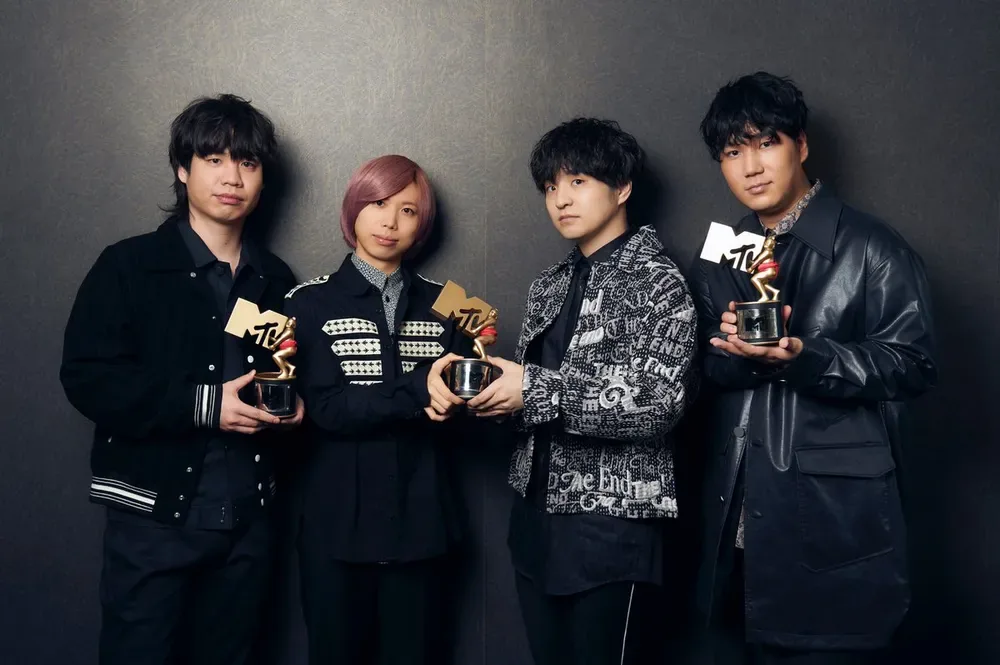
The central questions in discussions of Korean–Japanese popular-music exchange were once relatively simple. Could Korean singers succeed in Japan, and how competitive could Korean music become in one of the world’s largest music markets? Japan long ranked among the most practical overseas markets for Korean singers. Artists who established themselves at home released Japanese-language records and expanded their following through local broadcasts and performances, creating a standard formula for overseas expansion.
From BoA through TVXQ!, Girls’ Generation and KARA to BTS, TWICE, SEVENTEEN and Stray Kids, generations changed, but the direction remained largely constant. Korean music crossed to Japan and established a place within that enormous market. Initially, rigorous localization through Japanese-language records and local television appearances mattered. Once K-POP itself became a genre brand, the approach shifted toward reaching Japanese consumers while retaining much of the music and performance created in Korea.
By the mid-2020s, however, the previously less visible reverse flow was growing noticeably. More Japanese artists were performing in Korea, venues were expanding, and Korean listeners consuming Japanese music through streaming were steadily increasing. J-POP, once consumed mainly by fans who actively sought it out, began making itself felt on major streaming services and in large venues. A 29.5 percent year-on-year increase in J-POP streaming on KT Genie Music in the first half of 2026 makes this change difficult to explain as an impression or movement confined to a few fandoms.
Interestingly, this extends beyond saying that J-POP is popular in Korea. Reversing the earlier scene of Korean artists learning Japanese and preparing local activities to approach Japanese fans, Japanese artists are now studying Korean and seeking direct communication with Korean supporters. Artists working in Japan appear on Seoul stages; Korean fans sing Japanese songs; videos made at Korean shows reach Japan and other countries. Similar movements are visible not only in major concerts but also in live houses and small shows drawing dozens or hundreds.
Understanding today’s exchange therefore requires examining how the boundaries separating the two music markets have changed over more than twenty years, rather than treating K-POP’s Japanese expansion and J-POP’s Korean arrival as separate phenomena. Record companies, broadcasters and large agencies once led cross-border movement. Streaming platforms, social media and individual fans now assume some of those roles. A new sequence is emerging: music crosses first, fans form, and artists follow.
Korea’s worries about Japanese music, and an unexpected outcome
To understand the present, we need to look back to the late 1990s. Korea began opening to Japanese popular culture in stages in 1998, subsequently admitting films and performances through 1999 and 2000. Following the fourth opening in January 2004, Japanese-language popular-music records could effectively circulate fully within Korea. Younger music fans may find this unfamiliar, but Japanese popular culture had not previously been content that could circulate freely there.
Institutional restrictions did not mean Japanese music was entirely absent. X JAPAN, Namie Amuro, Hikaru Utada and L’Arc-en-Ciel already enjoyed considerable recognition among some Korean fans. People bought Japanese records directly or encountered music through satellite broadcasting and the internet; Japanese dramas and animation also sparked interest. But enthusiasts actively seeking music and records formally circulating in a mass market with routine broadcast and advertising exposure were entirely different matters.
The opening raised substantial concerns in Korean society. Japan possessed a far larger record market, broadcasting industry and entertainment capital. Some believed unrestricted inflows could damage Korea’s smaller popular-culture industry. Predictions included Japanese music and television spreading quickly among young consumers and weakening Korean content’s competitiveness.
The outcome differed considerably. Japanese music did not take over Korea’s popular-music market immediately after full opening. Its fan base grew without encroaching enough to overturn the mainstream structure. Instead, an unexpected movement in the opposite direction began gathering momentum around the same time: Korean dramas and music started creating new consumer groups in Japan.
This is an important starting point for understanding today’s exchange. Culture does not necessarily flow only from larger markets to smaller ones. As content competitiveness, fandom formation and media environments change, music from a smaller market can enter a larger one, generating another reverse movement in the process. Korea’s development from a country worried about Japanese cultural inflows into a global K-POP producer, followed by Japanese music finding new Korean consumers, shows the complexity of the changing relationship.
From Korea to Japan: more than twenty years of K-POP
Korean popular culture became noticeably more prominent in Japan in the early 2000s. The Korean Wave centered on Winter Sonata spread interest in Korean culture across Japanese society. In music, BoA successfully established herself and demonstrated that Korean singers could compete within Japan’s popular-music system. As TVXQ! and other artists entered in earnest, the musical Korean Wave began developing into an industry.
Their work in Japan differed from merely introducing music already released in Korea. They produced separate Japanese-language records, worked with Japanese labels and participated actively in local broadcasting and promotion. They ran dedicated Japanese fan clubs and concerts and events adapted to that market. Rather than exporting successful Korean artists, this resembled a localization strategy of entering Japan’s industry and working under the same conditions as Japanese performers.
The structure changed again in the 2010s. Girls’ Generation and KARA gained wide recognition, followed by large fandoms for BTS, TWICE, SEVENTEEN and a new K-POP generation. Japanese songs and Japanese-style promotion had once seemed virtually essential to entry. Once K-POP became a brand, however, many more Japanese fans consumed Korean-language songs and Korean-produced content themselves.
This is significant. Korean artists initially had to adapt to Japan’s industrial conventions. As K-POP acquired global influence, that relationship gradually changed. Japanese fans now listen to Korean songs, seek Korean entertainment and social media, and consume new releases in real time. Instead of awaiting translations or local records, they encounter content almost simultaneously with Korea. The shift is from an era when Korean music had to become like Japanese music to compete, to one when its Korean identity is itself an advantage.
K-POP’s position in Japan can no longer easily be described as simply foreign music or a passing fashion. Korean artists appear readily in major charts, large venues and advertising; more groups debuting or working in Japan are closely linked to Korean production systems. For young Japanese people, K-POP is foreign music and an everyday part of popular culture at once.
At precisely this point, an interesting change began. Still smaller than the strong Korea-to-Japan flow of the past twenty-plus years, movement in the opposite direction was becoming clearly visible.
J-POP begins flowing back toward Korea
Full opening in 2004 did not immediately bring J-POP into the center of Korea’s market. Artists including Mika Nakashima achieved recognition, and Japanese rock and anime music had solid followings. Across the market, however, J-POP long occupied relatively limited territory compared with Korean music and American and British pop.
There was a time when liking Japanese music itself implied a particular taste. Consumers tended to enjoy Japanese dramas or anime, take an interest in Japanese culture, or actively seek bands and idols. Listening required a process of searching. Rather than music encountered naturally in the mainstream, it was something interested people found by gathering information and recordings themselves.
The atmosphere has clearly changed in the 2020s. Japanese artists of diverse styles—YOASOBI, Fujii Kaze, KENSHI YONEZU, YUURI, AIMYON, Vaundy, OFFICIAL HIGE DANDISM and King Gnu—have reached Korean listeners. Rather than only particular genres or anime songs, singer-songwriters, bands, rock and pop are arriving simultaneously.
YOASOBI’s Korean concerts offered a symbolic scene. At the first solo Korean shows in Seoul in 2023, Korean spectators naturally singing Japanese lyrics drew attention. Singing together in a venue, rather than merely appreciating a foreign artist performing in Japanese, illustrated Japanese music’s changed position.
Japanese artists’ Korean shows have since moved beyond events for a small group of enthusiasts. Venues have grown and genres and generations diversified. Some artists can progress from several-thousand-seat halls to considering arenas and domes. Alongside established singers and bands, younger artists at the center of Japan’s current market have begun including Seoul in their tours.
The figures reflect this. KT Genie Music reported that J-POP streaming between January 1 and June 17, 2026 rose 29.5 percent from the same period a year earlier. This goes beyond one or two famous Japanese songs charting successfully: consumption of the category itself is growing rapidly. Major artists including King Gnu, Vaundy and OFFICIAL HIGE DANDISM planning or holding large Korean concerts likewise indicate a changing market scale.
Large differences still prevent a simple comparison with K-POP’s Japanese market. Korean music’s industrial foundation in Japan has more than twenty years of history linking major agencies, labels, broadcasting and concerts. Recent J-POP growth in Korea is comparatively new. What matters is not equality of scale, but that movement long flowing one way is now clearly emerging in reverse too.
An era when algorithms choose music before borders do
One major reason for J-POP’s faster spread is the fundamental change in music discovery. Listening to overseas music once required deliberate action: visiting imported-record stores or obtaining information through specialist broadcasts and magazines. Even after the internet became common, people generally needed to know an artist and search their name to encounter the music.
The situation is now entirely different. YouTube, Spotify, Apple Music and TikTok have changed discovery itself. Someone listening to Korean music may receive a Japanese recommendation, while Korean indie may appear for a Japanese-band listener. Country of production is not the first criterion in recommendation algorithms. Preferred melodies and genres, videos watched to completion and repeatedly played music have become more important conditions for discovery.
Short-form content has particularly lowered language and nationality barriers. Users need not initially know where a fifteen- or thirty-second song on TikTok, Instagram Reels or YouTube Shorts comes from. If its melody or combination with the visuals appeals, they find the song, search the artist and explore recordings and live videos. Where listening once required consciously choosing Japanese music, people increasingly like a song before knowing it is Japanese.
Spotify has likewise described streaming as a new route linking Japanese music with overseas listeners in its analysis of global expansion. Consumption once centered on anime and particular genres; now J-POP, hip-hop, city pop, Vocaloid and more reach global users. Japan’s industry is also gradually moving beyond dependence on its enormous domestic market and looking more actively at overseas listener data.
Korea is no exception to this platform structure. Korea Creative Content Agency surveys of domestic music users also show the rapidly expanding influence of YouTube, YouTube Music and other global platforms. Domestic services remain important, but users have far more choices than when discovery and consumption concentrated on one or two local platforms.
The cost of reaching Korean listeners has fallen sharply. A YouTube video and streamed recording can reach potential fans without securing a separate distribution network or broadcast slot. Rather than introducing music after deciding to enter a foreign market, music can spread first and the artist visit after the response is confirmed.
Anime, city pop and widening entrances to Japanese music
Anime has long been one of the strongest routes by which Japanese music became known in Korea. Many fans first discovered Japanese singers through opening and ending themes. Searching for an artist after hearing an anime song and then exploring other recordings remains important to overseas expansion.
Recently, that process has expanded further. Rather than stopping at one anime-linked song, listeners move into an artist’s entire musical world: finding a band’s full album after a soundtrack encounter, watching live videos and buying Korean concert tickets. Anime remains an entrance, but listeners passing through it can now explore a much wider Japanese market.
Conversely, more artists without direct anime connections are gaining Korean recognition. Singer-songwriters, bands, pop and rock are independently discovered online. This is why the inflow can no longer be explained solely by anime music’s popularity.
City pop’s rediscovery also mattered. Japanese recordings from the 1980s and 1990s found entirely new overseas listeners decades later through YouTube and streaming. International consumption does not require exporting new music alone: algorithms can revive old recordings as contemporary content.
Young Korean listeners have also rediscovered Japan’s past music. People in their twenties and thirties revisit songs their parents’ generation knew; others with no special interest encounter an older song online and trace Japanese popular-music history backward. As generations and genres broaden, grouping Korean consumers under the single label “J-POP fans” becomes harder.
This shows how differently J-POP is growing from K-POP’s earlier Japanese expansion. The latter centered on agency and label localization; today, fans often form naturally online and concerts follow. Where artists once crossed first and music followed, music now crosses first and artists follow.
The changing meaning of a Korean concert visit
Overseas artists’ Korean concerts were once often treated as special events. Apart from some rock bands and anime-linked artists with solid local followings, Japanese appearances were uncommon. An artist might visit once and return home with no indication of when another show would happen.
Greater frequency and scale change the market’s character. One successful concert provides more than a single success. Promoters, labels and management can examine occupancy, prices, audience ages, merchandise sales and online responses. Data accumulate about suitable venues, responsive promotional channels and how Korean fans buy tickets and experience shows.
That data reduce the risk of preparing the next visit. An artist beginning with hundreds may choose thousands next time, later expanding beyond Seoul or into a broader Asian tour. Fans also shift from a one-off event they may never see again toward expecting Korea could feature in the next tour.
Simple as it seems, the distinction matters considerably. Visiting once and treating Korea as a regular touring market are different things. The former resembles an event; the latter means market formation.
Repeated plans for major Japanese concerts illustrate this. King Gnu, Vaundy and OFFICIAL HIGE DANDISM choosing large Korean venues implies an assessment of ticket demand above a certain level. Fujii Kaze’s Korean following has likewise grown to a stage where a show at a very large venue such as Gocheok Sky Dome can be planned.
The industry’s calculations have changed. A visit is no longer explained merely by news that a singer famous in Japan is coming. There is potential for an independent concert market with consistent demand.
What kind of market is Korea for Japanese artists?
Saying Japanese artists are seeking new income because Japan’s market has shrunk is an oversimplification. Japan remains one of the world’s largest markets, where an established domestic fandom can generate substantial record and concert revenue. Financial considerations alone do not require every Japanese artist to enter Korea.
Other factors therefore matter alongside absolute scale. First is symbolism. K-POP’s global growth has given Seoul considerable international visibility in Asian popular music. Performing there can mean not only meeting Korean fans but gaining overseas experience within Asia.
Second is connection with global platforms. Korean fans are accustomed to YouTube, Instagram and TikTok, and concert content can spread quickly online. A short audience recording or official live clip can generate fans, with reactions potentially spreading to other countries.
Third is geographical accessibility. Flights connect the countries in a few hours. Compared with North American or European tours, travel costs and the burden of staying overseas are relatively low. Western Japan is particularly close to Korea, with frequent everyday tourism between places such as Fukuoka and Busan.
Finally, most important is growth in actual consumers. Increasing Korean streaming audiences and ticket sales give artists and agencies a reason to visit. Overseas response once had to be guessed; Spotify, YouTube and social media now indicate relatively specifically where and how much people listen. Confirming growth in Korea provides a basis for considering concerts next.
Korea could thus function as a practical first overseas market before America or Europe. For Japanese indie artists, Seoul is nearby and, despite cultural differences, not entirely unfamiliar. Conversely, Japan is among the closest enormous music markets for Korean indie artists. Conditions are developing for each country to become the other’s first overseas stage.
Japanese artists beginning to learn Korean
A particularly interesting aspect is the changing direction of language learning. Korean singers learning Japanese to approach Japanese fans long seemed natural. Studying for broadcasts, preparing local-language stage talk and making separate Japanese records were important parts of overseas work.
The reverse is now gradually visible. Beyond preparing simple greetings, Japanese artists are studying Korean continuously, singing Korean songs and seeking direct social-media communication. These cases cannot yet be directly compared in scale with Korea’s earlier Japanese expansion, but the reversal itself deserves attention.
Language means more than communication in cultural exchange. Fans need not understand every lyric perfectly to love music. Korean was not a decisive barrier to K-POP’s global spread. Many overseas fans first liked the music, performance and personality, then looked up lyrics and learned Korean.
Similar things happen as Japanese music grows in Korea. Korean fans sing Japanese lyrics and study to understand interviews. In reverse, Japanese artists learn Korean to communicate more closely. Music creates language interest, and language narrows the distance between artist and fan in a cycle.
Even without special government or institutional exchange programs, one beloved song can inspire learning another language. Popular culture’s power appears in these everyday changes.
Smaller movements beneath the large venues
Viewing exchange only through major Korean concerts reveals half the picture. Beneath arenas and domes are live houses holding hundreds, then stages for dozens. Japanese singer-songwriters not yet known in Korea hold first Seoul concerts, while Korean indie bands visit small Japanese live houses to meet local audiences.
These movements rarely show clearly in statistics. They attract less coverage than big concerts, and ticket sales do not move the entire industry. Yet they may be especially meaningful culturally. An established star with tens of thousands of fans touring abroad and an artist without an overseas base crossing to find new listeners represent different kinds of exchange.
In the latter case, the concert itself develops the market. A Japanese artist almost unknown in Korea sings in a small room; some spectators post videos. Others see them, search the artist and listen. The next Korean concert brings slightly more people. Small as it is, the process of a market forming is directly visible.
One example is Japanese singer-songwriter KANO MIYU. As OWL Magazine’s earlier article about her musical life examined, she continues her work in Japan while steadily broadening Korean connections. Performing in Korea, singing Korean songs, studying the language and trying to communicate with fans make an interesting example of recent small-scale exchange.
Her case matters not because she is a top J-POP star with enormous Korean commercial success, but for the opposite reason. An individual not positioned to move foreign markets through a huge industrial system can now experience a new Korean stage and build fans directly.
Overseas expansion once favored artists backed by large agencies and labels. They needed local labels, broadcast and concert connections and promotional budgets. Individuals can now connect directly through social media: sharing performances, answering overseas comments and gaining listeners in another country through a single fan-recorded live video.
Such examples therefore need not be assessed only by one artist’s success or failure. What matters is the emergence of conditions allowing that choice. Major artists show the scale of existing markets; smaller artists’ movement shows how far those markets might expand.
Why more concerts advertise Korean–Japanese exchange
The market shift is reflected in programming. Concerts and festivals increasingly place both countries’ artists together or foreground exchange. Xnterstellar Music Festival 2026 (XMF 2026), scheduled for October 2026 at Incheon’s Paradise City, is one example.
The announced lineup included Japanese acts Ado, Mika Nakashima, ONE OK ROCK, My Hair is Bad and Novelbright alongside DAY6, YOUNHA, FTISLAND, LUCY and YB from Korea. Organizers described an ambition beyond a joint concert: a cultural platform connecting the countries’ music, with future expansion between them.
The point is not whether this particular festival succeeds. It is that programming Korean and Japanese artists on this scale can be considered commercially viable in today’s environment. Fans consuming K-POP in Japan and J-POP in Korea coexist, and more consumers interested in both make such events possible.
Simply putting both countries’ artists on a poster does not complete cultural exchange. If fans watch only their favorites and leave, the result may differ little from two separate concerts at one site.
Meaningful exchange requires audiences to move between acts. Someone arriving for K-POP needs to discover a Japanese band and seek its music; someone attending for Japan’s acts needs to become a Korean band’s new fan. Artists covering each other, collaborating and maintaining relationships afterward can deepen the significance.
Future evaluations need not focus only on performers’ fame. More important measures may be whether unfamiliar music was discovered across fandoms, new artist relationships formed, and activities between both countries continued after the event.
Established stars have routes; below them lies a gap
The present structure has clear limits. Famous artists have relatively well-established routes abroad: large promoters, global ticketing platforms, local promoters and labels. Once sufficient demand is confirmed, venues, ticket sales and touring schedules can be arranged.
The problem concerns the tier below. A Japanese singer-songwriter attracting dozens or hundreds who wants a first Korean concert may find the starting point surprisingly unclear. Assessing local recognition and selecting a venue is difficult. Booking, ticketing, publicity, operations and filming may all have to be handled independently.
Language is another issue. Contracts and venue bookings may require interpreting, while separate promotional content is needed for Korean fans. Even artists experienced in Japan face considerable risk with a first show if they lack Korean market information.
Korean indie artists face much the same problem in Japan. They need to understand live houses, ticketing and performance culture, and consider how to introduce music to strangers. Dome tours by major K-POP acts may suggest borders have nearly disappeared, but smaller artists still face high barriers.
Here a missing intermediate bridge becomes visible. Major artists have global promoters, complete newcomers have social media. Relatively few intermediate platforms connect promising artists who cannot independently organize overseas concerts with opportunities to test new markets.
A structure linking small venues and overseas artists, recording performances as content, introducing them to foreign fans and offering further shows after responses are confirmed could bring much more music across borders. A system for discovering and developing artists is needed, rather than simply holding one concert.
Venues become media and fans become distribution networks
This possibility looks more realistic because the role of concerts is changing. Venues once resembled the final destination of consumption. People discovered artists through records or broadcasting, became fans and bought tickets. Liking the artist before arriving was the usual sequence.
A venue can now begin the process of creating fans. One show generates dozens of short clips that reach nonattendees through YouTube Shorts, TikTok and Instagram Reels. Someone who encounters one searches the name, listens, follows social media and becomes an actual spectator next time.
For small artists starting abroad, this is important. Videos reaching tens of thousands may become a greater asset for the next concert than the fact that one hundred people attended the first Korean show. Performances are no longer content only for those present.
Venues become media; audiences consume and distribute. Much exposure once decided by broadcasters and labels now comes through fans’ smartphones and social accounts. Uncertainty about which video might spread in an unexpected country and create a fandom also gives smaller artists opportunities.
This expands the agents of cultural exchange. International exchange was often considered the work of governments, broadcasters and large corporations: interstate cultural events, program exchanges and formal overseas-record distribution.
Individual fans now participate too. Koreans translate Japanese interviews, Japanese fans introduce Korean videos, and people film, share and travel abroad to see favorites. One fan’s video sometimes reaches more people than official advertising.
A structure where culture flowed only downward has become one generating countless small connections simultaneously. Repeated connections eventually form a market.
Music ultimately moves people
Exchange is not only about streaming and concerts. Once fans cross borders, tourism and regional economies are affected. Tokyo, Osaka and Fukuoka become more than tourist destinations for Koreans visiting Japanese artists; Seoul becomes a repeated destination for Japanese fans attending K-POP concerts and fan meetings.
Concert travelers spend on flights and accommodation, eat and shop near venues, and often travel for several days around the schedule. Music creates physical movement that connects with tourism.
K-POP’s growth has already demonstrated this. Overseas fans visiting Seoul for concerts and fan meetings and touring artists’ locations and filming sites have created a tourism culture. Fans likewise travel within Japan or from abroad for Korean artists’ dome shows.
A larger Korean J-POP concert market could expand reverse movements too. Japanese fans may visit Seoul for Japanese artists, and Koreans who experience shows in Japan may travel onward to regional cities. A city first discovered through music becomes a future destination.
This is why exchange cannot be reduced to listening to one another’s music. Music inspires language learning, interest in another country and ultimately physical travel.
“Entering Korea” and “entering Japan” may become outdated expressions
If this continues, those expressions may eventually acquire different meanings. Entry implies a clear origin and destination: success in Korea followed by Japan, or success in Japan followed by Korea.
For digitally based artists, markets are increasingly less clearly divided. Seoul fans hear Tokyo-made music on release day, while Korean performance footage reaches Japanese fans. Artists can play Seoul and Fukuoka a few days apart, and fans connect through the same social account regardless of residence.
Japanese nationality does not mean fans are only in Japan. Korean artists likewise do not address Koreans alone. The unit of the industry is gradually shifting from country to fandom.
Further development could create a new activity area between the markets. This does not mean merging the industries. Language, broadcasting, performance culture and fandom consumption still differ considerably.
Artists below a certain scale could nevertheless link Seoul, Tokyo, Osaka and Fukuoka as one circuit. One hundred fans in a single Japanese city and one hundred each in Seoul, Tokyo and Fukuoka create entirely different growth paths. Cross-border followings already exist online; the remaining question is how quickly physical stages can follow.
J-POP travels the route K-POP built
There is an interesting paradox: K-POP’s globalization arguably helped create conditions for J-POP to grow in Korea. It drew Korea’s industry into global networks and accustomed consumers to foreign-language content and overseas performances.
Multilingual content, global ticket sales and real-time social communication became ordinary industrial activities. Venues gained experience with foreign spectators and artists. Korean fans also actively discover music through overseas platforms and social media rather than only domestic broadcasts and charts.
The digital infrastructure and consumption culture K-POP built to cross borders can therefore help other countries’ music enter Korea. Reaching Korean fans globally is not exclusive to Koreans. Japanese artists can use the same YouTube, Spotify and TikTok.
The cultural flow did not end as a one-way street. While Korean music expanded through Japan toward the world, Korean consumers became more comfortable in an international music environment, making access easier for overseas music, including Japan’s.
Japan’s industry is changing internally too. Its huge domestic market long made overseas expansion seem comparatively unnecessary. Domestic record sales and concerts alone could support a substantial business.
Streaming now reveals overseas audiences in real time. Listeners in Korea, Southeast Asia or America can grow without dedicated foreign promotion. Accumulated data provide grounds to consider concerts and publicity abroad.
If K-POP’s Japanese success created the first enormous current of exchange, streaming-era J-POP has begun using that route in reverse.
Why connection matters more than competition
Korean and Japanese popular culture have long been compared competitively: which music market is larger, which genre is more successful globally, and which production system is more advanced? These questions remain common.
Industrial comparisons certainly matter. But understanding developments on the ground increasingly requires explanations beyond competition alone.
K-POP’s success need not mean J-POP’s failure. More Japanese listening in Korea does not necessarily subtract equally from Korean music. Consumers need not choose only one genre; one person can listen to Korean and Japanese music, American pop and indie simultaneously.
More listening across borders can instead increase the artists able to move between markets. Japanese performers who experience Korea may return; Korean indie bands gaining Japanese fans can prepare another tour.
The important future question may therefore be less who won than what new things emerge when the markets connect.
Why small stages deserve attention beyond top stars
Major Japanese artists’ Korean shows are the clearest indicator of J-POP’s growth. Drawing thousands or tens of thousands means there are fans who actually pay, supporting further visits by other artists.
To see where the market is going, however, smaller stages deserve examination.
A Japanese singer-songwriter’s first Korean visit, a Korean band’s first overseas show in a small Japanese live house, Japanese singers practicing Korean songs, Korean indie artists addressing audiences in Japanese, and shows for dozens reaching thousands online reveal changes different from major concerts.
KANO MIYU’s Korean work can be viewed in this way. This does not place her at the center of enormous bilateral exchange. Rather, she illustrates how far a large change reaches into small units.
Artists not yet globally known no longer necessarily need inclusion in a major agency’s global project to meet overseas fans. Once music and videos cross and fans emerge, smaller artists can experience new markets directly.
If dozens or hundreds repeat such movements, the landscape may look considerably different within a few years.
A scene difficult to imagine twenty years ago
When Japanese popular music was fully opened in 2004, some Koreans worried about the industry’s influence: enormous Japanese content might displace domestic music.
More than twenty years later, the scene differs considerably. Japanese fans sing Korean songs in Korean, and Koreans sing Japanese songs in Japanese. Koreans fill Japanese domes; Japanese artists take large Seoul stages.
Korean singers study Japanese and Japanese singers Korean. Koreans travel to Tokyo, Osaka and Fukuoka for concerts; Japanese fans head to Seoul. Korean, Japanese and English comments appear beneath the same artist’s post.
The boundary between domestic and foreign culture assumed in earlier opening debates has become much fainter for today’s listeners. Nationality has not vanished, but it is no longer the first condition deciding whether to listen.
Korea opened to Japanese music more than twenty years ago. Contrary to expectations, Korean music then moved rapidly into Japan and K-POP became an important pillar. Now Japanese music is flowing into Korea again.
The method is different this time. No government announced another opening, nor did labels first devise a large export strategy. Music is discovered online, fans form, their responses create concert demand and artists follow.
The next step is a sustainable structure, not a trend
The question is no longer whether J-POP can succeed in Korea. Figures and concert changes already confirm growth in some areas. Domestic J-POP streaming rose sharply year on year in the first half of 2026, and major Japanese artists’ Korean venues are expanding rapidly.
The more important question is whether that interest can produce sustainable exchange.
The next stage will differ considerably depending on whether it ends with a few famous artists’ large concerts or creates routes for established mid-career artists and newcomers alike.
Joint festivals face the same question: merely placing stars together, or developing platforms for discovering artists and connecting fandoms? A sustained market requires links between performances, filming, content distribution and the next concert, rather than one-off events.
Borders are already considerably lower for major artists, but remain high for small ones. Broadening exchange requires systems that bridge the gap.
One option connects small venues and artists, records performances, shows content to potential overseas fans and links confirmed responses to another stage. This is not merely concert planning, but a system for discovery and cross-border development.
Such platforms could create exchange at far more levels: not only top stars’ arenas, but new singer-songwriters and bands naturally visiting each other’s cities.
The era when only K-POP went to Japan is over
For more than twenty years, the strongest current flowed from Korea to Japan. Korean singers persistently approached one of the world’s largest markets and established places through time and trial and error. Rigorous localization through Japanese records and promotion was initially necessary, but eventually K-POP’s name became an advantage. Today it is not unfamiliar foreign music or a passing fashion, but an industrial field deeply rooted in major charts, concerts and fandom culture.
That flow is unlikely to disappear easily. Japan remains a key practical overseas market, and K-POP is familiar culture there. The change to watch is not a weakening of the existing flow but simultaneous growth in the previously faint reverse direction. Japanese visits increase; Koreans listen and sing Japanese lyrics; some artists learn Korean for direct contact and repeatedly perform there. Both countries’ artists join the same concerts and festivals, and fans increasingly consume the same music almost simultaneously online.
The two currents cannot yet be called equal. K-POP’s Japanese market is the product of more than twenty years of major agencies, local labels, broadcasting and concerts. Korea’s J-POP market is growing rapidly but is still forming. There is no need to exaggerate this as a complete reversal or movement to the center of Korea’s market. The point is not which is larger, but that movement long appearing one-way has clearly become two-way.
Korea institutionally opened its doors more than twenty years ago. Despite worries about Japan’s huge cultural industry, the strongest subsequent movement was opposite: Korean music and dramas reached Japan, and K-POP established its own field. Now a new reverse flow is appearing. The history resembles repeated mutual influence, with direction and method changing at different times, more than one culture unilaterally displacing another.
Today’s change is especially meaningful because the mechanism differs. Labels, broadcasters and agencies once built routes first, followed by artists and music. Local records, broadcasts and large promotions were needed to reach new audiences. Now music moves first: a song or short live video crosses through streaming and social media, fans form and performances and artists follow. Where industrial decisions began earlier expansion, listener discovery and fan responses increasingly create markets first.
Small stages may reveal this more clearly. A Japanese singer-songwriter greeting Seoul in Korean for the first time, a Korean band meeting its first Japanese live-house audience, a spectator filming and posting it, and a foreign listener unexpectedly watching and searching the name all form connections previously difficult to create. Individually small, repeated movements can produce growth paths unlike the model where only artists already famous at home go abroad.
Judging future potential therefore need not focus only on arena and dome numbers. Can unfamiliar artists create first stages in each other’s countries? Does content reach new fans? Does one visit lead to another show or collaboration? Major concerts show the current size of established demand, while repeated exchanges beginning in small rooms show how far the market might expand.
The most interesting result is not one side taking the other’s market. Artists have fans across borders; fans travel and discover each other’s music online. These accumulated processes form a new activity space previously unclear between the countries. It is neither one fully integrated market nor simply either existing national market. It resembles an intermediate territory where nationality remains but activities and fandoms cross borders.
Looking back over twenty-plus years, directions have kept changing: Korea’s full opening to Japanese culture, Korean music heading to Japan, and now Japanese music finding new Korean audiences. How large it will grow, and whether temporary interest becomes sustained concerts and artist exchanges, remain uncertain. What is clear is that conditions now allow music, fans and artists to move in both directions.
The era when only K-POP went to Japan is over. That does not mean J-POP replaces it. More precisely, the era when only one side traveled to the other is ending. Music now flows simultaneously in different directions between Korea and Japan. The next chapter will likely depend on where those currents meet and what new stages they create.