REVIEW · Festivals
Uenode Korean Festa 2026: Encountering Korean Music in Tokyo
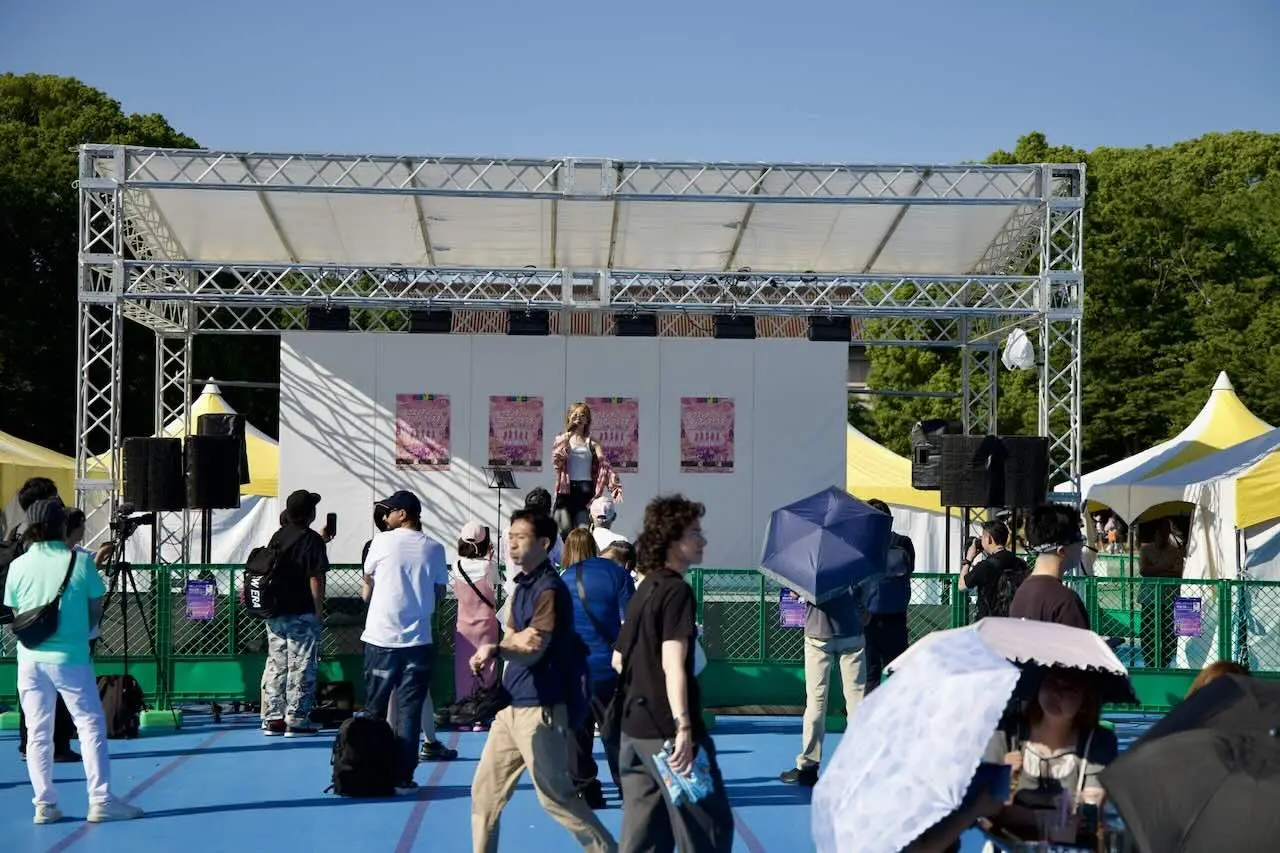
Uenode Korean Festa 2026 took place from May 29 to 31, 2026, at the Fountain Square in Tokyo’s Ueno Park. Designed to introduce Korean music, food and popular culture in central Tokyo, the event brought a range of artists and performance groups to its stage over three days.
On May 30, the second day, a stage and numerous food and promotional booths filled the square. Alongside audiences who came specifically for the performances, residents and tourists visiting Ueno Park wandered in, tasting Korean food and listening to music as they joined the festivities.
Japanese artists singing Korean songs gave the day’s stage a tangible connection to the festival’s theme of exchange between Korea and Japan. Saki performed LeeHi’s “BREATHE” in Korean, while Yuuna lifted the atmosphere through energetic interaction with an audience just a short distance away.
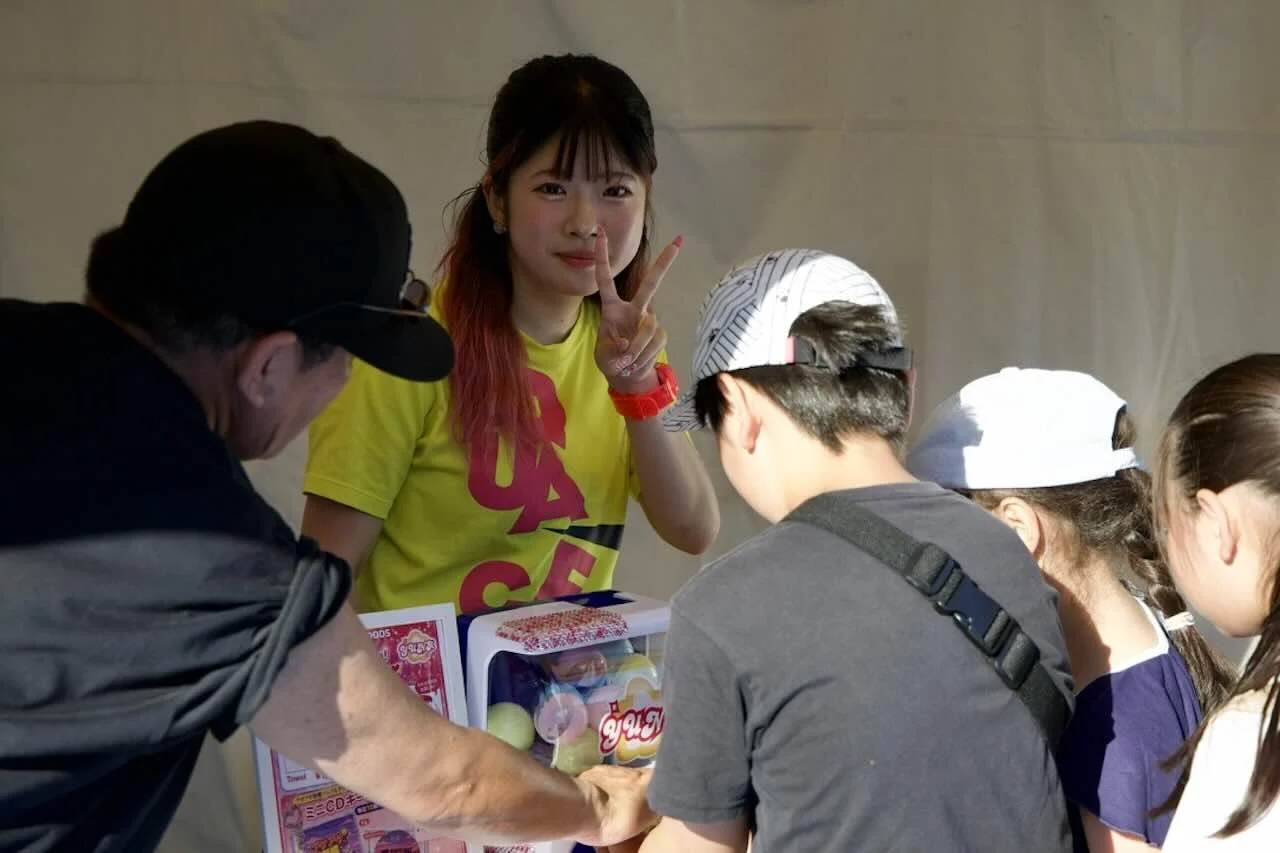
Offstage, fans voluntarily helped sell merchandise and guide visitors, and an artist who had finished performing chatted with fans in the same space. These close exchanges, different from those at major concerts or agency-led events, offered a glimpse of the local independent live-music scene as well as Korean music and food.
Three days of Korean culture at Ueno Park’s Fountain Square, beginning May 29
Uenode Korean Festa 2026 ran for three days, May 29–31, at Ueno Park’s Fountain Square. With its concentration of museums, art galleries and a zoo, Ueno Park is one of Tokyo’s major cultural destinations, drawing both local residents and international visitors on weekends.
The Fountain Square frequently hosts large outdoor events. Its broad space can accommodate a temporary stage, viewing areas, food stalls and promotional booths, making it well suited to festivals combining performance with cultural experiences.
This edition likewise treated the whole site as a place to experience Korean culture rather than focusing solely on stage performances. A stage for live music and other acts stood at the center, surrounded by a long array of booths offering Korean food, products and cultural information.
The event was large enough for its temporary stage and booths to be visible from a distance when approaching from Ueno Station. Banners and signs incorporating Korean appeared throughout the site, while Korean music played continuously, giving the grounds a different feel from a typical Japanese neighborhood festival.
The visitors were diverse. Some fans arrived early to secure a spot near the stage for a particular artist; others noticed the music and food stalls while visiting the park and simply walked in. Japanese audiences, Korean visitors and international tourists shared the same space, enjoying performances and food.
That openness is characteristic of cultural festivals in city parks. With no separate concert ticket or admission procedure needed to explore the site, people unfamiliar with Korean culture could easily encounter its music and food. A fan-oriented concert and a festival for the general public occupied the same space.
Tteokbokki, chicken and tornado potatoes: visitors gather at the Korean food stalls
Alongside the stage, Korean food stalls formed another center of activity. They sold dishes already fairly familiar in Japan, including tteokbokki, Korean-style corn dogs, tornado potatoes and chicken.
Everyday foods in Korea were presented here as cultural attractions. Visitors ordered at the stalls, watched performances with food in hand, or shared their purchases at tables around the grounds.
Long lines formed at some popular booths. Many visitors had come for the food itself rather than simply eating while waiting for a performance. Across the site, people studied menus and shared dishes with their companions.
Food helped widen the festival’s appeal because it required little explanation or prior knowledge. Visitors did not need to know the artists: they could come for familiar Korean dishes and encounter Korean music and performance along the way.
At tables near the food stalls, audiences ate while watching the stage. With music and food taking place together rather than in separate areas, the atmosphere felt less like a concert venue and more like an outdoor festival where people could spend time freely.
Other booths introduced Korean products and tourism and cultural information. As visitors explored, music and performances continued onstage. The event presented Korean popular culture beyond K-pop or television drama, extending it to food, travel and consumer products.
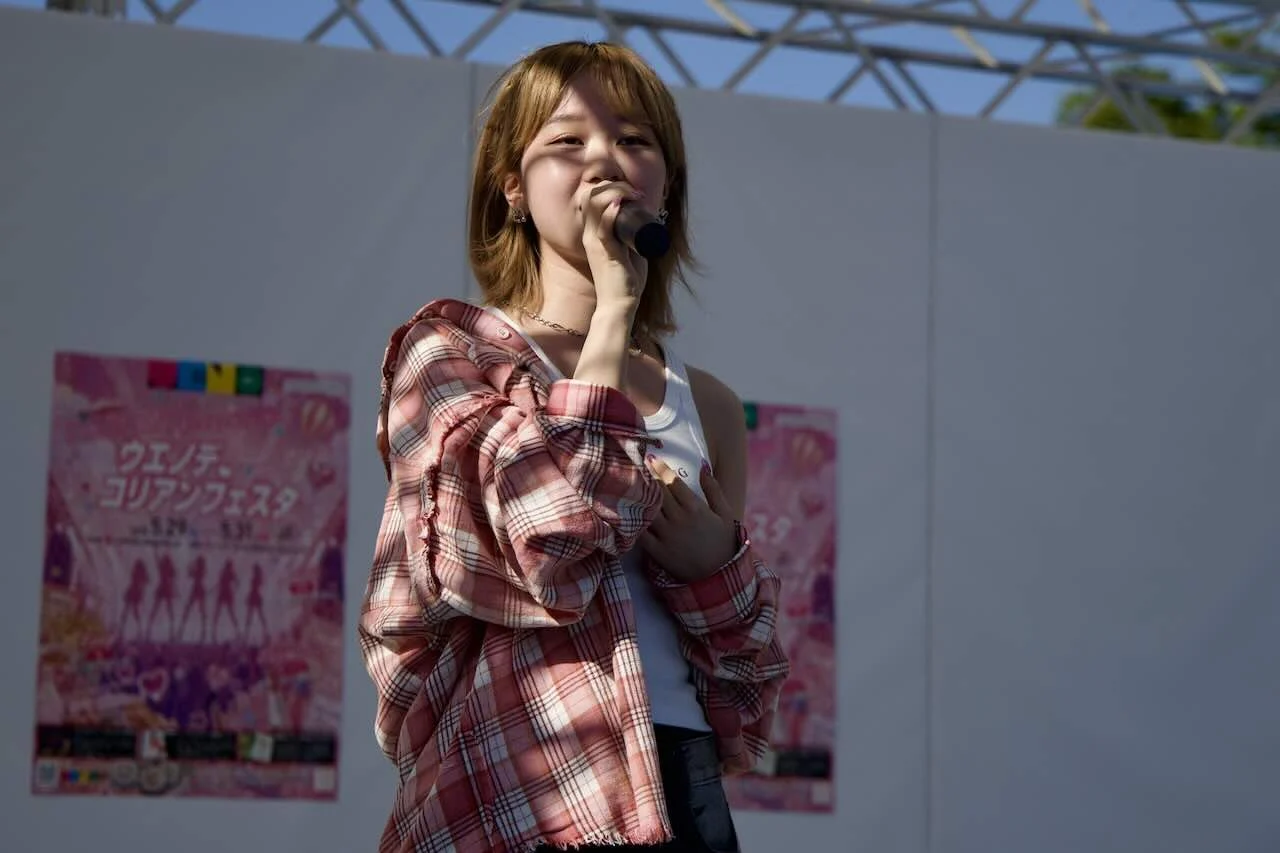
Japanese artist Saki performs LeeHi’s “BREATHE” in Korean
Japanese artist Saki appeared on May 30. Some audience members were hearing her for the first time, but her mix of Japanese and Korean songs suited the occasion.
LeeHi’s “BREATHE” stood out. The Korean ballad depends on restrained emotion and delicate vocals, asking listeners to concentrate on words and voice rather than a forceful visual performance. Singing the Korean lyrics herself, Saki conveyed the original’s quiet, weighty atmosphere.
There was significance, too, in a Japanese artist singing a Korean song in its original language at a Korean cultural event in Tokyo. Rather than conveying the song through a Japanese adaptation, she retained the Korean lyrics, bringing the original language and rhythm to the stage.
Listeners unfamiliar with Korean could follow the mood through melody and emotion. For Korean audience members who knew the original, seeing a Japanese singer perform a familiar song in Korean was itself a fresh experience. The crowd listened relatively quietly and attentively as Saki sang.
The performance made the idea of cultural exchange unusually direct. A Japanese singer sang a Korean artist’s song in Korean, and Japanese and Korean listeners heard it together. The act itself communicated the event’s meaning without further explanation.
Korean popular music’s audience in Japan is not confined to idols and dance performances. This stage showed how a ballad centered on lyrics and vocals, such as “BREATHE,” could reach new listeners through a Japanese artist’s interpretation.
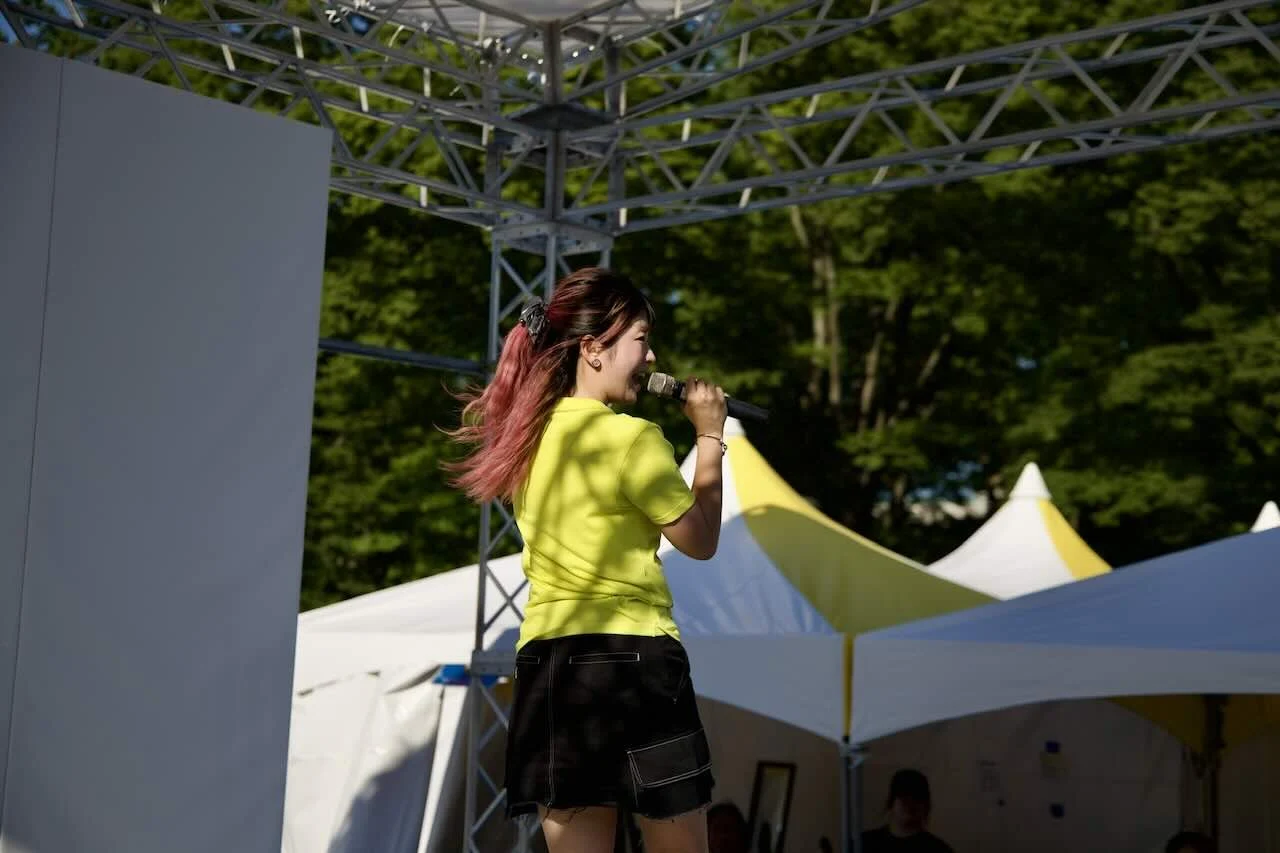
Yuuna connects at close range, filling the stage with approachable energy
Yuuna performed after Saki. From the moment of arrival, Yuuna actively exchanged looks and responses with the crowd, building the performance’s atmosphere through those interactions.
The first thing to register was the energy coming from the stage. Rather than simply singing a prepared sequence of songs, Yuuna watched the crowd and encouraged participation through gestures, expressions and remarks, making full use of the short distance between stage and audience.
At a large venue, artists often communicate through planned production and stage equipment. Here, direct interaction took priority. Audience reactions reached the stage immediately, and Yuuna responded just as quickly, adjusting the flow of the performance.
The set also felt approachable. Instead of maintaining a fixed distance between performer and audience, it suggested a show being made together. Its freedom recalled street performances or small live venues more than a tightly standardized idol show.
Existing fans responded in familiar ways, while newcomers naturally watched along with the people around them. Rather than a closed performance for a particular fan base, it became an introduction to Yuuna’s music and personality for the festival’s varied visitors.
An outdoor festival cannot assume the same concentration as a dedicated music venue. People browse food stalls or move through the grounds, and ambient noise is unavoidable. Even so, Yuuna kept reaching out to the audience and sustained the stage’s energy, drawing attention to the performance.
For established fans, it was a chance to connect closely with Yuuna. For first-time listeners, it offered a quick sense of the performance style. The stage was modest in scale, but the ability to close the distance with an audience was clear.
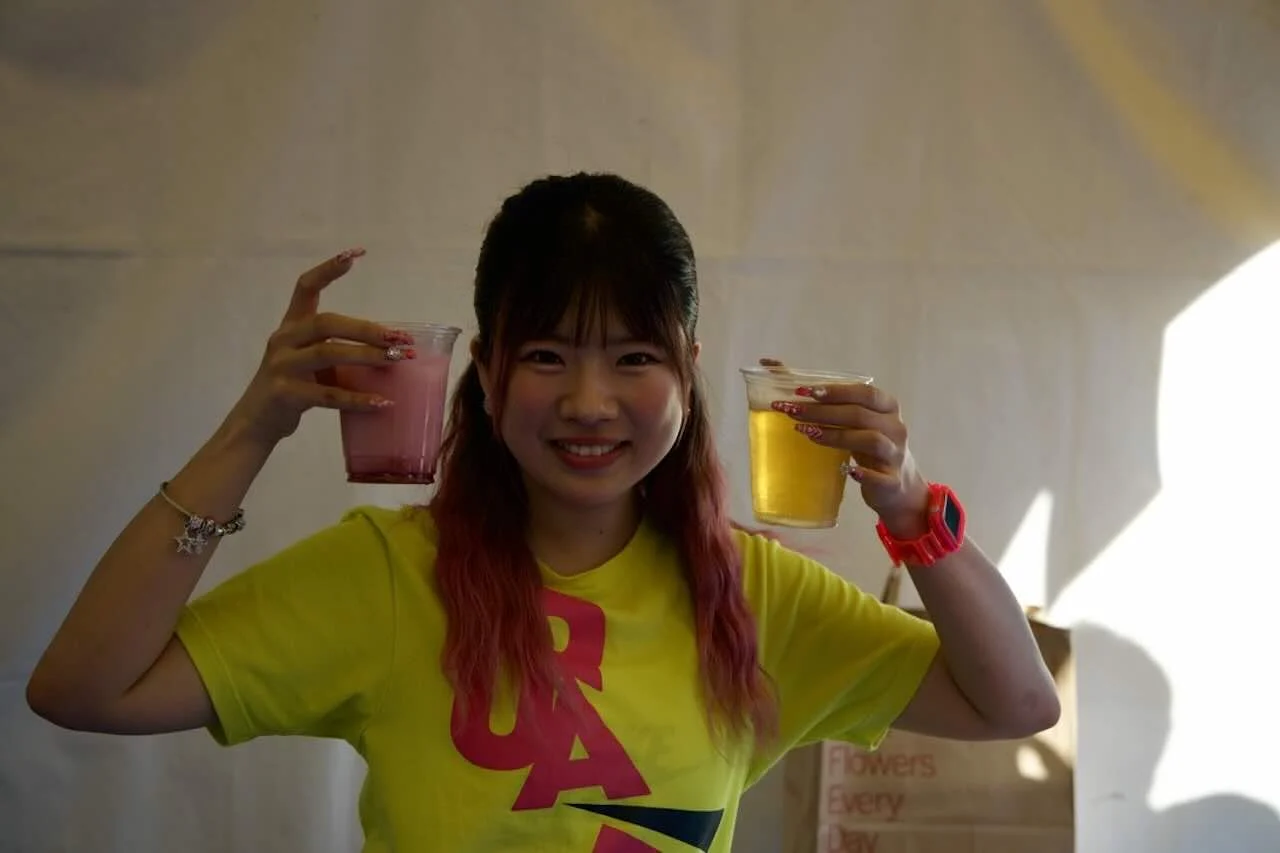
Fans help with merchandise and audience guidance, sharing in the work
After Yuuna’s set, a scene unfolded that differed from a typical large concert. Some of the people organizing merchandise and guiding visitors around the stage were not professional staff but fans who had followed Yuuna’s work for a long time.
They assisted with sales, explained products and organized queues. When needed, they also helped take photographs, naturally dividing tasks so that activities after the performance could run smoothly.
To a first-time visitor, the line between fans and staff was not always obvious. Instead of waiting for instructions, fans found things they could do, taking a step beyond watching the show to help create the event itself.
Such arrangements are less common at large concerts where agencies and professional teams divide responsibilities systematically. Around smaller independent artists, fans sometimes volunteer where needed, helping build the practical foundation of an artist’s activities.
That does not mean every fan performs the same role or that audiences are expected to help run events. On this occasion, however, long-standing supporters naturally assisted with tidying and sales, creating an atmosphere more personal than an ordinary merchandise transaction.
Their role extended beyond that of consumers. They watched the show and bought goods, but also introduced the artist to new listeners and shared necessary tasks. Small as the operation was, it revealed trust and an ongoing relationship between artist and fans.
This fan culture worked differently from a large fandom. It resembled a community of people who recognized one another and understood their roles more than a mass of organized supporters. Those connections continued naturally after the show.
At the same table after the show: conversations beyond the stage
Once merchandise sales and tidying had settled down, fans gathered at tables around the grounds to discuss the performance and recent activities. The separation between stage and audience gave way to a more open space for conversation.
After finishing the cleanup, Yuuna joined them. An artist who had just been singing onstage was now sitting at the same table and chatting with fans, a scene quite different from a major concert or a conventional idol event.
The roles of artist and audience had been clear during the set. Afterward, people shared impressions of the show and everyday stories in one space. This was not an official talk session or a timed fan benefit: conversation began naturally while the event was being packed up.
With fans so close, Yuuna’s activities did not end with the stage performance. Preparation, the set, merchandise sales and conversations afterward formed one continuous occasion, with fans naturally involved at each stage.
Such relationships may become harder to maintain as an artist’s audience grows. At a small show like this, however, an individual fan’s reactions and continuing support can reach the performer directly, while gratitude and attention can return in equally concrete ways.
For someone seeing Yuuna for the first time, this was also a way to understand that relationship. The friendly exchanges onstage were not merely a performance device; they continued naturally once the music stopped.
Korean songs sung by Japanese artists: cultural exchange made tangible
The day’s significance extended beyond selling Korean food or displaying Korean-language signs. Japanese artists sang Korean songs, and Japanese audiences listened naturally, giving cultural exchange a concrete form onstage.
Saki’s performance of LeeHi’s “BREATHE” was an emblematic moment. She brought both Korean pronunciation and the song’s emotional expression to the stage, while listeners focused on the same song regardless of nationality or language.
Singing in the original Korean requires more than learning a melody. A performer must understand pronunciation and the rhythm of the words, then express their meaning in a personal voice. The value lay less in perfectly reproducing the original than in a Japanese artist receiving and communicating the song in a distinct way.
Yuuna’s stage and fan culture widened the exchange in another direction. Alongside Japanese fans were visitors from Korea, and some people who now supported different singers reunited through the event and talked again.
Fans who had originally met while supporting the same artist had, over time, begun following different singers. At Korean Festa, they met again and encountered new performances together. Relationships begun through music continued beyond a particular artist’s activities, making exchanges among fans another part of the festival.
What emerged was not a one-way introduction of Korean culture to Japan. Japanese artists interpreted Korean songs in their own voices; Japanese and Korean audiences listened together; and artists and fans continued talking in the same space after the show. Relationships were forming in several directions at once.
From popular culture to food and travel: Korean content in festival form
Beyond the music, visitors had many ways to encounter Korean culture. Food booths presented street snacks and popular dishes, while merchandise and promotional stalls offered Korean products and information about culture and tourism.
In Japan, Korean music, drama, cosmetics, food and tourism are increasingly encountered as interconnected interests. Someone attending for K-pop can try Korean food, while a visitor drawn by the food may naturally find a stage performance.
This festival used those connections. Rather than treating the stage and food areas as separate events, it placed them in the same square, allowing visitors to start with their own interests and move toward other aspects of Korean culture.
Familiar dishes such as tteokbokki and chicken offered an accessible starting point. A ballad sung in Korean or a local artist’s live set, meanwhile, provided a cultural experience that went a step beyond food.
It also mattered that the festival welcomed families, friends and tourists rather than addressing only fans of a particular genre. Visitors could take part by eating or browsing without watching a whole performance, while the continuing program offered new acts regardless of arrival time.
Ueno’s character influenced the event as well. Good transport access and the steady flow of people visiting the park and cultural institutions exposed Korean culture to people who had not come for the festival. The advantages of presenting it in an open urban space were clear.
Through the next day’s sis performance: a three-day program
Uenode Korean Festa 2026 was not a one-day event but a three-day program running May 29–31. Even after the May 30 performances, a variety of acts were scheduled for the following day.
The final day, May 31, included sis (SIS/T), the group to which KANO MIYU belongs. Some people planning to return for that performance visited Ueno Park a day early to check the site’s size, atmosphere and stage location.
Yet May 30 became more than a reconnaissance visit. An unplanned encounter with Saki’s set revealed a Japanese artist interpreting a Korean ballad; a first experience of Yuuna’s performance offered the energy of a small live show and its close fan culture.
A changing lineup and atmosphere are advantages of a multi-day festival. Visitors can come only on a favorite artist’s date, but attending another day may introduce singers and performances they would otherwise never encounter.
If May 30 highlighted the individual colors and audience interaction of Saki, Yuuna and others, the final day would pass the stage to a different lineup, including sis, to complete the three-day festival.
The event served both as a place to reconnect with familiar artists and to discover new ones. A person arriving for one act could also watch those before or after it, widening their interests: one of the strengths of a multi-artist outdoor festival.
A second day filled with performances, food and exchanges among fans
The second day brought Korean music and food, local artists and fan exchanges into a shared space. Rather than simply displaying or introducing Korean culture, Japanese artists and visitors participated directly and engaged with it in their own ways.
Saki conveyed the event’s theme onstage through LeeHi’s “BREATHE” in Korean. Yuuna raised the energy through close audience interaction, then continued talking naturally with fans afterward, revealing the warmth particular to smaller live events.
Fans volunteering with merchandise and audience guidance also defined the day. They were not only spectators: they helped create the practical conditions for the artist’s work. Relationships and trust built over time became visible in the event’s operation.
Visitors kept coming to the food and cultural booths. People eating Korean dishes while watching the stage, passersby pausing at a song, and fans supporting a particular artist occupied the same grounds and collectively shaped the festival atmosphere.
Above all, the event showed how cultural exchange can begin with everyday experiences rather than grand declarations. Japanese singers performed Korean songs, Japanese and Korean audiences listened together, and conversations continued across nationalities and roles after the show.
The second day at Ueno Park’s Fountain Square introduced Korean culture through a different approach from events built around major K-pop stars. Close-range live music, food and direct exchanges between fans and artists showed how culture travels and grows between people.
As the middle day of the festival, it also built momentum toward the final performances. Discovering new acts, meeting old acquaintances and watching Korean and Japanese culture mingle naturally transformed an ordinary Ueno Park weekend into a place of exchange.