REVIEW · Concerts & Live
Masaya: where songs and audiences meet at Cheonggye Plaza
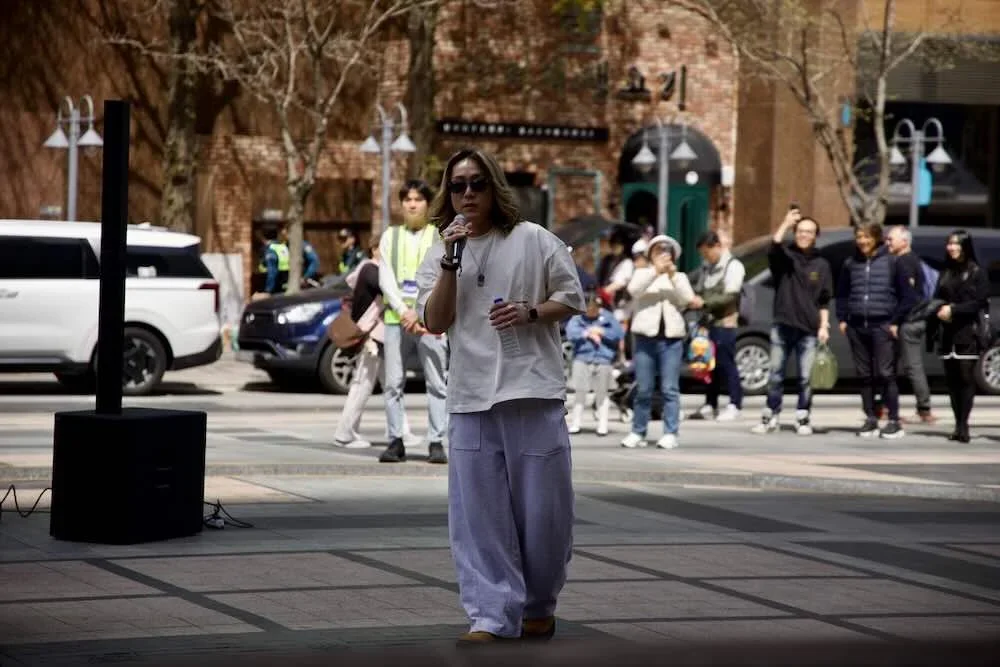
Masaya at Cheonggye Plaza: setlist
Performance order
- Marigold (マリーゴールド)
- Saigo no Ame (最後の雨)
- Hajimari no Uta (はじまりの詩)
- I Will Go to You Like the First Snow
- First Star
- Never Ending Story
The six-song main set was followed by an unaccompanied singalong of “Never Ending Story.”
April 12, 2026: Masaya’s busking performance in central Seoul
Japanese artist Masaya met Korean audiences directly through a busking performance at Seoul’s Cheonggye Plaza. Instead of an indoor venue, this was a street performance in an open urban space, where passersby and fans gathered naturally for a live experience shaped by the setting.
Cheonggye Plaza is one of central Seoul’s signature open spaces, busy with residents and tourists on weekends and holidays. Its accessibility and openness make street performances and cultural events especially visible. People began gathering around the area before this performance, too.
Although the additional date was announced after the previous day’s concert, interest formed quickly. As the start approached, the audience widened: alongside existing fans, people passing by stopped to watch.
The closeness and involvement of a street performance
Busking places performer and audience close together, physically and psychologically. Without the elevated stages or elaborate production of large venues, the artist must create an atmosphere through voice and immediate responses.
Masaya led the show through live singing and communication, with few embellishments. He connected through talk between songs and naturally drew attention when the music began. His ability to keep the performance centered within the freedom of a street setting was impressive.
Audience reactions became more visible as the show progressed. People filmed on phones, clapped in time and sang familiar songs, each participating in their own way. It felt less like passive viewing than a live experience made together.
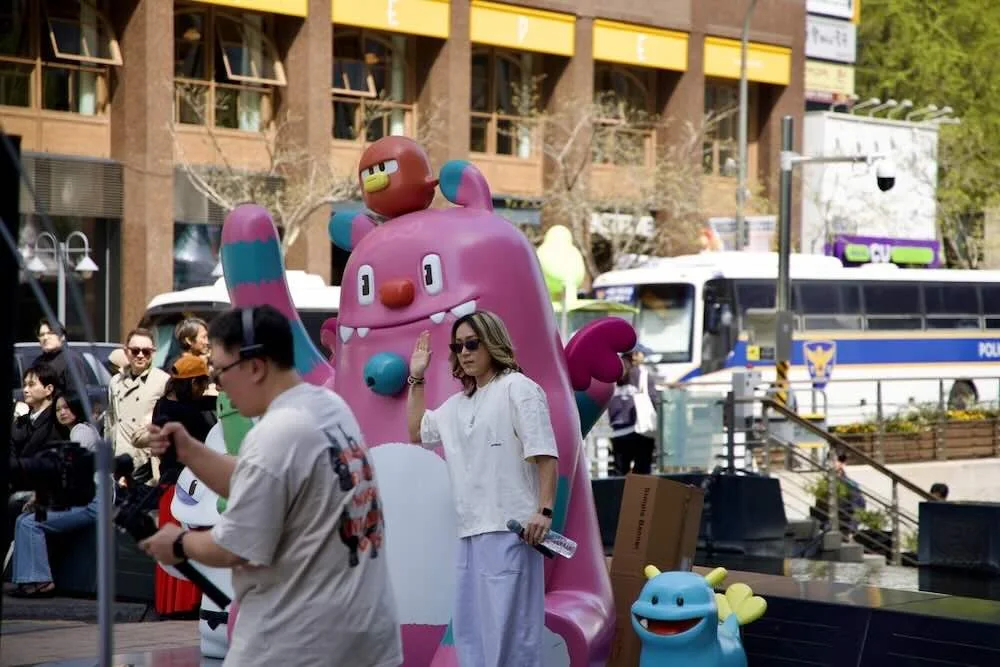
A six-song set of Japanese and Korean favorites and originals
The setlist was central to the performance. Masaya balanced Japanese pop covers, Korean covers and original songs to reach a broad audience. Selections across languages and genres offered a natural way to connect with those present.
He opened with Aimyon’s signature “Marigold (マリーゴールド),” a major Japanese pop hit distinguished by its gentle melody and accessible feeling. Beginning with a familiar song was effective in the street: passersby could listen easily, while fans received a reassuring opening.
The second song was Yasushi Nakanishi’s “Saigo no Ame (最後の雨),” an emotional ballad that changed the tone. A song requiring deeper feeling places weight on vocal steadiness and expression, and here it offered a chance to hear Masaya’s singing ability. After the brighter opening, it increased the emotional intensity and shifted the flow.
Third came his original “Hajimari no Uta (はじまりの詩).” Moving from covers that establish contact to an original is a familiar way to reveal an artist’s identity. Suggesting new beginnings and hope, as its title implies, the song naturally introduced his musical world. It showed a singer with a story of his own, beyond an ability to perform famous songs well.
The fourth selection was a Korean cover, Ailee’s “I Will Go to You Like the First Snow,” and the atmosphere shifted again. Widely known in Korea, it drew an immediate response; the familiar melody deepened the crowd’s engagement. A foreign artist singing a representative Korean ballad in central Seoul also carried symbolic weight. It felt like a choice intended to bring him closer to the local audience, beyond simply performing a cover.
The fifth song, his original “First Star,” became a key original in the latter half. After widening his audience through Japanese and Korean covers, he showed his own character more directly. Its hopeful, expansive mood, in keeping with the image of its title, continued to draw responses. The placement brought the center of the show back to his music.
The sixth song was Boohwal’s “Never Ending Story,” a Korean rock ballad loved across generations, combining broad appeal with emotional impact. It was an effective late climax. Attention intensified as it progressed, and the crowd naturally sang along, lifting the energy.
The overall sequence moved from a Japanese favorite to an emotional ballad, an original, a Korean favorite, another original and a widely familiar finale. Even within a short busking show, it had a clear arc. It served as an introduction to Masaya as an artist, rather than merely a covers performance.
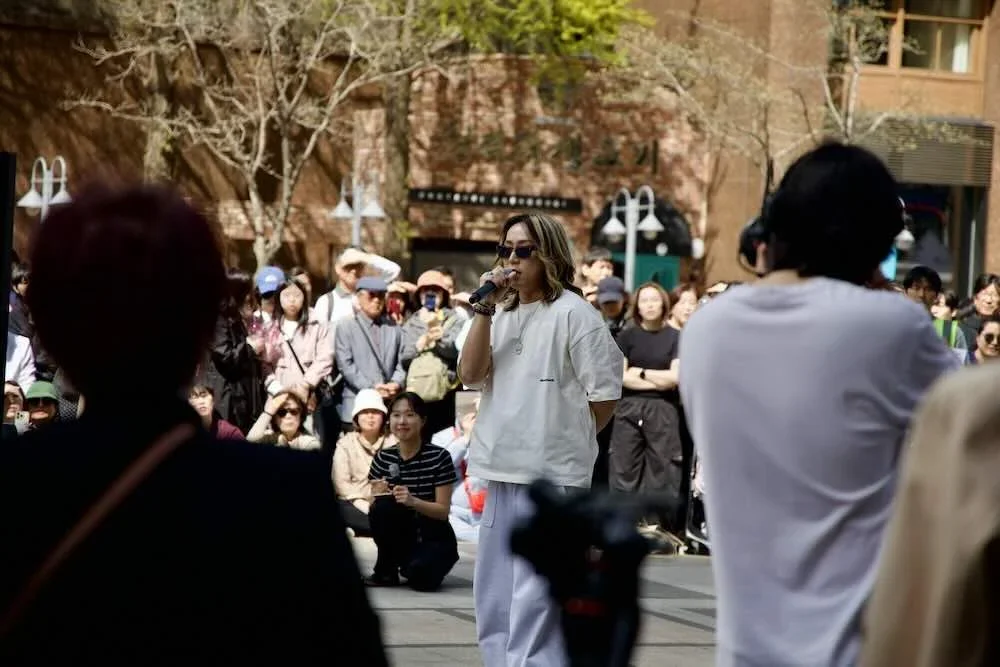
Connection continues through encores and unaccompanied singing
The energy did not fade when the main set ended. “Never Ending Story” returned as an unaccompanied crowd singalong, followed by a moment of singing “First Star” together.
This captured the spontaneity and immediacy particular to street performance. Without backing or production, audience voices filled the space and naturally brought artist and listeners into a shared rhythm.
An encore of “First Star” then closed the performance. Even after the scheduled program, the crowd’s response had set the show in motion once more.
Live ability and command of the setting, reaffirmed
The Cheonggye Plaza performance made Masaya’s strengths fairly clear. First was his steady live singing. Open outdoor spaces bring inconsistent acoustics and surrounding noise, making conditions harder than indoors. Even so, he maintained a reliable ability to communicate each song.
Second was his ability to engage the setting. Street performance is not only about people already paying attention: drawing in passersby matters. Here, both audience size and responses grew naturally as the songs continued, suggesting an appeal beyond a fan event.
Third was his feel for repertoire. Japanese songs, Korean songs and originals connected smoothly, combining local relevance with individuality. This is an important element for an overseas artist widening a base in Korea.
A wider range of activities after the audition show
After gaining attention through the audition program “Geneki Kao Japan,” Masaya has continued with performances and other activities. His singing and stage focus spread online, sustaining interest in Korea as well.
More recently, he has expanded beyond concerts into busking and brand collaborations. Indoor venues and street stages are very different, but his ability to connect directly with audiences in both points toward further possibilities.
Possibilities demonstrated in central Seoul
The Cheonggye Plaza show was more than a one-off event: it demonstrated how Masaya can meet Korean audiences. Familiar Korean songs created common ground, Japanese songs and originals conveyed his individuality, and encores and singalongs deepened the exchange.
It was a brief street performance in the city center, yet it contained live ability, communication and popular appeal. As he expands his contact with Korean fans through concerts and busking, attention turns to his next steps.