REVIEW · Festivals
Korea–Japan Festival 2025 in Seoul: When Cultural Exchange Becomes a Concert
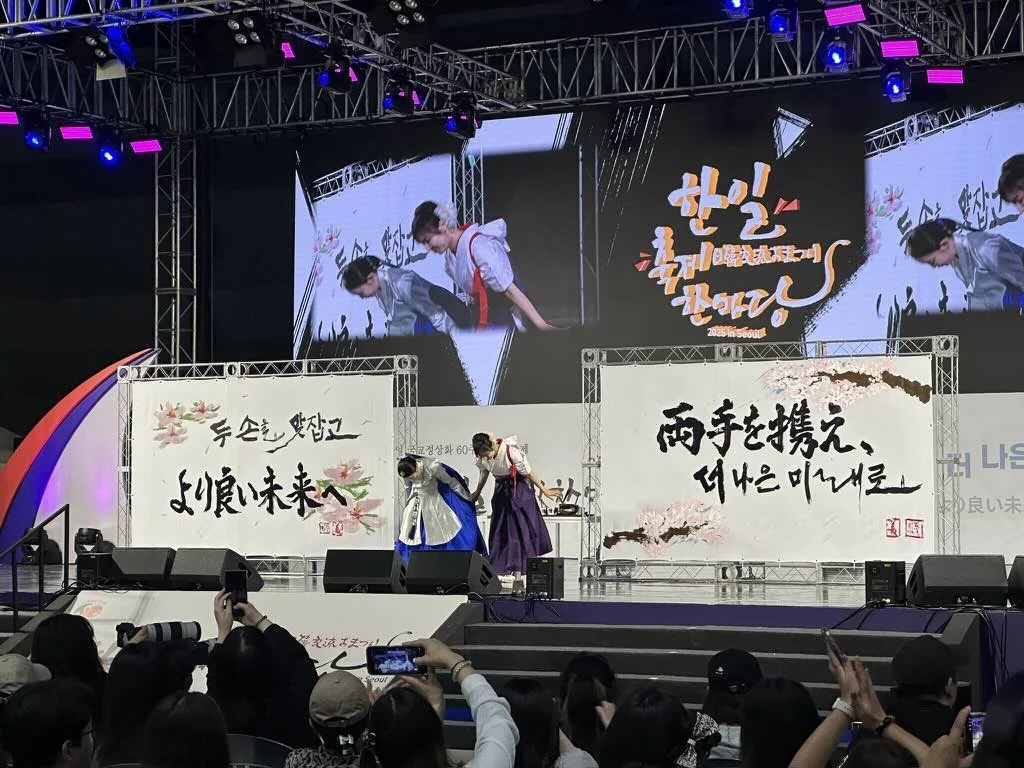
“Cultural exchange” is a familiar phrase in discussions of Korea–Japan relations. Experiencing what it means at an event is less straightforward. Symbolic significance often takes priority, with performances treated as supporting items on the programme.
By name alone, the Korea–Japan Festival held at COEX in Seoul on 12 October 2025 might have sounded like another such occasion. An event can be rich in meaning while its stages leave little lasting impression.
This festival felt different in its very structure. Rather than placing traditional performances and hands-on booths at the centre, it put the concert itself there. It was less a case of staging performances to promote exchange than of exchange emerging naturally as people enjoyed the performances. That distinction matters more than it might seem. Audiences absorbed what they saw onstage rather than relying on an explanation of what it meant.
Beyond the television contest: Masaya and Takuya
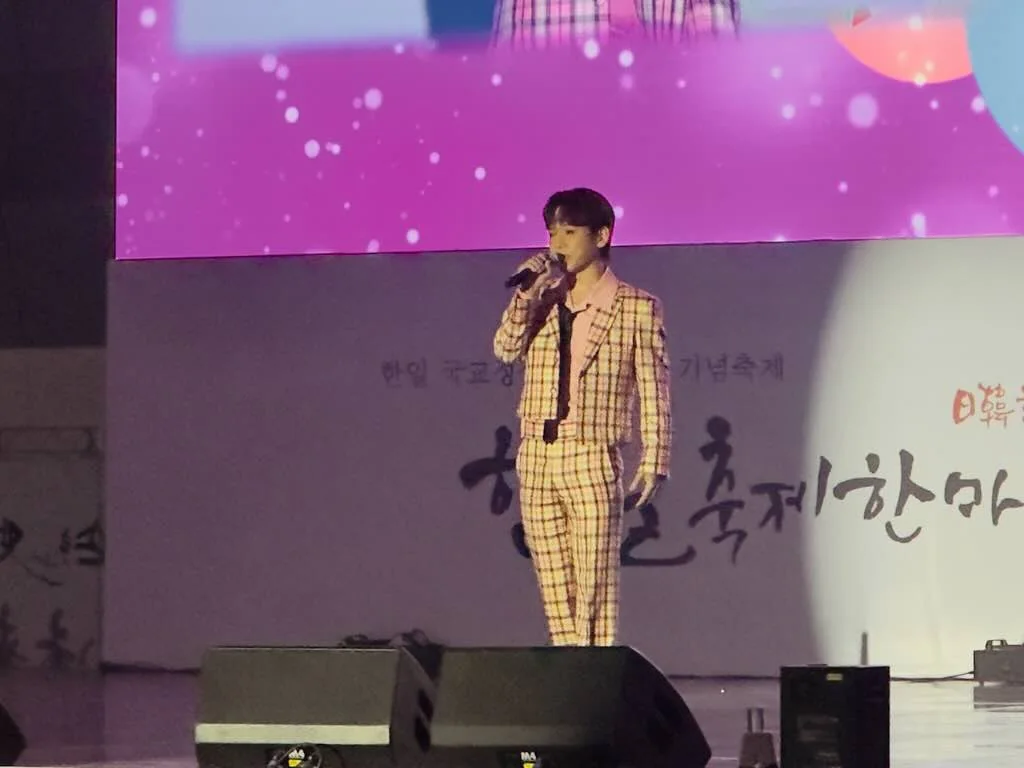
One clear thread was provided by Masaya and Takuya, who represented Japan in the men’s edition of the Korean singing competition “Korea–Japan King of Singers.” Their role went beyond a guest appearance: they brought a story already established on television into a live setting.
Television personalities usually remain within the frame. Viewers remember edited scenes, and a concert can become an extension of those scenes. Here, the sensation ran the other way: familiar people seemed to step out into a real, shared space. The audience responded accordingly, less as though discovering unfamiliar overseas singers than encountering a stage they already knew.
The character of their performances was particularly interesting. Neither tried simply to sing Korean trot, nor insisted exclusively on Japanese pop conventions. Their vocal production and expression followed recognisable J-pop patterns, while their pacing and interaction with the room took on the rhythm of a Korean concert. The songs themselves were not blended; instead, different ways of listening were connected. That was the stronger impression.
The television contest had often been framed as “Korean trot versus J-pop.” In the room, however, the contrast felt less like competition than a difference in how music is enjoyed. Japanese vocals built around melody and tone, while the Korean concert approach found completion in the exchange with the audience. The two singers moved naturally between those modes.
That connection is crucial. Exchange concerts can feel awkward when distinct styles are simply placed next to one another: the running order makes sense, but the performances do not flow. Here, different styles did not interrupt the momentum. The audience followed rather than compared, and the programme became a coherent concert.
The story continues offstage: Yudai Takenaka in the audience
The story extended beyond the performers. Yudai Takenaka, who entered the television contest as Japan’s top-ranked representative, was not on the bill but appeared at the venue. His band Novelbright had a Korean concert scheduled the previous day, and he appeared to have visited COEX after that engagement.
The revealing scene was in the audience, where Takenaka sat to one side watching Masaya perform. Seeing him as a spectator suggested more than a casual visit: it felt like a continuation of relationships formed through the programme. People presented onscreen as rivals were now watching one another’s stages in person. The television story had moved into the time and space of everyday life.
Exchange events are often defined solely by the people onstage. Here, someone who did not perform also became part of the occasion, expanding its context. For the audience, it was a glimpse of a story still unfolding rather than just another guest appearance.
Aya Hirano: A presence beyond genre
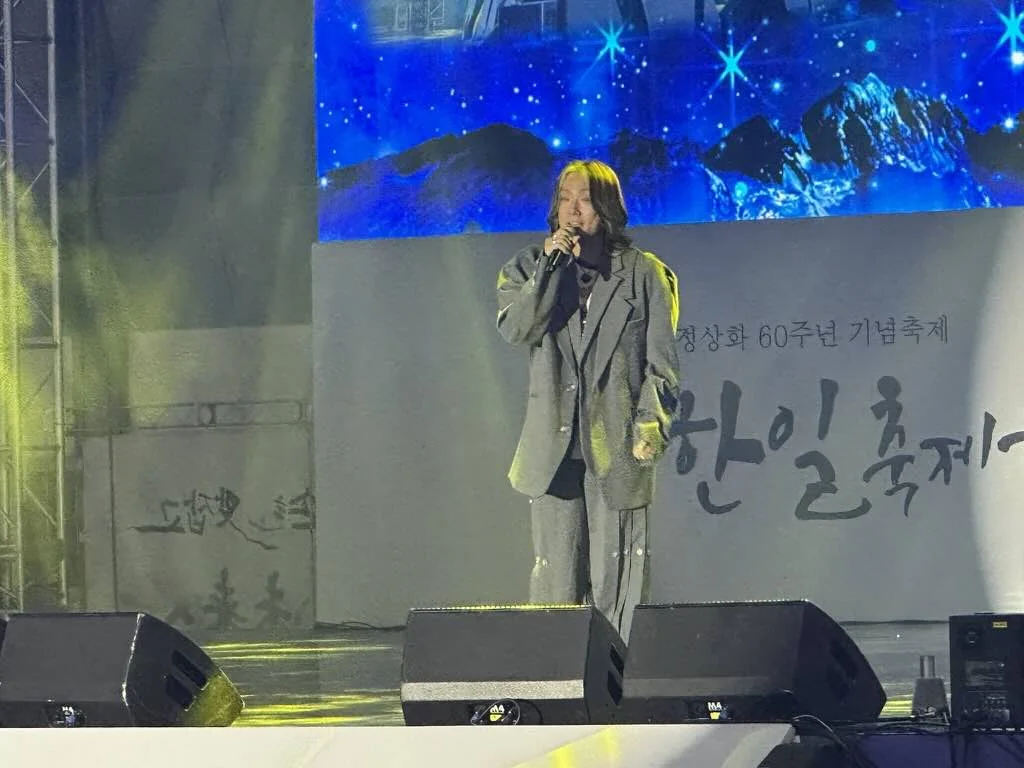
Aya Hirano provided another focal point. Her name may be less familiar to some Korean general audiences than those of mainstream pop singers, but anyone acquainted with Japanese popular culture may already know her voice. She became widely known for late-2000s anime characters including Haruhi Suzumiya in “The Melancholy of Haruhi Suzumiya” and Misa Amane in “Death Note,” before extending her work into acting and singing.
Her stage is therefore difficult to describe simply as a J-pop performance. Where a singer might build a set around the songs, Hirano builds scenes. Facial expression, movement and gaze become part of a continuous performance as she sings, inviting the audience to follow a situation rather than merely hear a track. Her experience conveying characters’ emotions through voice seemed to transfer directly to the live stage.
The response took an unusual shape. It was not confined to an established fandom. Those familiar with Japanese culture experienced a recognised voice in a shared physical space; newcomers responded to the immersive quality of the performance itself. Prior knowledge was welcome, but not necessary to follow along.
As a result, the audience began to mix. Anime fans, Japanese music listeners and people who had simply come for a concert reacted at the same moments. Rather than separating the room by genre, the way the performance communicated drew it into one current. This also explains why the distance sometimes felt at exchange concerts was largely absent.
That was what made Hirano’s presence significant. Before nationality or genre required explanation, she connected through performance itself. Many artists serve as symbols at exchange events; fewer actually change the atmosphere in the room. On this occasion, Hirano belonged to the latter group.
When a festival becomes a concert
The festival’s distinctiveness lay here. Its usual framework is one of cultural introduction, with traditional activities, food and tourism promotion at its centre. This concert segment reversed that sequence.
Instead of explaining a culture so that people could understand it, the stage created a shared response. It was closer to enjoying culture than being introduced to it. Audiences did not need to set out to learn about Japan: they enjoyed the performances first, then naturally became aware of differences in nationality and genre.
That order is surprisingly important. Exchange begins with enjoyment rather than understanding. Enjoyment creates interest, and interest opens a path to understanding. These performances followed precisely that progression.
Different songs, a shared direction
Masaya and Takuya offered Japanese songs shaped by the audience interaction of Korean concerts; Hirano presented J-pop built around character and performance. Judged only by genre, they had little in common.
Yet the concert as a whole left a sense of unity. The common ground was not musical style but their approach to the stage. Rather than explain or persuade, they showed what they could do. The audience could feel that it had seen a good concert before thinking of itself as participating in a cultural exchange event.
In that sense, this felt closer to a jointly shared Korea–Japan concert. The stage came before nationality.
The festival mattered because it did not need to put a special message front and centre. Different kinds of music could flow naturally through the same space; that fact was already explanation enough.
Exchange is not brought into being by a declaration. It takes shape when an audience applauds a performance. This festival made that moment visible.