REVIEW · Songs & Albums
NELL’s “Words You Shouldn’t Believe”: When Words and Feelings Doubt Each Other

Karaoke codes
NELL’s “Words You Shouldn’t Believe” unsettles the act of listening from its title onward. It may sound like a warning against someone’s words, yet the warning itself is also made of words. Listeners consider not just what to doubt but how much to trust the voice reaching them now. That uncertainty makes its emotions of love and loss broader than a simple betrayal story. Kim Jong Wan’s voice and the flow of lyrical rock sustain a state where wanting to believe and wanting to withdraw coexist, rather than offering a certain explanation.
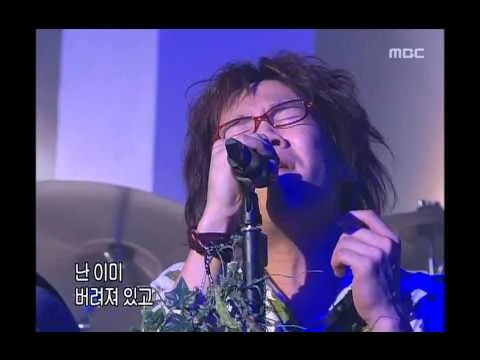
NELL — Words You Shouldn’t Believe (Live Version) MV
A title that questions itself
Reading the title only as a verdict on a promise already exposed as false diminishes its hesitation. Judging that one should not believe differs from actually ceasing to believe. Knowing words may be untrue does not easily remove the hopes invested in them. The song can be read through the feelings of someone caught between those states. It is closer to continuing to recall certain words than to a conclusion that trust has broken. Even a title shaped as a warning can carry attachment or fear, creating the unease. A categorical sentence reveals the heart’s uncertainty instead.
Words of love communicate information while creating a relationship. When one sentence becomes hard to believe, more than its truth is shaken. We reconsider ourselves at the moment we heard it and how we saw the other person. The loneliness of “Words You Shouldn’t Believe” connects to this sense of retracing. The words belong to the past, but the present heart keeps trying different responses before them. What if I had not believed? Could I hear them differently even now? Such questions resist easy answers. Even without clearly explaining one event, the song makes the entanglement of words and memory emotionally concrete.
The unease where a fragile voice meets a powerful flow
The tension Kim Jong Wan’s vocals create with the band does not treat fragility and strength merely as opposites. When a seemingly wavering voice survives the large flow, the feeling gains scale in its uncertain state rather than becoming a firmer declaration. That is why increasing sonic force does not mean the speaker has acquired conviction. It may instead sound like an unsettled heart spreading into a larger space. Rather than summing up NELL’s lyricism as a soft melody, it is worth following how a delicate voice maintains tension under the band’s pressure.
Hearing several versions does not require selecting the most complete interpretation. Changes in the relationship between voice and accompaniment can make the title sound like a warning or an attempt at self-persuasion. Listening to the expressions the same sentence gains under different conditions reveals the song’s endurance more concretely than counting versions. Repeated performance does not fix its meaning. Each return can alter the proportions of trust and doubt. Recognizing that difference leaves a familiar title as words to judge again, rather than a sentence already understood completely.
Words that other versions do not easily settle
“Words You Shouldn’t Believe” asks whether the heart can be put in order immediately after trust disappears. The title warns clearly, but the voice retains feelings unable to withdraw so easily. There is no need to resolve the mismatch by closing the song into a simple betrayal story or total despair. Listeners, too, may recall doubting something while wishing those words were true. NELL’s flow lets that contradiction resonate instead of turning it into one correct answer. If the title keeps repeating after the song ends, it sounds like both a warning and the trace of someone still searching for words to believe.