REVIEW · Concerts & Live
Yellow Monsters: A Mosh Pit Opens at Hongdae’s Sangsangmadang
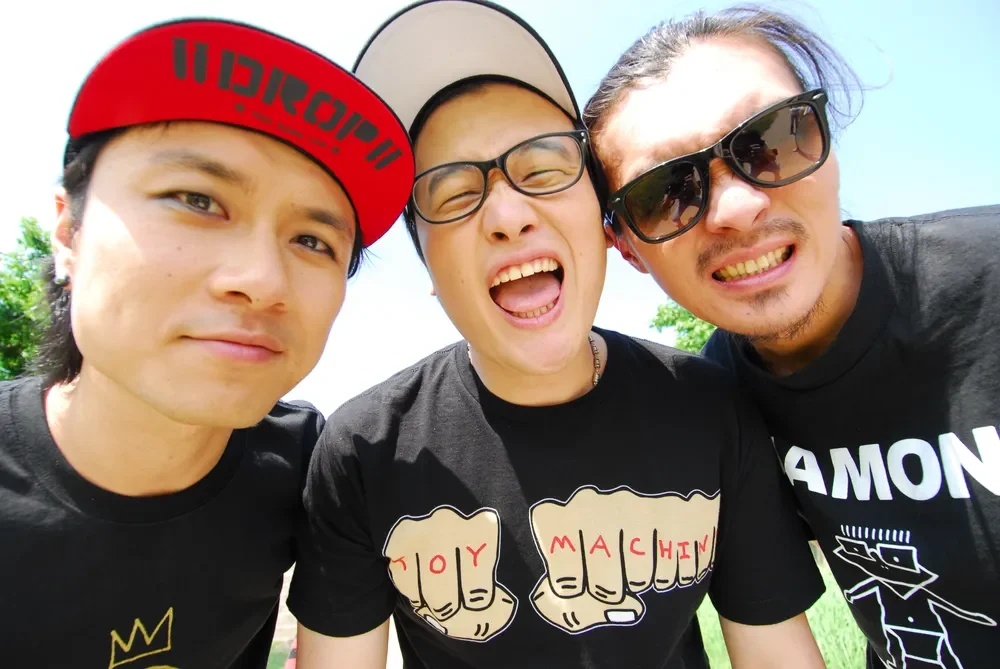
A night remembered as energy, not noise: Yellow Monsters
Punk rock’s present demonstrated at Sangsangmadang
Recordings cannot convey a punk show completely. Distorted guitar, quick tempo and roughly delivered words are completed in person. On October’s final day in 2012, at KT&G Sangsangmadang Live Hall near Hongik University, Yellow Monsters’ performance made that clear. Even people arriving without prior knowledge found themselves absorbed into the music and space.
Hongdae and the meaning of a live house
The hall symbolizes Hongdae’s indie scene. Many artists passed through, and wall photographs visibly record Jang Kiha and the Faces, Crying Nut and Kim Chang-wan among others. It is more than a venue: a record where layers of Korean popular music cross.
This show extended that history. Long active in Hongdae, the band had become known through EBS Space Gonggam, but its real appeal appears more clearly live than on television.
Regular shows and repetition’s power
It was performing every Wednesday evening throughout October. Unlike a one-off event, accumulating shows at a regular time and place means something special to band and audience, naturally building a regular following.
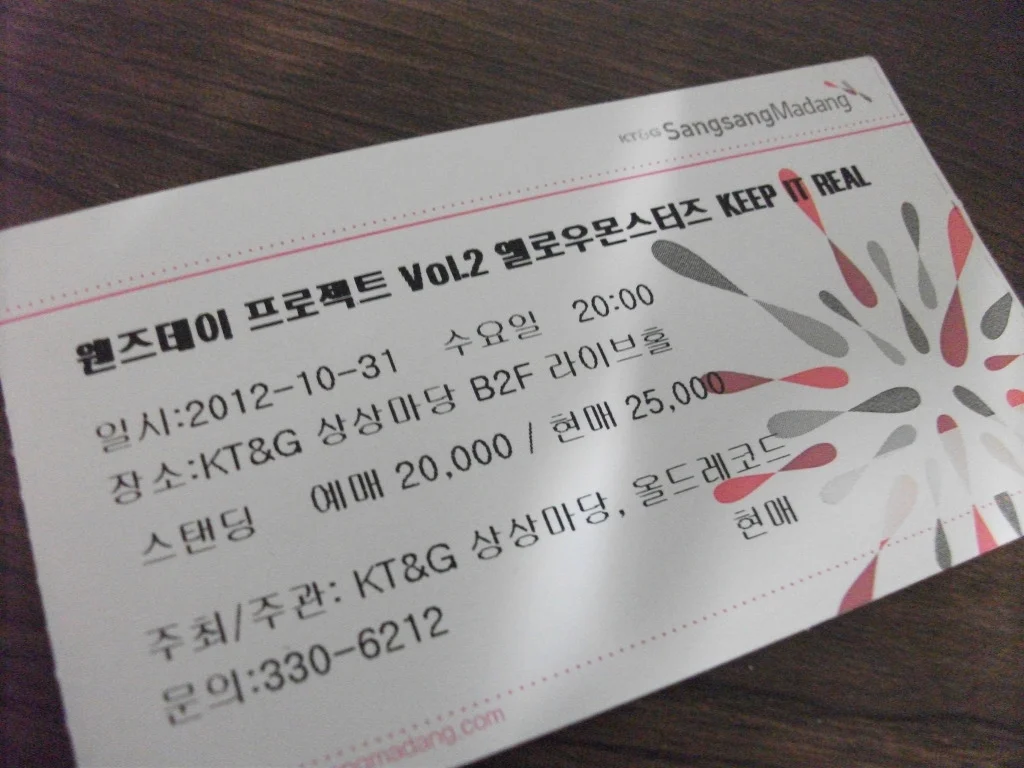
Tickets cost ₩20,000 in advance and ₩25,000 at the door. Potentially a burden for newcomers, the price stopped being a major criterion once the show began. Live energy and density offered an experience difficult to convert into numbers.
An unbroken flow from opening to main set
RUX appeared first. Setting the evening’s tone, its short, intense stage raised tension quickly, gathering the room into the shared feeling of a punk-rock night.
Yellow Monsters inherited that flow and clarified its color. People unfamiliar with the songs could move easily with the rhythm; repeated hooks and direct sound made the room one mass. Punk’s simplicity and straightforwardness became strengths here.
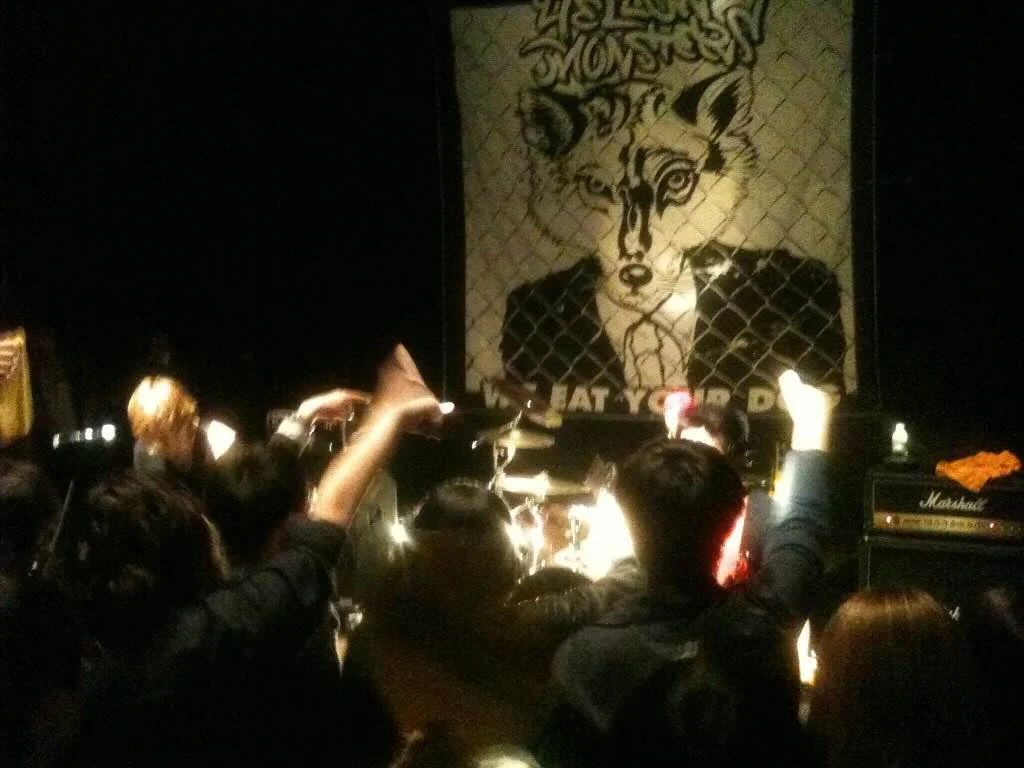
The mosh pit: another language of punk performance
A naturally forming “slam zone,” or mosh pit, stood out. A circular space for audience members to bump together and release energy, it is a form of participatory play often found at punk shows.
Though it may look rough, implicit rules avoid excessive force and require immediately helping fallen people up. Movement assumes sharing, not attack. What matters is timing rather than technique, a feeling that music and audience share one rhythm.
The pit formed naturally, and listeners entered in response to music. It indicated trust and energy built beyond a certain level between band and audience.
Punk remains music completed in person
Sound rougher and more direct than a recording, and almost no physical distance from performers, revealed the genre’s essence and why it remains strong live.
Rather than offer a new message, it reconfirmed punk’s basic force. Neither complicated music nor explanation was needed: repeated beats, voices and audience movement completed one scene.
What remained in Hongdae’s night
Leaving the hall, resonance that might seem like noise remained in the ears. Yet it felt less unpleasant than the sensation of having played well. The show quietly demonstrated living punk and Hongdae live houses as one of its centers.
It remains differently from large concerts or festivals. Small in scale but high in density, it showed that density as live performance’s great virtue.