REVIEW · Concerts & Live
Korea Alpin Rose Yodel Club’s 43rd Concert: Voices Across Generations
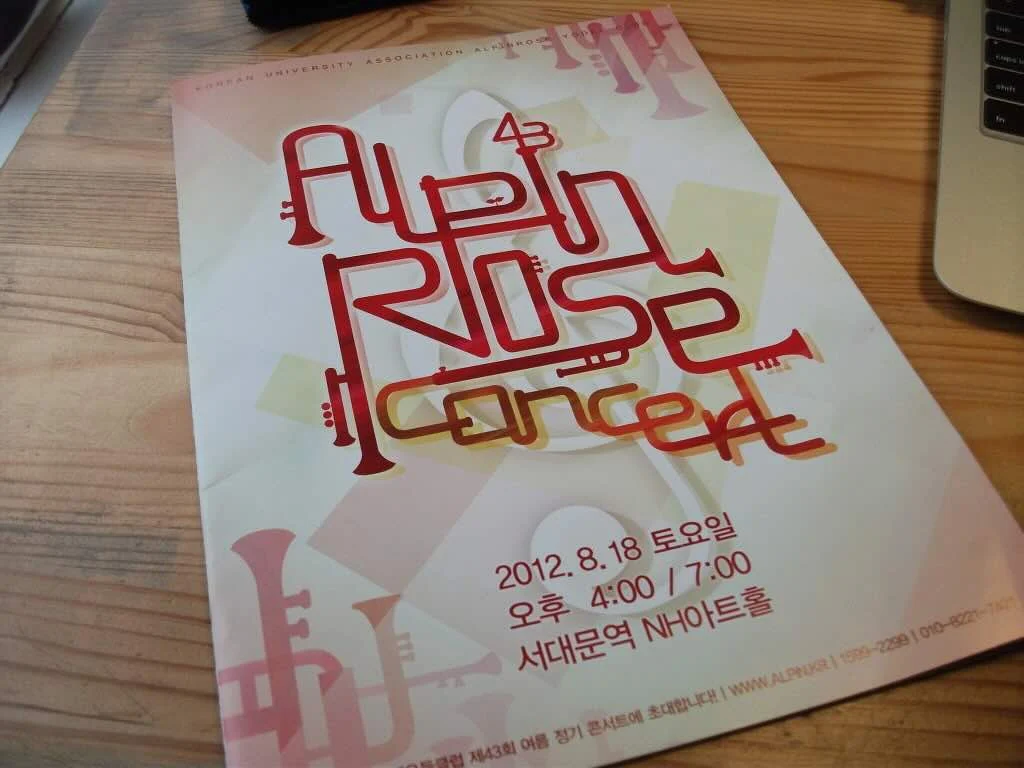
The 43rd Korea Alpin Rose Yodel Club concert: forty years of student voices
Yodeling often evokes an Alpine landscape: high mountains, meadows and voices carrying into the distance. Seeing a yodeling performance in Korea remains a relatively unfamiliar experience. Against that background, the Korea Alpin Rose Yodel Club’s 43rd regular concert, held at NH Art Hall near Seodaemun Station on August 18 in the summer of 2012, was a stage for which “unusual concert” felt apt. More interestingly, it was not a one-off event, but an extension of decades of university club culture.
From 1969 to 2012: a history of yodeling carried by university students
Founded in 1969, the Korea Alpin Rose Yodel Club is an inter-university association that has given regular annual concerts since its first presentation in 1972. As its name Alpenrose, meaning a rose blooming on Alpine slopes, suggests, its focus has gone beyond reproducing European traditional music to singing it anew through a younger generation’s sensibility.
Grounded in Swiss folk yodeling, the club has consistently explored European and Western-country styles as well as combinations with Korean popular songs and pop. Rather than enclose the unfamiliar genre in a framework of tradition, it sought connections with contemporary music. The 2012 concert was one outcome showing more than forty years of those efforts.
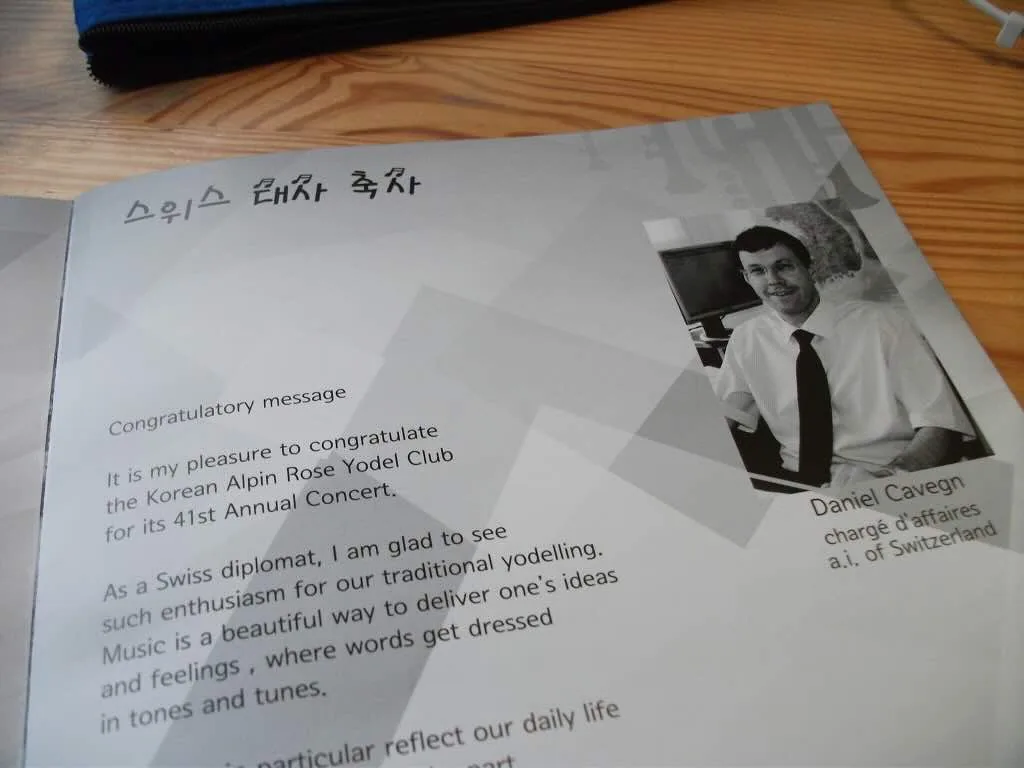
The 43rd concert: a stage in four movements
The relatively long program comprised four parts. Instead of simply singing one yodel after another, it changed character between sections to regulate the concert’s rhythm, an especially striking feature.
Part one began with group yodeling. It introduced what yodeling is in a relatively traditional way. Harmonies created by many voices sounding together conveyed the genre’s collective energy directly.
Part two changed the atmosphere with a musical-theater format. Combining story and dialogue, it offered another route for audiences unfamiliar with yodeling. Song and acting joined, expanding yodeling beyond a vocal technique into a language of performance.
Part three introduced fusion yodeling. Modern rhythms and arrangements added to the tradition made this the clearest expression of the club’s direction. The stage demonstrated a genre still open to variation rather than simply music of the past.
The final fourth part closed with fast-tempo yodeling. Songs repeatedly shifting quickly through high registers made a strong impression and brought the entire concert to an energetic finish.
Beyond the assumption of a concert that only sings yodels
The overall impression was clear: this was not merely a sequence of yodeling songs. Each part seemed deliberately designed to show a different face of the genre, and the performance naturally created one flow through them.
The musical-theater second part especially reduced the distance from yodeling. Story and situation helped audiences understand a genre difficult to approach through song alone. Considering that a student club created it, the structure appeared to demand considerable preparation and rehearsal.
A venue shaped by varied audiences
The audience was relatively diverse. Acquaintances, relatives and friends formed its core, as might be expected of a university club performance, but international spectators also stood out. Yodeling’s relatively low dependence on linguistic barriers became another advantage.
Dialogue in the musical-theater section could have made comprehension difficult, but the atmosphere and energy of the music itself were not strongly limited by nationality. Yodeling was a sound experience in its own right, and the audience received the performance through that sound.
Under the name of a university club concert
This regular concert differs somewhat from the usual image of a university club performance. It was neither merely a campus event nor a small presentation, but a concert with a long tradition and clear identity. The number 43 succinctly showed how long the association had held to one genre.
Yodeling sits far from mainstream popular music. Nevertheless, Alpenrose has sustained this unfamiliar genre as students and in the form of a club. The performance itself was also a record revealing another side of Korean university culture.
Yodeling left more than sound
What remained after the concert was not simply the memory of songs. Beyond having heard yodeling, it showed how a particular genre can continue across generations in Korea. Tradition and experiment, club and concert, university culture and performing arts overlapped in one place.
Yodeling remains unfamiliar. Yet that unfamiliarity was precisely the attraction: a sound remembered longer because it was unknown, and the time of the people who protected it. Korea Alpin Rose Yodel Club’s 43rd regular concert thus remained as a scene of culture.