REVIEW · Concerts & Live
At Awa Odori Kaikan, Rhythm Crosses Into the Audience
A daytime performance in Tokushima on March 19, 2026: roughly forty minutes of drums, shamisen, flute and contrasting dance styles, ending with the audience entering the movement.
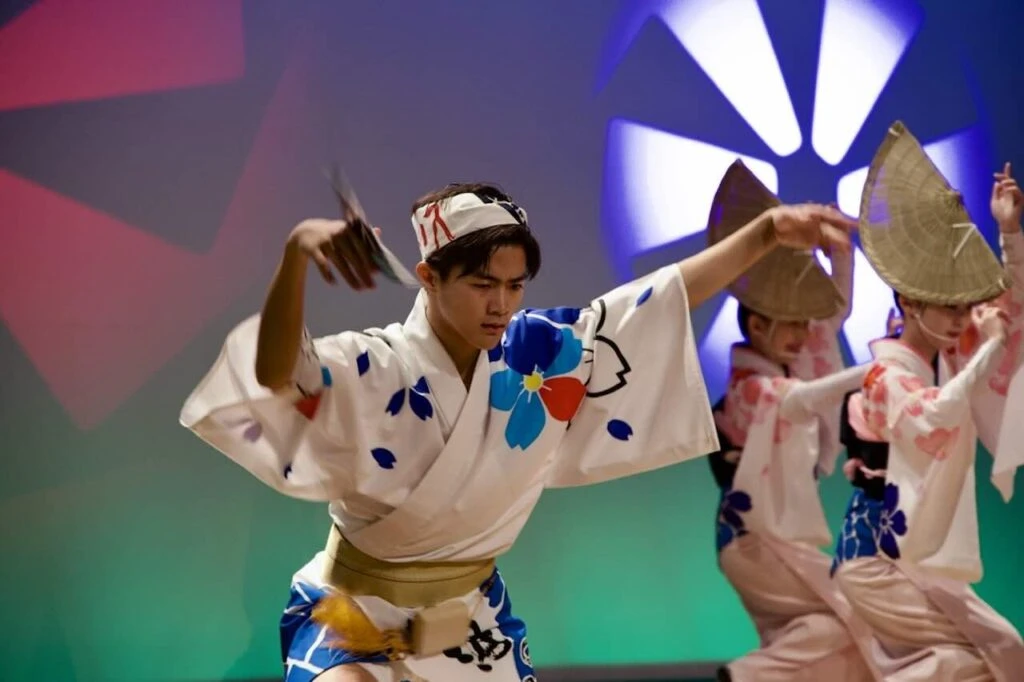
Hearing a dance previously known by name
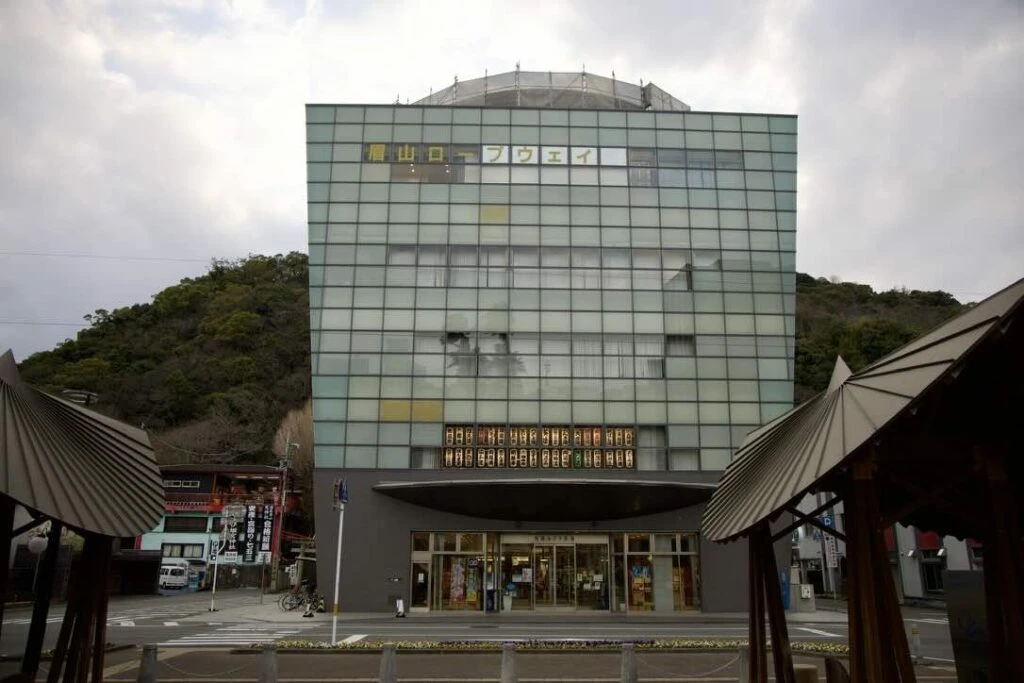
Awa Odori is a name visitors encounter on arriving in Tokushima, even at the airport. Knowing that a dance represents a region is different from experiencing it in a theater. The daytime performance at Awa Odori Kaikan, below Mount Bizan, on March 19, 2026, closed that distance through drums, shamisen and flute.
The roughly forty-minute show did more than explain a tradition. Playing led movement, and repeated gestures made the pulse visible. Attention gradually shifted from the outline of a dance to the way feet, knees and arms shared its beat.
Music that is more than a background
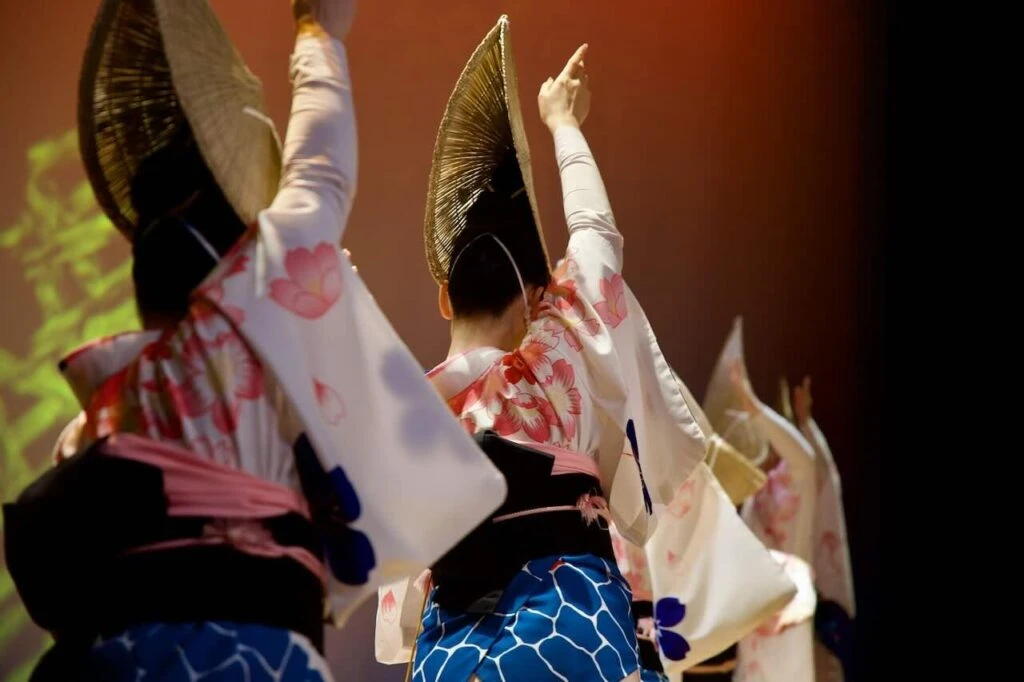
Calling the music a background to the dance misses its role. Drums establish the pulse; shamisen and flute add melody and texture. Short calls bring human voices into the same forward flow. Tokushima City describes the accompaniment, known as zomeki, as a lively two-beat rhythm. Onstage it becomes legible through movement as well as sound.
Repetition does not make the performance seem stationary because many people hold that pulse together. Its force is clearer when a line of dancers moves as a unit than when an individual arm gesture is considered in isolation.
One beat at different heights
The contrast between the styles traditionally called men’s dance and women’s dance first appears in posture. Bent knees and a lowered body direct force downward; an upright stance with raised hands draws an upward line. The same music produces different impressions of weight and speed.
Arms and fingertips in a photograph cannot explain the dance completely. Feet continue keeping time while hands are raised, and a low posture does not mean stillness. Apparently simple repetition requires balance and timing. Precision emerges from sustaining a movement together rather than multiplying gestures.
The audience enters the final scene
Toward the end, spectators learned basic movements and joined the dancing onstage. Recognizing a gesture from a seat is different from coordinating it with the beat. As participants began moving their arms and feet, a familiar-looking pattern became a sequence they had to navigate themselves.
The invitation did not feel like an unrelated extra. Repetition and shared rhythm had already prepared the room. Rather than learning a shape and only then encountering music, participants stepped into a pulse they had been hearing. The division between stage and audience briefly loosened.
What remains after forty minutes
Awa Odori Kaikan makes a summer festival dance accessible in other seasons. A March indoor performance cannot reproduce the scale of Tokushima’s midsummer streets, but it can reveal at close range how music and movement need each other.
What stays is less the fact of visiting another attraction than the moment of understanding dance through music. Posture changes, the beat continues, and a flow established by musicians passes through dancers to spectators. After leaving, the repetition is more memorable than the familiarity of the name.