REVIEW · Songs & Albums
PARK HAK KI’s “Vitamin”: Everyday Energy Sung Together
Karaoke song codes
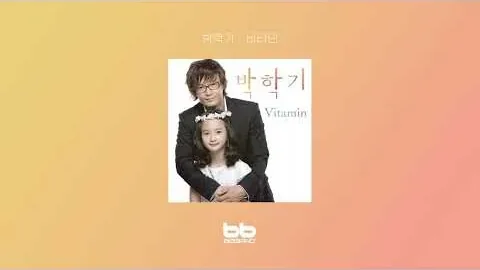
PARK HAK KI’s “Vitamin” compares love to the energy to live a day rather than a life-changing event. Its title may be so familiar that it passes unnoticed, yet that everyday quality brings the song close. It offers the sense of someone beside us continuing to give strength, rather than one great demonstration. Hearing Jung-yeon and Seung-yeon join him means gratitude does not remain with one speaker. The possibility of an adult’s words to a child and a child’s reply occupying the same song feels warm.
Offering a day’s energy instead of a grand promise
A vitamin is not needed only once on a special day. Following the title’s metaphor moves love from an emotion for exceptional moments to a feeling supporting daily life. There is no need to extend that into another person being responsible for one’s whole existence. It is closer to the small experience of gaining a little strength to move when thinking of someone. Maintaining that modest scale prevents gratitude from becoming burdensome praise. The song need not exaggerate a whole life to affirm love’s worth.
Its pleasures also differ from images of grand success. Shared food and play, sensations found within a day, come to the center. They are symbols explaining love and concrete time to share. As affection is repeated in different words, listeners recall small scenes giving them strength. Instead of defining happiness, the song brings moments of feeling happy close at hand.
When an adult’s and children’s voices meet
PARK HAK KI’s participation with his two daughters, Park Jung-yeon and Park Seung-yeon, also lets us consider this everyday scale in sound. When adults and children sing the same sentence, its meaning stays the same but the relationship imagined changes. Rather than only a protector and someone protected, a relationship opens in which both can give strength. The family collaboration alone need not carry the emotional response. More interesting is how sharing a song between generations broadens the direction of gratitude.
Bright, kind songs are sometimes judged to offer comfort too easily. But “Vitamin” does not volunteer to solve every difficulty. It repeats the small statement that a loved person gives energy. That limited promise becomes a strength. Rather than demand that a listener’s day must be happy, it suggests that even within that day there may be a moment of encouragement. Received plainly, the title sounds more like an affectionate nickname than a claim proving an effect.
Gratitude worth repeating
“Vitamin” can be heard as a family song and as a song for another close person. Its actual participation has a clear background, but the lyrics’ recipient need not be limited to one. Thinking of whom to sing the same words to lets the song enter individual lives. What remains is less a declaration that love changes everything than gratitude that someone’s presence made today a little different. Being able to sing that small change repeatedly is the song’s vitality.