FEATURE · 칼럼
Han Seok-yul in Misaeng: The Work Behind a Cheerful Face
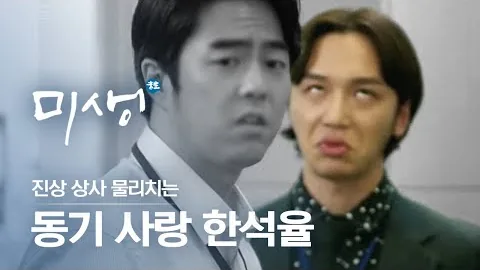
On a first viewing of the Korean workplace drama Misaeng, most viewers identify with Jang Geu-rae. Newly entering working life, he must endure despite knowing little. His position needs no explanation, and viewers naturally find themselves standing beside him.
Over time, however, another character begins to draw attention. Initially irritating and frivolous, seemingly disrupting the mood whenever he speaks, he gradually becomes someone whose next scene we await. That person is Han Seok-yul.
Seok-yul is not immediately likable. Talkative and full of jokes, he can seem immature in an office. Beside Geu-rae’s anxious vigilance, his apparently effortless adjustment heightens that impression. If Geu-rae is someone entering the company, Seok-yul seems already to embody it.
Yet the character’s essence lies in actions revealed over time, rather than first impressions. More than someone skilled at office life, he is someone who sees the person first. That priority defines his behavior.
Someone who preserves the atmosphere
An office carries more emotion than one might expect. It looks like a place for work, but tensions and silences between people occupy much of it. A reprimand makes the air heavy; a mistake quiets the whole team.
There is often someone who responds first: speaking before awkwardness settles, joking before silence stretches, approaching someone before they withdraw. We usually call that person the one who lifts the mood.
Seok-yul works a little differently. He acts not to raise the atmosphere but to stop it collapsing. He preserves it rather than manufactures it.
When Geu-rae makes a mistake, he does not console him directly. He treats him normally, offering ordinary remarks as though nothing has happened. That matters because the most painful moment at work is often not the reprimand but the silence afterward. That silence can be harder to bear.
Attempts at consolation can make someone feel more diminished, whereas ordinary treatment leaves room to return. Seok-yul understands this. His remarks do not sound like comfort, but become its most practical form.
How a cheerful person works
In the drama’s middle stretch, his expression changes as work goes wrong and circumstances tangle. His laughter diminishes. The moment matters because it reveals that he was never simply a frivolous person.
He first seems to laugh because he is at ease. In fact, he laughs because he understands the situation so well. He is quick to notice who is struggling, holding on or close to breaking.
People generally become brighter when they feel all right. Some become brighter precisely when things are difficult, knowing that their own collapse would make life harder for others. They smile and speak first. Seok-yul’s cheerfulness is a role as much as a disposition.
That is why he feels real. Many offices have someone who maintains the team’s atmosphere regardless of rank or professional ability. They may not solve the problem, but help others endure the time after it.
The first to understand Jang Geu-rae
Toward the end, Seok-yul becomes one of those who best understands Geu-rae. He notices his condition before seniors or supervisors do, and recognizes the feelings with which he is holding on.
The contrast between them is striking. Geu-rae is quiet, careful and reluctant to show himself; Seok-yul is talkative, active and constantly connected to others. Outwardly, their temperaments appear entirely different.
At heart, only their methods of enduring differ. Geu-rae uses silence; Seok-yul uses laughter. His support is distinctive for that reason. He rarely offers optimistic advice or says things will improve. Instead, he treats people normally, continues everyday conversation and makes the incident feel ordinary again.
Advice is an easy way to console someone. What helps restore them, however, is allowing them to return to everyday life. Seok-yul is a character who understands that.
Someone who returns, rather than someone who never breaks
Crucially, he is not unbreakable. He falters, his expression changes and his brightness disappears. After time passes, he returns to his familiar self.
This is less a conventional growth story than a recovery. He does not return transformed or stronger; he simply laughs again. Real life can be similar. Growth often resembles returning to oneself rather than becoming a new person: being able to speak normally and joke again after being hurt. That is what recovery means.
He therefore remains among the drama’s most realistic figures. Neither the most gifted nor the most tragic, he is someone we would be deeply grateful to have beside us at work.
The reason so many remember him may be simple. We have all been Geu-rae, and at some point have endured because of someone like Seok-yul. What sustains working life is often a tiny sentence rather than an achievement or appraisal.
An unremarkable comment, an ordinary exchange, a manner that treats us as usual: Han Seok-yul is the character who offers those things most naturally.