FEATURE · 칼럼
J.Y. Park’s Plastic Trousers: The Stage Choice Behind the Joke
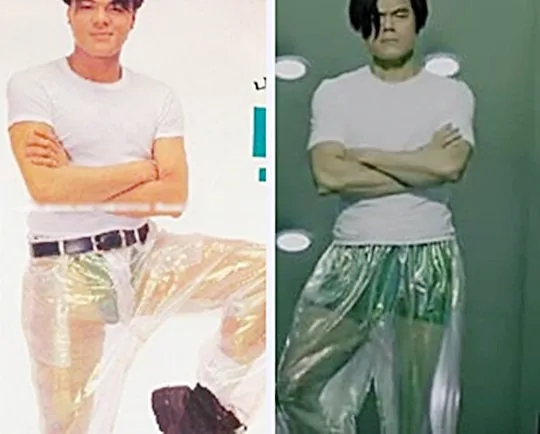
J.Y. Park’s plastic trousers became a stage costume recognizable from a single photograph. Transparent material and visible clothing underneath attract attention before anyone hears the song again. Yet remembering the image only as an odd-fashion joke sidelines his account of why he wore it on television. The story changes when the costume is considered alongside his later recollections of the broadcasting environment.
The broadcast restrictions he remembered
In Dong-A.com’s report on his July 2012 appearance on KBS2’s Happy Together 3, Park recalled restrictions on dyed hair, earrings and sunglasses. He attributed the provocative clothing to resistance against those rules. He also said he wore another outfit at rehearsal, changed into plastic for the live broadcast and subsequently faced limitations on appearances. In his memory, the costume remained part of a performance that collided with regulation.
The trousers resurfaced on tvN’s You Quiz on the Block on August 19, 2020. Star Today’s report again described his account of numerous appearance and clothing restrictions as the background to his choice. The same outfit returned in variety programs years apart. Alongside laughter at a photograph, there was time for its wearer to explain what had frustrated him.
How much of a singing body could television show?
After hearing that recollection, transparency raises different questions. Where was the boundary for what a singer could wear on television? When being clothed conflicts with the body remaining visible, what becomes the problem? In Park’s account, plastic clothing answered such rules. That is separate from judging whether it was beautiful or wearable today.
On a pop stage, clothing is seen with a moving body. A frozen photograph does not create the same impression as singing and dancing. The trousers therefore invite consideration as a performance costume, rather than only an eccentric still image. A photograph revisited years later occupies a different time from the original stage. The tension of choosing the outfit overlaps with the present distance that allows laughter at an old appearance.
2019: returning to plastic with Hwasa
The outfit did not remain merely a subject of recollection. At MAMA in Nagoya Dome on December 4, 2019, Park and Hwasa performed “Don’t Leave Me” together. SBS reported their appearance in plastic outfits. Rather than stop at an old photograph onscreen, he brought the image into a present-day collaboration with a younger singer.
Its meaning was no longer confined to one person. Hwasa wore a material associated with Park as the two met through a familiar song. The pleasure of a costume’s return overlapped with the pleasure of collaboration across generations. Plastic became a reusable visual vocabulary rather than the surface of an archived object. Singing a song again and wearing an image again occupied the same performance.
Set the 2012 recollection, the 2019 collaboration and the 2020 conversation side by side, and a history emerges that one photograph cannot show. A former costume prompts explanation or becomes an occasion to sing with someone else. Watching its specific reuse onstage is more interesting than declaring that anything remembered long enough becomes a success.
A story to keep beside the joke
When an old stage photograph returns on television, its original context can shrink. It becomes an immediate identifier and a source of laughter requiring no explanation. But amusement need not negate the original attempt. The same outfit can also create time to ask about an earlier choice. His 2012 and 2020 remarks record how that question returned.
One pair of plastic trousers cannot explain all of Park’s music. Neither can it simply be dismissed as an incident unrelated to it. A singing, dancing performer chose how his body would appear on television. Laughter may be the first response to the photograph; afterward, it is worth remembering his account of changing after rehearsal and heading into a live broadcast. Behind the familiar image remains the voice of the singer who stood there.