REVIEW · Theatre & Musicals
Don Quixote at Myeongdong Theater: A Figure Who Resists Easy Understanding
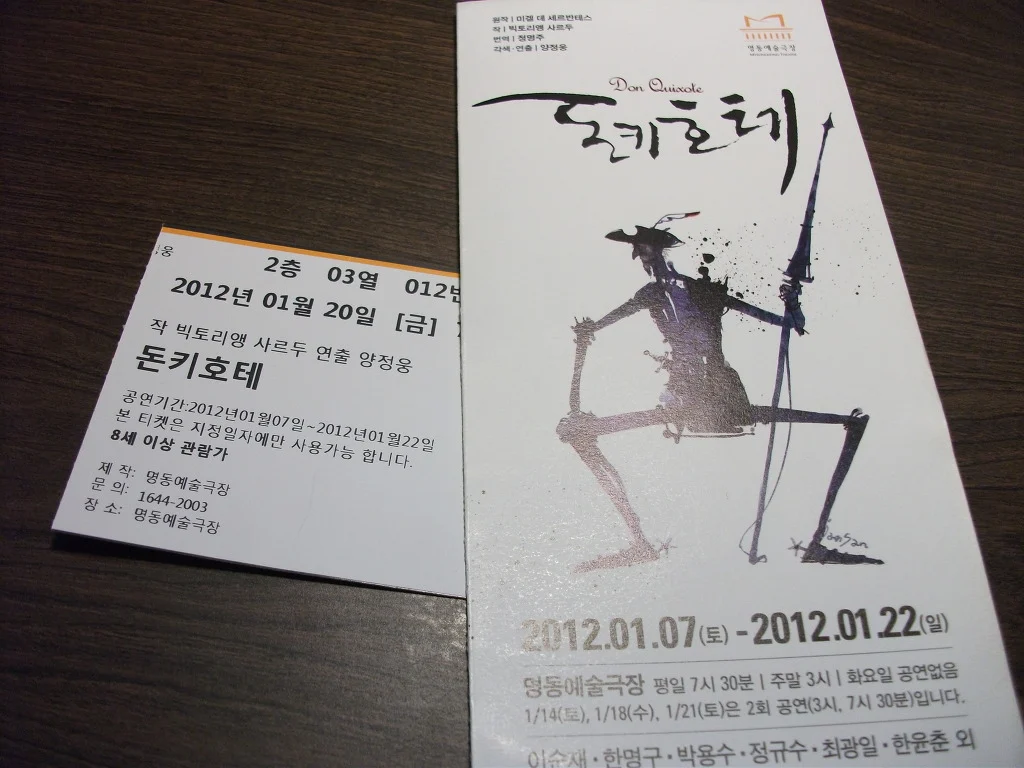
Spanish literature in the present tense, encountered in Myeongdong
In January 2012, a winter night in Seoul’s Myeongdong acquired a different temperature through a play. Don Quixote at Myeongdong Theater, based on the Spanish literary classic, showed how literature and theater could meet. Reinterpreted repeatedly in many media, the novel is familiar, yet poses different questions each time onstage. This production, too, faced the audience with a question beyond the emblematic old knight charging at windmills: does Don Quixote remain a relevant presence today?
Expecting Lee Soon-jae’s Don Quixote, and encountering another interpretation
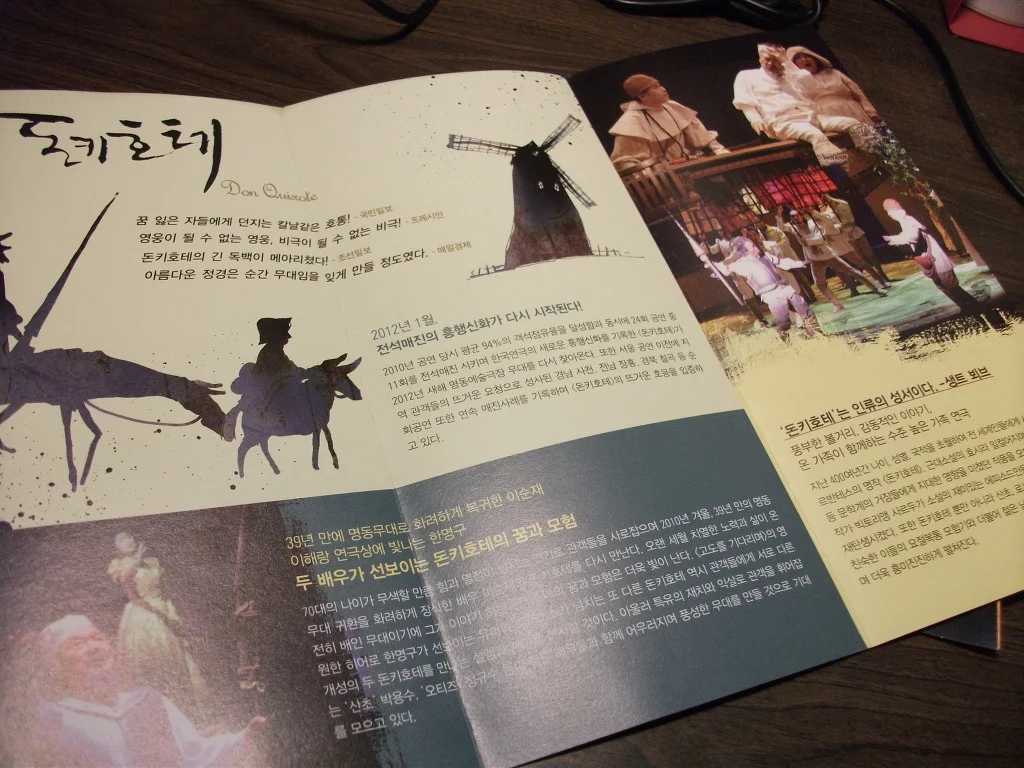
From its announcement, the production attracted attention for Lee Soon-jae’s participation. A figure with a symbolic standing in Korean theater playing the classic’s elderly knight added substantial trust to the work. His name itself seemed to announce its direction and weight, and many audience members naturally understood it as Lee Soon-jae’s Don Quixote.
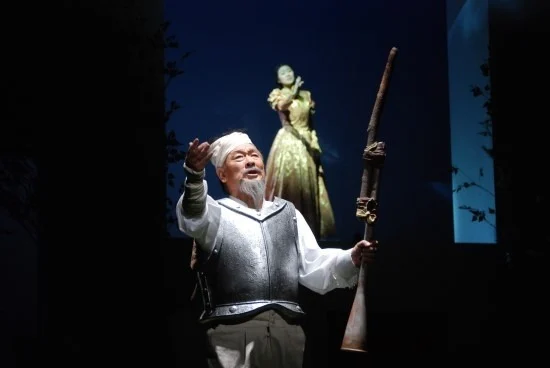
However, the production alternated two casts rather than relying on a single one. A choice accounting for the demands of a long run created the chance to encounter differently textured Quixotes within one work. The actor performing that day was Han Myung-gu, whose approach was calmer and more inward. Focusing on the subtle fractures produced by conviction and stubbornness rather than exaggerated gestures, he encouraged the audience to view the character as a subject for interpretation instead of laughter.
Selecting a narrative rather than compressing the original
The play neither simply summarized the entire novel nor lined up its famous scenes. Instead, it selected episodes foregrounding clashes between relationships and emotions. The connections among Don Fernando, Dorothea, Cardenio and Luscinda could not be reduced to a simple love story. Their desires, choices and consequences exposed complicated cross-sections of human lives.
This narrative structure made Don Quixote and Sancho clearer. One is a knight pursuing beliefs detached from reality; the other follows while adding the language of reality. Passing through the conflicts around them, they brought the classic’s questions into the present tense. How unrealistic can an ideal be? And is that unreality truly worthless? Those questions recurred throughout.
Difficult to understand, difficult to dismiss
Don Quixote is always a difficult figure to understand. He repeatedly misjudges, clings to anachronistic chivalry and fails by practical standards. Yet the play does not consume him simply as a ridiculous old man. He seems plainly eccentric and foolish onstage, while also remaining someone who refuses to abandon his world to the end.
He does not fight here to succeed or gain recognition. Rather, he carries his chosen worldview through while accepting failure. The audience may not understand every action, but cannot easily deny his consistency. Here the play reveals the classic’s force: through behavior, it quietly repeats questions still relevant as times change.
The distance and concentration created by Myeongdong Theater
Myeongdong Theater is distinctly different from Daehangno’s small theaters. Situated in a tourism and commercial center, it makes theater feel less like everyday cultural consumption than a consciously chosen experience. That spatial character also influences the way a performance is watched.
Compared with the experimental, close encounters common in Daehangno, Don Quixote here left a more refined, stable impression. That met the character of a production based on classic literature. At a certain distance from the stage, the audience followed its people and story calmly. The distance instead helped clarify its message.
Choosing a lasting impression over showing more
This was not a production overwhelming the audience with elaborate sets or radical direction. Instead, it concentrated on characters, dialogue and narrative flow, placing the classic’s questions onstage. It left resonance rather than rapid developments, time for thought rather than immediate emotional impact.
The impression that resisted easy ordering after the performance arose from that choice. Quixote charging at windmills continued to recur in the audience’s mind. It was closer to a portrait of humanity wavering between reality and ideals than to a simple symbol.
A classic remains in the present tense
Rather than strain to reinterpret a classic, the play concentrated on demonstrating its continuing relevance. A centuries-old story remains persuasive on today’s stage because its questions are still ongoing. A figure difficult to understand yet impossible to ignore, and a conviction that does not stop despite repeated failure, remain both unfamiliar and familiar to a contemporary audience.
The production showed one way theater can call a classic into the present. The stage ended, but the name Don Quixote did not easily disappear from spectators’ memories. In this way the classic remained, once more, in the present tense.