REVIEW · Songs & Albums
Linkin Park’s “Crawling”: The Emotion Held at the Centre by One Voice
Karaoke song numbers
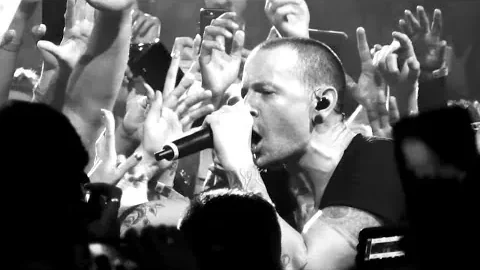
Linkin Park’s “Crawling” makes vocal pressure felt before it explains emotion. With Chester Bennington’s voice at the centre, words about wounds arrive less as distant recollection than as a condition inescapable within the present body. The weight lies in that immediacy. A voice describing a completed event would let listeners arrange causes and effects. Here, pressure precedes explanation, denying the easy distance of saying the emotion has been understood.
Rather than await the alternation of rap and singing familiar from other songs, we follow how one voice sustains a feeling. Beside “In the End,” from the same album, the difference between dividing emotion across voices and weighting one vocal becomes audible. Where another song centres on contrast between two voices, this one traces tension within a single voice. Even within the same band, emotion is arranged differently, creating distinctions that the shared label of a heavy sound cannot contain.
A feeling that cannot be pushed outside the body
The movement named by the title is far from a large, confident advance. It evokes lowering the body and moving little by little. Heard alongside difficulty with self-control, even a loud voice becomes hard to receive simply as a victory cry. Far-reaching sound sits beside an image of bodily lowering. Being able to shout does not mean commanding the situation; that contradiction prevents vocal power from becoming mere confidence.
The speaker need not be identified completely with the singer’s life. The state within the song offers emotional density enough. Instead of diagnosing the source of pain, listening can stay with how that state becomes sound. Searching for a nameable cause can miss the present sensation conveyed by the voice. Hearing the speaker’s unease and difficulty with control keeps attention on the music without reducing the singer’s life to one explanation.
A strong voice can also express helplessness
Vocal power is often described as confidence or command. In “Crawling,” force becomes a way of exposing emotion beyond control. The contradiction of speaking loudly without resolving anything remains in the voice. The louder the sound sent outward, the greater the inward pressure can seem. Intensity is not the same as release, so tension persists even as the voice extends, carrying into the next phrase.
Keep the weight of accompaniment and vocal together, and that tension sharpens. The voice seems both to lead the song and to be caught inside its sound. That is a reason to hear what condition a note sustains rather than simply how high it rises. The space made by the backing and the weight of the vocal within it help explain why the feeling continues. Relationships between sounds send us through the same condition again rather than allowing a single break through it to finish the song.
The same words revealed by another arrangement
Changes in accompaniment density in live performances or covers bring familiar words to a different distance. Feelings heard within a forceful band can sound more exposed beside fewer instruments. That is why the original’s power cannot be measured simply against the size of another arrangement. A new line-up does not justify remeasuring the scale of pain. Compare the sounds surrounding the same sentences, and pressure in one version may become exposure in another.
“Crawling” does not offer the correct answer after pain has been overcome. Listeners stay with the condition while the song lasts. When a voice acknowledging unresolved emotion is needed more than a tidy explanation, its weight returns. A form remains in which an unsettled heart can say it is unsettled. Hearing the pressure that survives the loud sound brings the song closer as a sense of not passing through that moment alone, rather than as proof of overcoming it.