REVIEW · Songs & Albums
YB’s “Peppermint Candy”: A Voice Reaching Toward Irretrievable Time

Karaoke song numbers
In YB's “Peppermint Candy,” the past is more than a beautifully preserved memory. The stronger the desire to go back, the clearer the impossibility becomes. Yoon Do Hyun's voice pushes that contradiction outward rather than quietly resolving it. Because even a powerful, soaring sound cannot turn back time, its strength sounds all the more desperate. The moment when having power parts company with being able to change something brings the song closer to a plea in the present than a simple recollection.
One can listen with the film of the same name in mind, but knowing its entire plot is not a prerequisite for entering the song. The distance between the present self and the time one wants to recover is audible in the music itself. Urgency comes through before sweetness in this act of remembering. A memory can be brought out and examined, but it cannot be entered again. As the distinction between recalling the past and returning to it becomes clearer, the song's direct language sounds less like decoration for a memory than a demand addressed to somewhere unreachable.
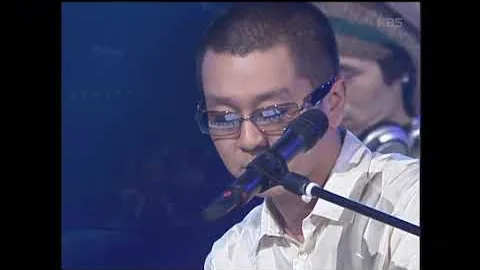
Yoon Do Hyun Band — Peppermint Candy (December 1, 2001)
Wanting to go back does not change the past
Regret often makes us repeat facts we already know. Remembering a time when another choice was possible does not alter the present. The same wish recurs in this song not, it seems, because information is missing, but because feeling struggles to accept the facts. Even after the judgment that it is too late has been made, the heart's time does not conclude at the same speed. The recurring wish reveals that gap rather than explaining the past anew. The listener hears both someone who knows the facts and someone unable to accept them.
The directness of the lyrics therefore does not mean a lack of explanation. Words that keep pointing in one direction without listing complex reasons can expose the condition of someone who can no longer find another language. Repeated pleading does not close the distance in time. Adding other words might seem likely to move the feeling forward, but here, continuing to face the same direction matters more. The sentences' simplicity preserves the desperation of clinging to one unchangeable thing, and repetition adds weight to the plea.
The emotion driven by Yoon Do Hyun's voice
As the vocal builds, a scene of recollection becomes a demand made now. Although the singer is describing memory, the voice sounds like someone trying to change something in the present. The collision between that impossible demand and the music's momentum creates the song's tension. Music and time pull apart: the more the voice moves forward, the more its gaze turns backward. Because that misalignment remains unresolved, the buildup feels less like an escape than a gesture sending an impossible demand farther out.
Treating the rising voice only as a measurable feat of singing misses something essential. The central question is not how high the note reaches but why it sounds like pleading. Listen for the coexistence of vocal power and a powerless situation. Admiration for accomplished singing alone cannot fully register the helplessness inside the loud sound. The place Yoon Do Hyun's powerful voice is trying to reach is a time that even present abilities cannot open. Within the crescendo, a blocked path remains.
A song that refuses to leave memory prettified
The familiar object named in the title, a peppermint candy, suggests a clear sensory experience, yet the emotion the song reaches is not simple. Thinking about an earlier innocence can make the contrast with the present more painful. The distance between the title and the voice creates that contrast too. Beside a small, vivid sensation one could imagine in the mouth, the song's past remains impossible to grasp. A nearby object's name and a receding time are placed together, giving even the abstract idea of innocence an almost tangible specificity.
The end of the song does not open a route into the past. What remains is the time spent giving the desire to return its fullest expression. The poignancy of “Peppermint Candy” lingers less in a story of overcoming regret than in the place those words failed to reach. Before a time unchanged by even the most urgent words, only the voice remains in the present. Heard without erasing that difference, the ending is not a place where regret has been settled. It is a place where the impossibility of returning and the wish to return still coexist.