REVIEW · MUSIC
Motohiro Hata’s “Uroko”: The Courage to Shed a Layer and Move Closer
Revisiting Hata’s 2007 single through its original music video, a Touch and MIX collaboration, and performances from Augusta Camp and the Copernicus tour—a song that turns hesitation into movement.
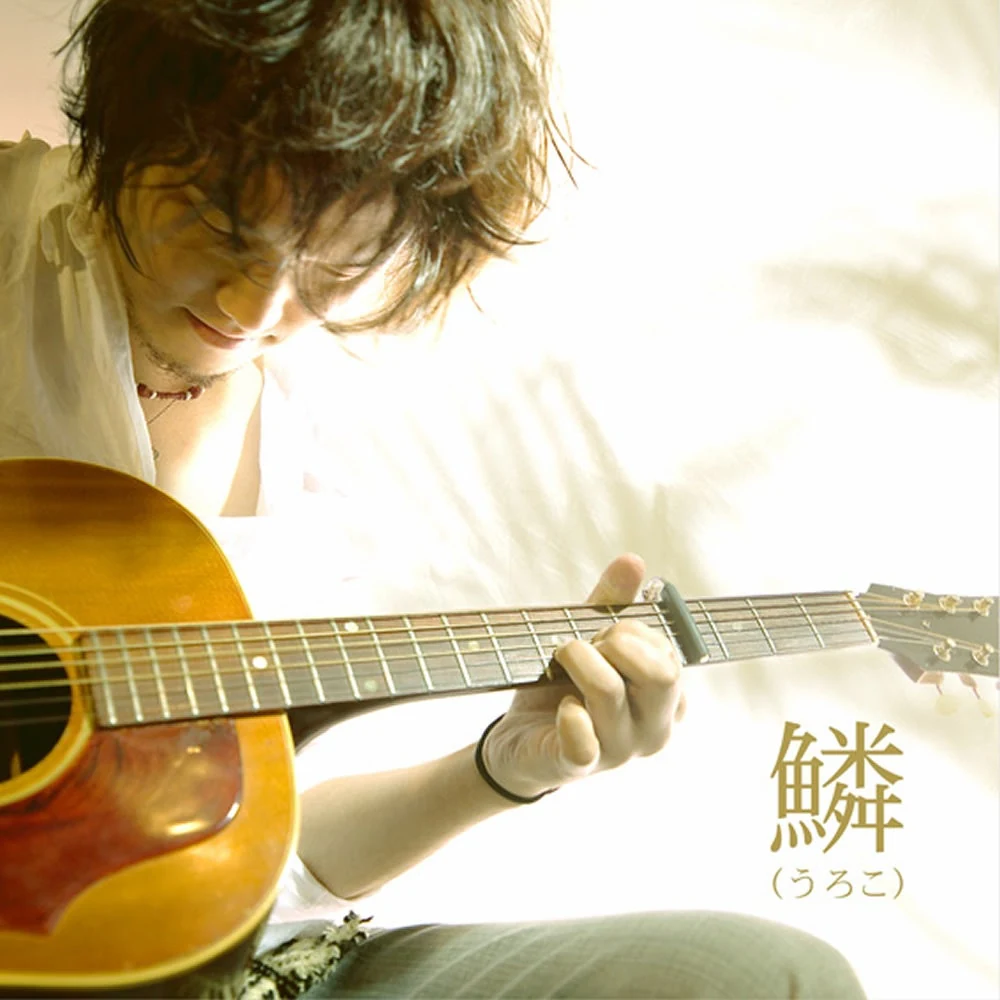
Karaoke numbers
Some songs make you move before you can explain what you feel. Motohiro Hata’s “Uroko” is one of them. What begins as an intimate address gradually gathers the force of a decision. The song is tender without becoming still, urgent without sounding inflated. The tension between those qualities gives his voice its pull.
Written in Japanese as 鱗(うろこ), the title means the scales of a fish. For a listener encountering the song for the first time, the image offers a useful way in: a protective surface can also become something that must be shed to reach another person. Four official videos—the original music video, a manga collaboration and two live performances—open different paths into that feeling.
A second single with a lasting shape
Released on June 6, 2007, “Uroko” was Hata’s second single. Its place early in his recording career is part of its history, but the song offers more than a glimpse of an artist getting started. The movement from contained phrases to an expansive chorus holds uncertainty and resolve inside the same musical arc.
Hata’s voice combines a smooth melodic line with a grain that keeps it from feeling polished flat. As it climbs, the phrasing takes on a more immediate pressure. The appeal is not simply the height of the notes; it is the sense that the words have become necessary to say. The original official music video is the place to begin, listening for that change in scale and intensity.
Official music video
HATA MOTOHIRO · Watch on YouTube ↗
When protection becomes distance
Sadness alone does not describe the emotional motion of “Uroko.” Longing can make a person stay where they are, replaying a feeling. This melody keeps moving. Its forward pull allows affection to become an impulse toward action, even before any outcome is certain.
The image of scales can be heard in that light. What once kept a person safe might also keep someone else at a distance. This is a critical reading rather than a claim about a single, definitive authorial intention. The song leaves enough space for listeners to bring their own unfinished conversation or hesitation into it. You do not need a line-by-line translation to notice the shift from holding back to reaching outward.
Touch, MIX and the memory inside a melody
A second official music video arrived in 2017, bringing “Uroko” together with Mitsuru Adachi’s manga Touch and MIX. Created to mark the release of the compilation All Time Best Hata Motohiro, the collaboration was introduced by publisher Shogakukan as the first video to weave together the stories of both works.
For readers unfamiliar with them, Touch and MIX belong to Adachi’s world of baseball, adolescence and relationships; MIX returns to the setting of Touch 26 years later. That background explains why a brief image may carry years of memory for a longtime reader. Yet the video also offers an entry point through glances, distance and emotional continuity. The manga does not supply a fixed explanation of the song. It gives an existing melody another layer of time.
Touch / MIX special music video
OfficeAugusta · Watch on YouTube ↗
Back to the stage: Augusta Camp 2007
The third video is Office Augusta’s official release of Hata performing “Uroko” at Augusta Camp 2007, held at Seibu Dome. It brings the sequence back to the year the single came out. The performance date should be distinguished from the later upload date: this is a record of the 2007 stage.
In a concert recording, attention moves toward the physical work of singing: the breath at the end of a phrase, the push into the next note, the act of sending a voice across a large space. Where the music videos add a visual narrative, the live footage brings the song back to a body and a roomful of listeners. The melody remains familiar, but the source of its momentum becomes more tangible.
Live at Augusta Camp 2007
OfficeAugusta · Watch on YouTube ↗
Another stage: the 2020 Copernicus tour
Hata’s official channel also presents “Uroko” from HATA MOTOHIRO CONCERT TOUR 2020 -Copernicus-. Placed alongside the release-year Augusta Camp performance, it offers another concert context for the same song. Listen from the early stage forward, or begin with this performance and return to the original music video. The order can change what catches your ear: a familiar melody gives you room to notice the voice and the breath carrying it.
Live: CONCERT TOUR 2020 -Copernicus-
秦 基博 / @hatamotohiro · Watch on YouTube ↗
Four ways into the same movement
Seen together, these videos reveal how much room the song contains. The original establishes its identity; the manga collaboration invites a shared cultural memory; the two concert recordings return us to the voice carrying it. Each changes what we notice without replacing the others.
What lasts is less a grand resolution than the moment a person begins to move. Hesitation has not necessarily disappeared. Someone simply wants to get closer despite it. “Uroko” gives that small act of courage a melody large enough to inhabit.